


Key Takeaways
- The U.S. Marine Corps is seeking advanced camouflage cloaks to reduce detection by drones and thermal sensors.
- 13,000 cloaks are requested by 2027, with a total of 61,000 aimed for by 2030.
- Effective design should enable wearers to avoid detection at significant distances, including over 5,000 meters for certain sensors.
Cloaks to Counter Drone Detection
The ongoing Ukraine conflict highlights the critical need for improved battlefield camouflage. In response, the U.S. Marine Corps is developing a Multispectral Camouflage Overgarment (MCO) aimed at protecting soldiers from detection by drones and infrared cameras. The Marine Corps Systems Command issued a notice detailing this initiative, focused on enhancing individual signature management through various spectrums.
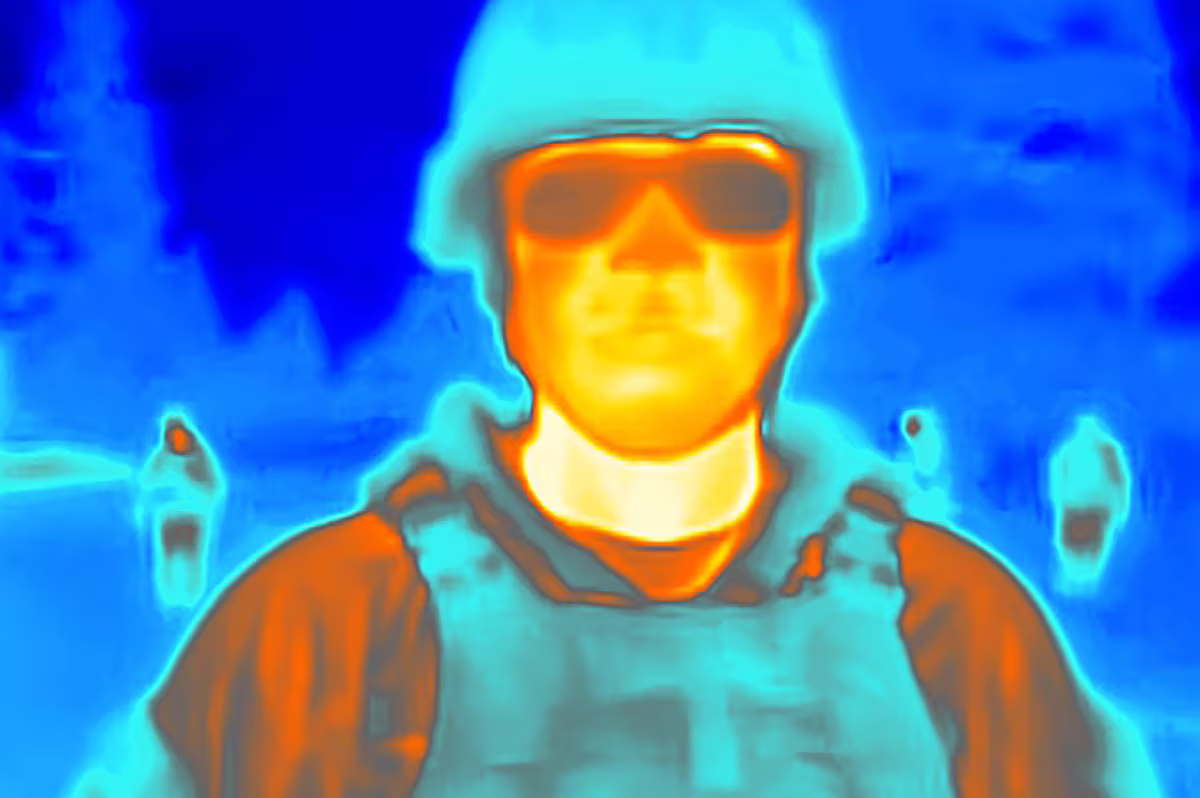
The MCO is designed to mitigate visibility across visual, near-infrared, and short-wave infrared spectrums, while also reducing thermal signatures detectable by mid-wave and long-wave infrared sensors. The notice sets a proposal deadline of April 22, emphasizing the urgency and importance of this project.
By 2027, the Marines intend to acquire 13,000 of these cloaks, with plans to reach a total of 61,000 by 2030. According to the notice, the MCO will serve as the essential solution for Marines both in training and during deployment. However, it will not be intended for everyday use in garrison settings.
Specific requirements have been outlined regarding the cloak’s performance against detection. For instance, the design aims to prevent visual detection during the day from ground-based sensors up to 600 meters, with an ideal goal of just 50 meters. In the case of aerial sensors, such as drones, the specified distances start at 1,000 meters and aim for a maximum effectiveness at about 10 meters.
In terms of thermal detection, the cloak must mask wearers from mid-wave infrared sensors at distances of at least 2,000 meters, ideally at 600 meters. For aerial mid-wave infrared sensors, the MCO should effectively camouflage users at a minimum distance of 5,000 meters, ideally 2,000 meters.
Design specifications call for a single-piece, generously sized cloak that offers complete body coverage while accommodating individual gear and equipment. It is essential that the garment can be quickly donned or removed in under 15 seconds. Durability is also a priority; the cloak should withstand extensive use, with a lifespan of 90 days to a year and up to 50 washes.
The Marine Corps aims for the cloak to weigh no more than 3.5 pounds, with a goal of keeping it below 2 pounds. Similar technology is already in use among Britain’s Royal Marines, who utilize the Barracuda cloak from Saab, a leading manufacturer.
In contrast, Russian troops have also employed thermal cloaks against Ukrainian drones; however, their experience underlines the risks associated with inexpensive, poorly designed cloaks. Such garments have occasionally led to increased visibility, creating a stark contrast as cold spots against warmer backgrounds.
As the U.S. Marine Corps continues to advance its capabilities, this initiative reflects a significant step towards enhancing soldier survivability in modern combat scenarios.
The content above is a summary. For more details, see the source article.









