


Key Takeaways
- Demand for floating wind turbines has decreased significantly compared to projections made just a few years ago.
- Technip’s joint venture, Ekwil, focuses on floating wind solutions but faces limited project opportunities.
- The offshore wind industry struggles globally, with roadblocks in Europe and the U.S. impacting development efforts.
Challenges in Floating Wind Power
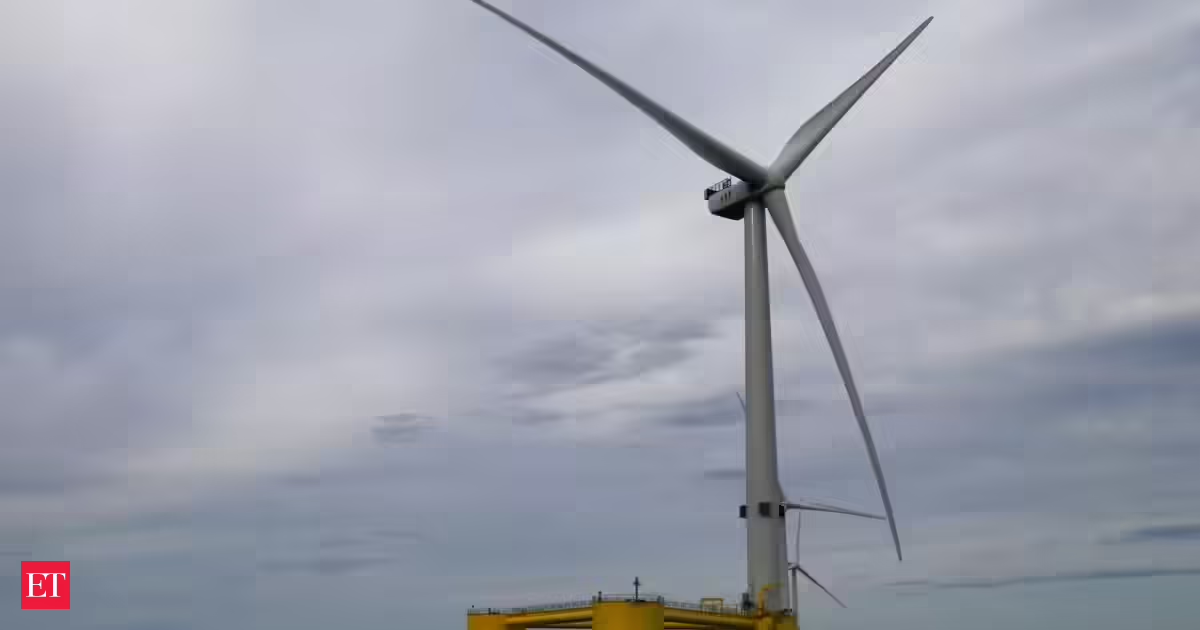
Technip Energies’ CEO, Arnaud Pieton, recently highlighted a marked decline in demand for floating wind turbines, revising expectations that were set three to five years ago. This downturn reflects broader issues within the wind power industry. Pieton noted during a post-earnings call that Technip’s joint venture, Ekwil, which specializes in floating wind technologies, aims to participate where projects are underway, but currently, such projects are scarce.
Last year, the company began noticing signs of a slowdown in the floating wind sector. Pieton attributed this to the high costs associated with the technology and the limited operational environments suitable for its deployment. As a result, the growth trajectory envisioned for floating wind solutions appears less promising.
The offshore wind power sector has been grappling with challenges on a global scale. In Europe, multiple countries met with challenges as they were unable to attract bidders for offshore wind farm developments in the previous year. Compounding the situation, in the U.S., the former President Donald Trump imposed stop-orders on several offshore wind projects, including initiatives led by Orsted, limiting the progress of such developments. However, there has been a recent update in favor of Orsted, as a U.S. court ruled for the resumption of their projects in February.
These developments underscore the volatility of the offshore wind industry and raise questions about its future, suggesting that while the technology holds potential, significant hurdles must be overcome to realize its full capabilities.
The content above is a summary. For more details, see the source article.









