


Key Takeaways
- Donut Lab successfully tested its solid-state battery on the Verge TS Pro motorcycle, marking a shift from lab to real-world performance.
- The battery features an 18 kWh capacity with an estimated range of 217 miles and a rapid 5C charging rate allowing for near-instant charging.
- Despite compelling charging speeds, concerns remain regarding battery chemistry and longevity, with production bikes still undergoing optimization.
Real-World Testing Launches for Donut Lab’s Battery
Donut Lab, a Finnish startup, is making headlines with its innovative solid-state battery technology, which is now being tested in real-world conditions on the Verge TS Pro motorcycle. Announcing plans to supply Estonian company Verge Motorcycles with the first production solid-state battery pack, Donut Lab has moved from lab tests to public demonstrations.
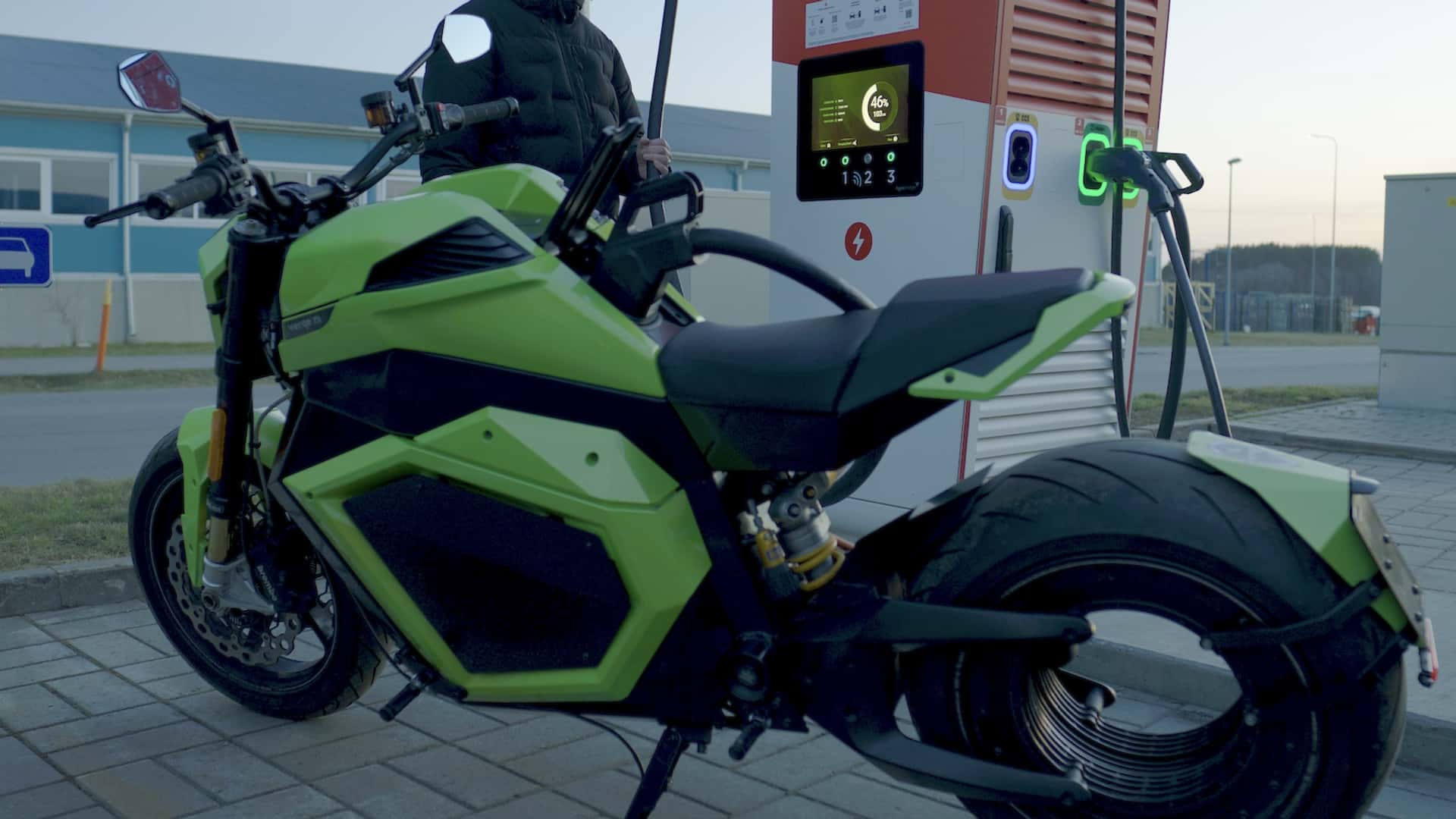
The Verge TS Pro test motorcycle is equipped with an 18 kWh nominal solid-state battery, reportedly offering a driving range of 217 miles. CEO Marko Lehtimaki highlighted that the battery can achieve an impressive 5C charging rate, theoretically allowing it to charge fully in approximately 12 minutes. This rate is notable, as it would mean a charge time of just 5 minutes to reach 50% and around 12 minutes to achieve 80%, all without complex liquid cooling systems—something uncommon in modern electric vehicles.
Prior to this, Donut Lab had mostly relied on individual cell tests, which provided limited insights into overall battery performance. Initial claims at the Consumer Electronics Show included high energy density numbers and extensive cycle life, leading to skepticism from industry experts regarding the feasibility of such figures without robust proof or validation.
During the recent public test, the Verge motorcycle was charged from a low battery level, drawing 103 kW of power, which is significant for its size. While this energy transfer is commendable compared to many electric motorcycles, it is only half of what the company had claimed at CES. As a result, uncertainty persists about whether this discrepancy arises from charger limitations or other factors related to the motorcycle’s design.
While traditional small battery packs charge more slowly due to their limited number of cells, the Donut Lab battery demonstrated capability far exceeding that norm. The speed of this charging, however, raises questions as to whether Verge Motorcycles’ production models can maintain these values consistently.
It’s worth mentioning that most contemporary electric vehicles utilize advanced liquid cooling systems alongside air cooling to regulate heat from rapid charging. Solid-state batteries, due to their design, are expected to be more thermally stable, potentially making air cooling sufficient. Nevertheless, it’s unclear if this specific battery will meet its ambitious longevity promises or live up to its expected performance under various conditions.
As production nears, Donut Lab remains tight-lipped about the actual battery chemistry used. With upcoming deliveries generating interest, keen observers are likely to seek insights into the battery’s true capabilities, assessing whether it can fulfill its initial high expectations.
The content above is a summary. For more details, see the source article.









