


Key Takeaways
- Pakistan’s Fauji Cement Co. has significantly invested in solar energy, utilizing 69 megawatts across its sites.
- Industries in Pakistan and India are shifting towards solar energy, reducing reliance on liquefied natural gas (LNG).
- Bangladesh’s slower adoption of renewables and reliance on LNG has led to increased energy costs and potential economic disadvantages.
Transitioning to Solar Energy
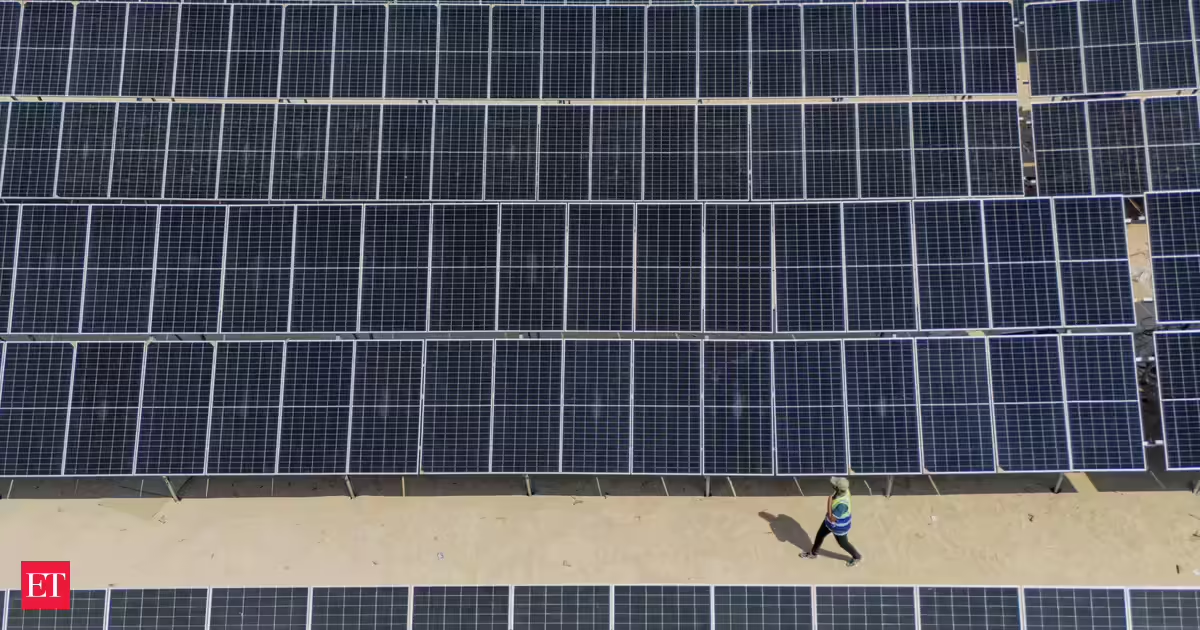
Omer Ashraf, Chief Financial Officer of Fauji Cement Co. in Pakistan, is unfazed by the ongoing conflict in Iran, as his company reaps the benefits of solar energy. Since installing its first solar array in 2019, Fauji Cement has expanded to a total capacity of 69 megawatts across five main sites, contributing 23% to the company’s electricity needs. The cost of solar energy is about 5 to 6 rupees (approximately two cents) per kilowatt hour, significantly lower than grid prices.
The shift from traditional gas and grid power to solar is not unique to Fauji Cement. As energy demand rises, many industries in Pakistan and India are increasingly utilizing renewable energy sources. With the instability impacting the Strait of Hormuz, there is a growing trend among energy-intensive businesses to adopt more cost-effective renewable options.
In stark contrast, Bangladesh, often regarded as South Asia’s economic success story, has faced setbacks due to a reliance on liquefied natural gas (LNG). The recent Iranian attacks on Qatar’s Ras Laffan LNG terminal have damaged a critical part of global supply, making a fifth of global LNG supplies offline.
The textile sector demonstrates the potential of solar energy in accelerating economic development. In India, apparel factories increasingly leverage renewable sources, securing around 28% of their electricity needs from green energy. Leading firms like Pakistan’s Nishat Mills Ltd. and Interloop Ltd. have made substantial investments in solar energy, while Bengaluru-based Gokaldas Exports Ltd. derives up to 79% of its energy from renewable sources.
In Bangladesh, the transition to renewable energy has been slower, with only 1.6 gigawatts of solar energy connected nationwide. High import tariffs on photovoltaic equipment have obstructed rooftop solar deployment, while reliance on LNG has led to doubled imports since the Ukraine war began. This dependency has forced Bangladeshi utilities to pivot towards coal—a more expensive alternative—affecting their cost advantage in the global market.
As countries navigate the ongoing energy crisis, Pakistan is faring better, with recent reports indicating a $12 billion reduction in spending on imported LNG and oil. This is attributed to local solar power growth, which has reached one-fifth of the country’s grid power. Meanwhile, Bangladesh’s utilities are now contending with rolling blackouts and rising energy-related costs affecting garment worker wages.
In the broader context, as the chaos of 2026 unfolds amidst geopolitical tensions, the traditional marketing narratives surrounding gas as a “stabilizing force in the energy system” have fallen flat. Future gas producers will need to re-evaluate their strategies to convince customers of the reliability and necessity of gas supply, particularly in light of recent disruptions and the rapid adoption of renewable energies in neighboring regions.
The content above is a summary. For more details, see the source article.









