


Key Takeaways
- Zhang Tong employs advanced technology such as drones and smart machines on his 300-hectare wheat farm in Shandong Province.
- China’s agricultural landscape is shifting towards automation and data-driven methods, with aims to increase grain production under the 15th Five-Year Plan.
- Farmers like Yu Long are utilizing sensors and water-saving technology to optimize yields and reduce resource waste across large agricultural operations.
Technological Innovation in Agriculture
Zhang Tong, a 36-year-old farmer in Shandong Province, is revolutionizing his family farm along the Yellow River by integrating modern technology with traditional practices. Utilizing drones and smart machinery, he effectively manages his 300 hectares of wheat fields. A drone surveys and maps the farm, while precision irrigation systems reduce water consumption by nearly 30 percent by delivering water and nutrients directly to the roots, likening their function to human blood vessels.
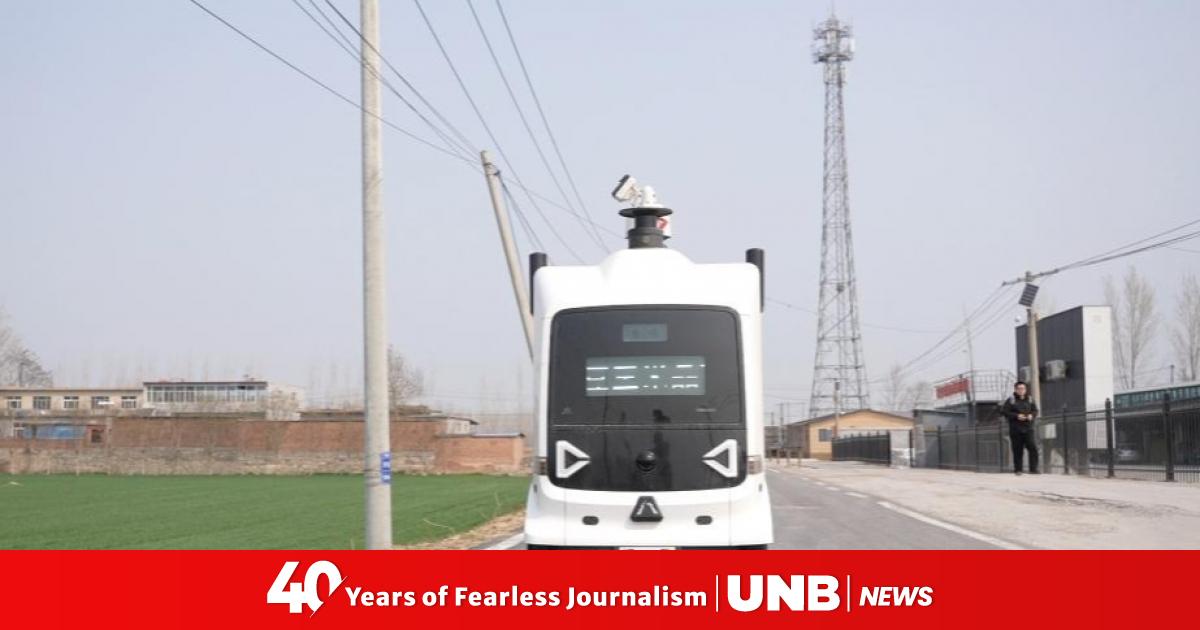
Since launching his farming journey in 2019, Zhang increasingly relies on automation. Intelligent seeders completed the planting of his entire farm within a month, and a fertilizer blender customizes nutrients according to soil analysis. Driverless harvesters and unmanned vehicles monitor crop health and manage pest control, contributing to an impressive annual wheat yield of 3,000 tonnes.
This technological shift is not unique to Zhang; it reflects a broader transformation in Chinese agriculture. Across the country, innovative farming practices are emerging. In southern regions, rice seedlings flourish in climate-controlled environments, while northern winter wheat benefits from aerial management. The traditional image of farmers laboring with manual tools is rapidly being replaced by operations driven by artificial intelligence, robotics, and sophisticated data analytics.
Zhang is also exploring innovative methods like soybean-corn intercropping and specialized seeders to optimize harvest timing. Researchers, including Feng Lingyang from Peking University, assist farmers by employing techniques like computer vision, machine learning, and gene editing to enhance yields and create new income opportunities.
In 2022, China achieved a record grain production of 715 million tonnes. With the objectives outlined in the 15th Five-Year Plan (2026–2030), the country aims to increase production to 725 million tonnes, focusing on stabilizing rice and wheat production, while expanding corn and soybean cultivation. Experts assert that technology will be critical in reaching these ambitious targets.
On a neighboring farm, over 500 sensors monitor environmental factors like soil moisture and temperature across 660 hectares. Yu Long, general manager of Jinan Chengfa Agricultural Technology Co., aims to decrease grain loss by 5 percent and enhance yields by 15 percent while reducing fertilizer and pesticide use. He highlights improvements like water-saving sprinklers and larger harvesters to mitigate losses.
The transformation of agricultural practice along the Yellow River marks the dawn of a new era in Chinese farming, where science and technology redefine the methods used to sustain the nation’s 1.4 billion people.
The content above is a summary. For more details, see the source article.









