


Key Takeaways
- Search efforts for a missing U.S. pilot intensify amid ongoing tensions between the U.S. and Iran.
- Iran’s foreign minister hinted at a willingness for peace talks, but Tehran remains defiant against U.S. demands.
- Military engagements continue, with both nations conducting airstrikes targeting each other’s assets.
U.S.-Iran Tensions Escalate Amid Ongoing Conflict
On Saturday, Iranian forces intensified their search for a missing U.S. pilot after two warplanes were downed in the region. This marked a significant point in the conflict, now in its sixth week, with continued risks for U.S. and Israeli aircraft despite reassurances from President Donald Trump and Defense Secretary Pete Hegseth about U.S. air superiority.
The unconfirmed fate of a possible U.S. service member comes on the heels of Trump’s threats to retaliate against Iran, aiming to bring the nation “back to the Stone Ages.” The ongoing war has already resulted in significant casualties, an energy crisis, and adverse effects on the world economy. While Iran’s leadership has shown resilience, Foreign Minister Abbas Araqchi expressed appreciation for mediation efforts from Pakistan, yet reiterated Iran’s position on the war’s legitimacy, stating, “We care about the terms of a conclusive and lasting END to the illegal war that is imposed on us.”
Trump reiterated his ultimatum to Iran, stating, “Remember when I gave Iran ten days to MAKE A DEAL or OPEN UP THE HORMUZ STRAIT. Time is running out – 48 hours before all Hell will reign down on them.” The Strait of Hormuz has seen increased hostilities, with Iran reportedly attacking a vessel linked to Israel, igniting tensions further.
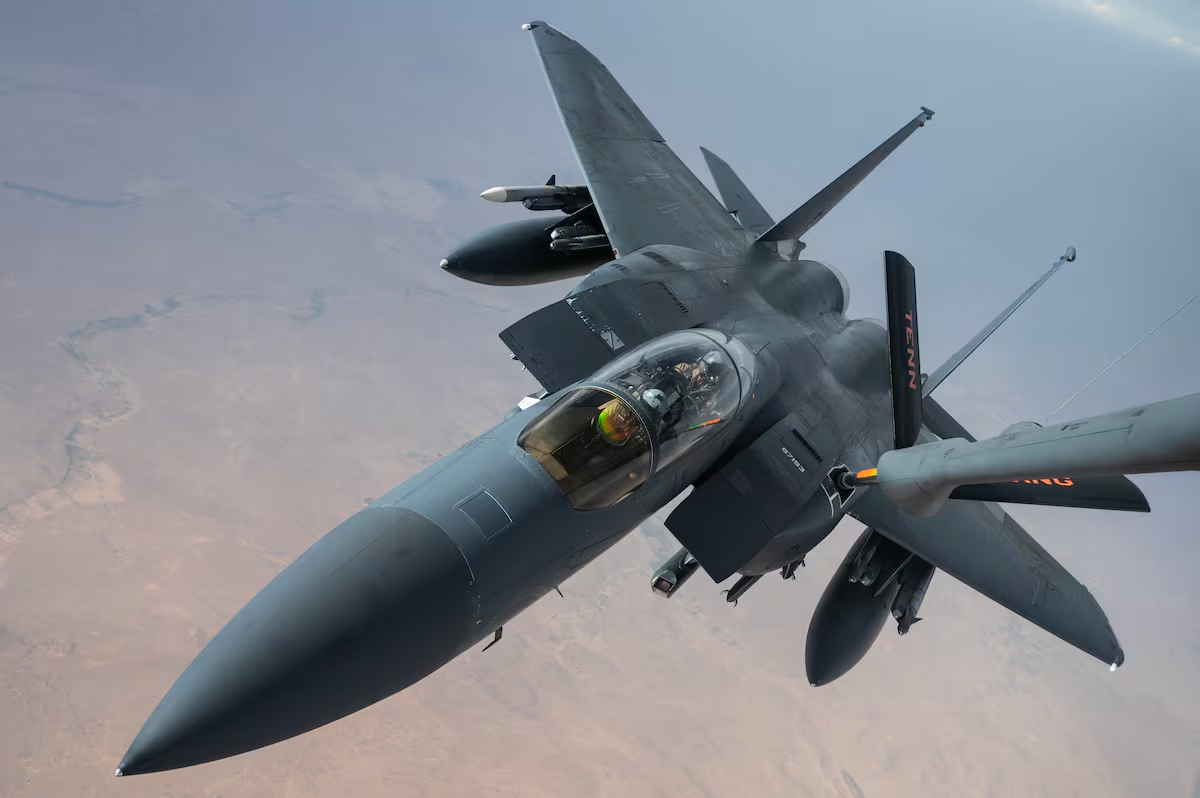
Iran claimed responsibility for downing a U.S. F-15E jet and reported engagement with two Black Hawk helicopters involved in the pilot search. Although the helicopters were able to evade Iranian fire, the U.S. military’s assessment of the incident’s injuries remains unclear. Tehran’s Revolutionary Guard Corps indicated that search operations were ongoing near the crash site, with a local governor promising rewards for any captures of U.S. troops.
Iran’s recent military activities included test-firing new air defense systems. A spokesperson announced enhanced capabilities were being constantly unveiled to counter perceived threats, stating, “The enemy should know that we rely on new air defense systems built by the young, knowledgeable, and proud people of this country.”
In a separate development, both nations’ military forces continued to engage each other directly. Iranian officials announced missile and drone strikes against Israeli targets, as well as attacks on U.S. installations in Kuwait and Bahrain, highlighting the escalating conflict.
Domestically, President Trump’s political landscape is becoming increasingly precarious amid rising gas prices and plummeting approval ratings. Discussions about a cabinet reshuffle have surfaced, especially following the removal of Attorney General Pam Bondi, in an effort to recalibrate his administration’s approach amidst persistent challenges.
The conflict is further complicated by recent air strikes reported in Southwestern Iran, including attacks on a petrochemical zone and near the Bushehr nuclear plant, resulting in casualties. However, operations at the nuclear facility were unaffected according to state media.
As the Israeli military continues its operations against Iranian-backed Hezbollah in Lebanon, tensions between the U.S. and Iran show no sign of abating. Experts suggest that the current geopolitical situation has placed the U.S. in a difficult position, with increasing pressure from various stakeholders.
The content above is a summary. For more details, see the source article.









