


Key Takeaways
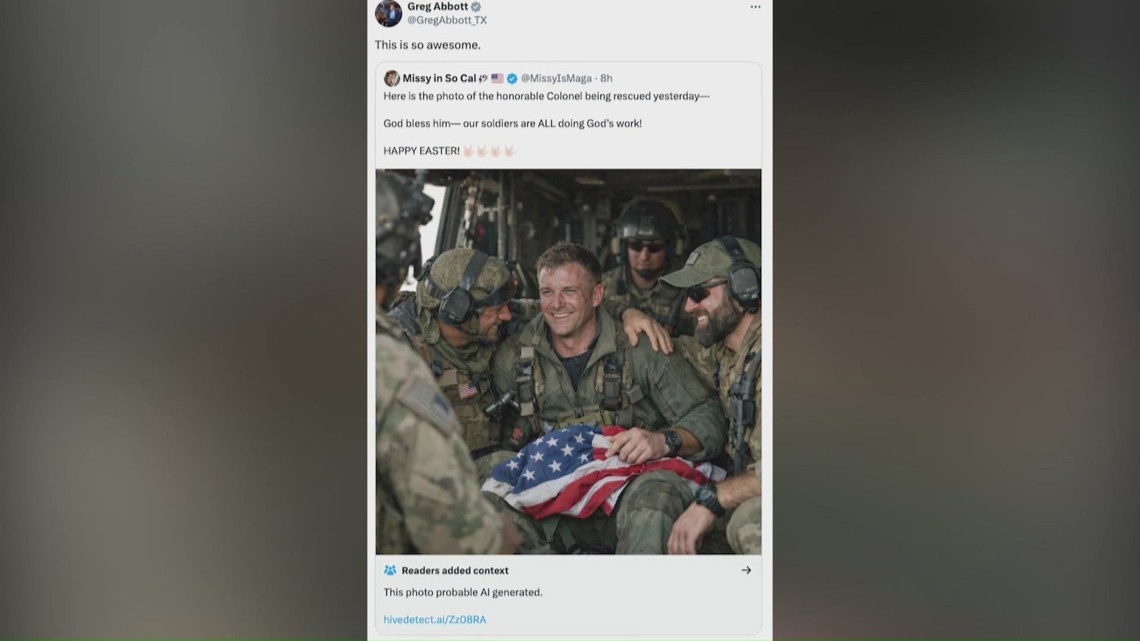
- Texas Governor Greg Abbott faced backlash for sharing an AI-generated image inaccurately depicting a rescue of a U.S. pilot in Iran.
- The rising use of AI in political campaigns raises concerns about misinformation and lack of regulation.
- Experts urge caution, emphasizing the importance of verifying sources and being skeptical of digital images.
Controversy Surrounding AI-Generated Image
After a daring rescue operation deep inside Iran, Texas Governor Greg Abbott sparked criticism for sharing an AI-generated image that falsely depicted the event. On Easter Sunday, Abbott reposted a misleading image on X, originating from an account named “Missy in So Cal,” that portrayed a fabricated scene of military personnel celebrating the rescue of a U.S. airman. Although the rescue was real, Abbott’s post featured an AI-created image, leading to its prompt tagging as such.
The U.S. military successfully rescued the second crew member of an F-15E fighter jet downed in Iran, who had been trapped for nearly two days. During the rescue, intelligence efforts involved the CIA and strategic destruction of U.S. aircraft to prevent capture by Iranian forces. President Trump reported that the injured pilot would recover.
Abbott deleted his post after several hours when it drew significant backlash. Commentators, including Kevin Frazier from the University of Texas, noted that distinguishing between real and AI-generated images is increasingly challenging. This incident highlights a growing trend of misinformation in the digital age, especially amid sensitive situations like conflicts, elections, and politically charged events.
As AI-generated content becomes more prominent, experts warn that the technology makes it easier for anyone, including political candidates, to create compelling yet false narratives. The prevalence of AI in political ads has raised alarm bells, as it poses risks of misleading voters. For instance, Texas Senator John Cornyn’s campaign used AI for controversial imagery regarding rival Attorney General Ken Paxton, demonstrating the potential misuse of this technology.
Current Texas laws restrict deepfake use in state races but do not address federal races, allowing for the unregulated use of AI in political advertising at this level. A proposed bill aiming for transparency in AI usage in campaign ads failed to pass the Texas Senate.
Experts emphasize that voters must remain vigilant and skeptical about digital content, especially in today’s fast-evolving media landscape. Kevin Frazier advocates for a culture of media literacy, urging voters to inquire about candidates’ use of AI. Liam Mayes, a media studies lecturer, reinforces the need for careful source verification, stating that crucial discrepancies between AI-generated images and reality may soon become impossible to discern.
As the line between fact and fiction increasingly blurs, it is vital for individuals to foster discourse about reliable information sources and to stay informed about the tools that shape political narratives. The conversation surrounding the ethical use of AI in media is essential as society navigates the implications of this burgeoning technology.
The content above is a summary. For more details, see the source article.









