


Key Takeaways
- Laos has inaugurated a large-scale solar power project, marking a significant step in Southeast Asia’s renewable energy efforts.
- The 1 GW solar installation is expected to generate approximately 1.65 billion kilowatt hours annually, reducing coal use and carbon emissions significantly.
- Developed by China General Nuclear Power Group, the project enhances Laos’s energy stability while underscoring regional cooperation in clean energy.
Project Overview
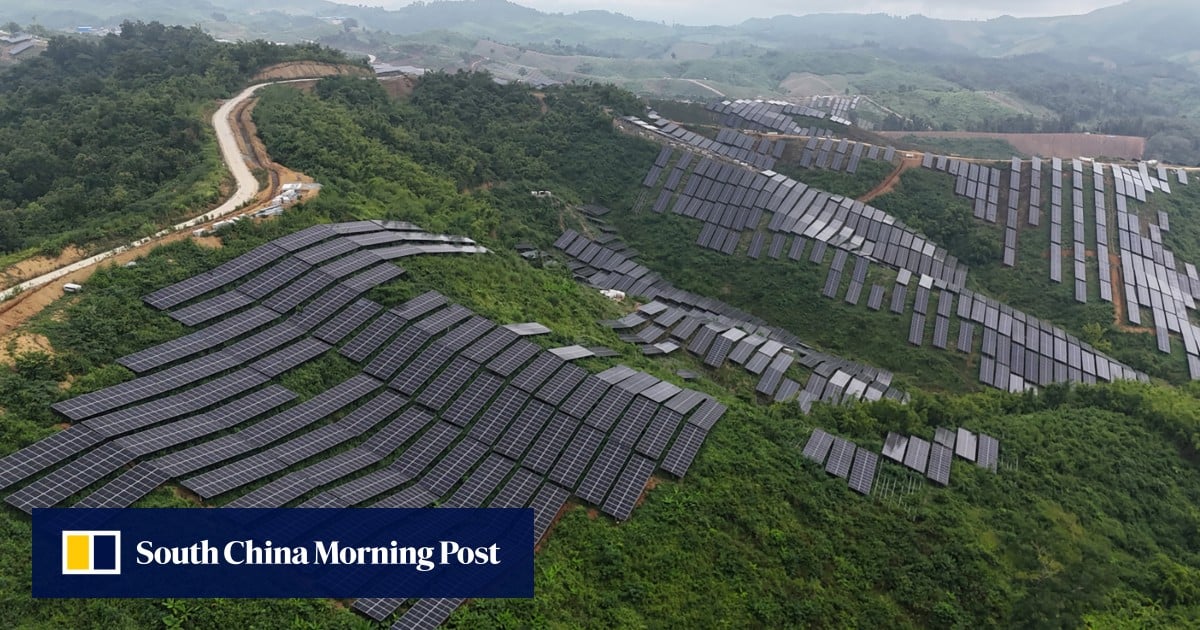
China has successfully completed one of Southeast Asia’s largest solar power projects in Laos, aligning with regional trends toward reducing fossil fuel dependency amid ongoing global energy challenges. The initial phase of the 1 gigawatt (GW) solar project was connected to the grid on Tuesday, marking Laos’s first large-scale mountainous photovoltaic installation.
Located in northern Laos, this solar facility is anticipated to produce about 1.65 billion kilowatt hours of electricity annually. According to China Central Television (CCTV), this output could result in savings of roughly 500,000 tonnes of standard coal, alongside a decrease in carbon dioxide emissions of around 1.3 million tonnes.
The project was undertaken by China General Nuclear Power Group (CGN), headquartered in Shenzhen and recognized as China’s largest nuclear power operator. The installation is composed of approximately 2.23 million solar panels and is linked to the China-Laos 500-kilovolt (kV) power interconnection project, which successfully achieved connectivity earlier this year in February.
Wang Yang, head of local production and operations at CGN, emphasized the significance of the project, stating that it would provide reliable and clean electricity to Laos while fostering regional energy complementarity. He also mentioned the company’s commitment to prioritizing safety and operational efficiency to enhance collaboration.
This initiative not only contributes to Laos’s energy landscape but also illustrates the broader commitment of Southeast Asian nations to embrace renewable energy sources in the face of volatile global energy markets. Through projects like this, countries are taking concrete steps to pivot from traditional energy sources to cleaner alternatives, thus promoting sustainability and regional energy security.
The content above is a summary. For more details, see the source article.









