


Key Takeaways
- India installed a record 6.05 GW of wind power capacity in FY26, a 46% increase from the previous year.
- Key states like Gujarat, Karnataka, and Maharashtra led the capacity additions, supported by a mix of standalone and hybrid projects.
- The government has implemented various measures to bolster the wind energy sector, aiming for 500 GW of non-fossil fuel capacity by 2030.
Record Wind Capacity Addition in India
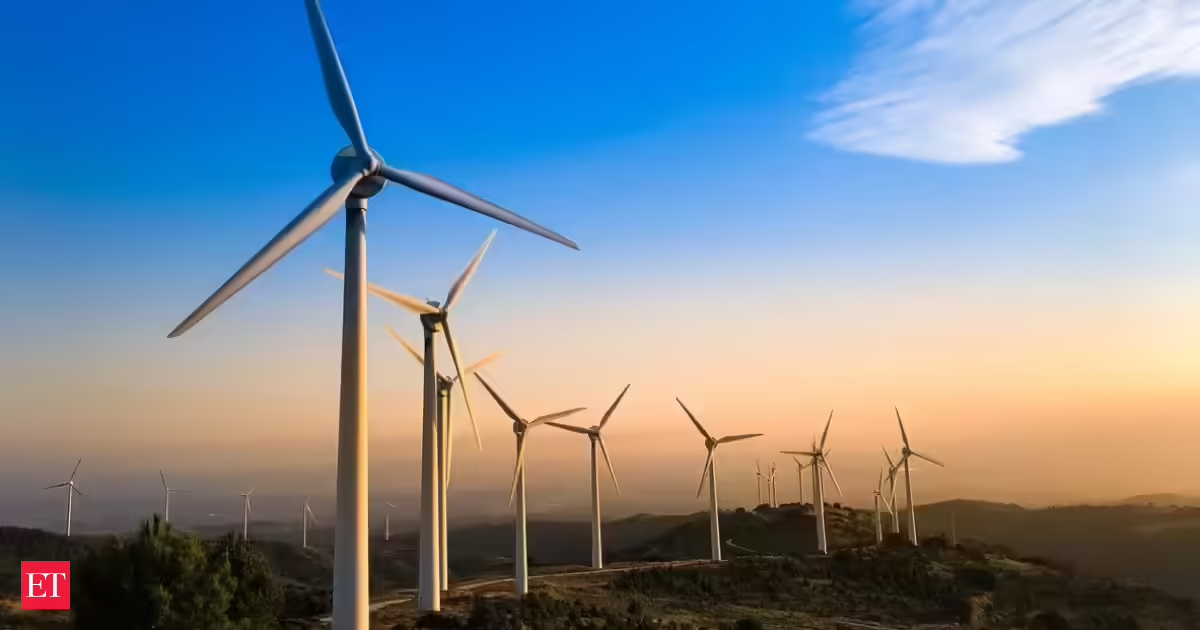
India has reached a historic milestone in its renewable energy sector, recording the highest annual wind capacity addition to date. For the fiscal year 2025-26, the country installed 6.05 GW of wind energy, marking a significant 46% increase from the 4.14 GW added in the previous year, FY25. This achievement surpasses the earlier record of 5.5 GW set in FY17 and brings the nation’s total wind power capacity to over 56 GW, according to the Ministry of Renewable Energy.
The progress has predominantly stemmed from the efforts of key states, including Gujarat, Karnataka, and Maharashtra. These states have taken the lead by deploying a combination of standalone wind installations and hybrid projects that integrate both wind and solar energy. This diversification has been instrumental in meeting the growing demand, particularly from commercial and industrial consumers, bolstered by the expansion of green energy open access.
To sustain this momentum, the Indian government has introduced an array of supportive measures for the wind energy sector. Notably, there will be a concessional customs duty on essential components and a waiver of inter-state transmission system (ISTS) charges that will remain in effect until June 2028. Additionally, the establishment of dedicated renewable energy consumption obligation frameworks has further strengthened the commitment to wind energy development. The technical support provided by the National Institute of Wind Energy has been pivotal in enhancing project development initiatives.
The evolution of India’s wind energy program, which commenced in the early 1990s, has positioned the country among the largest wind energy producers globally. This growth is underpinned by a well-established manufacturing framework and an expanding project ecosystem that collectively fuel advancements in renewable energy technologies.
The record wind capacity addition is anticipated to play a crucial role in diversifying India’s energy mix as it strives towards its ambitious goal of 500 GW of non-fossil fuel capacity by 2030. Furthermore, authorities are actively working to ensure that this upward trajectory continues in the years ahead, aligning with both national energy security and climate change mitigation objectives.
The content above is a summary. For more details, see the source article.









