


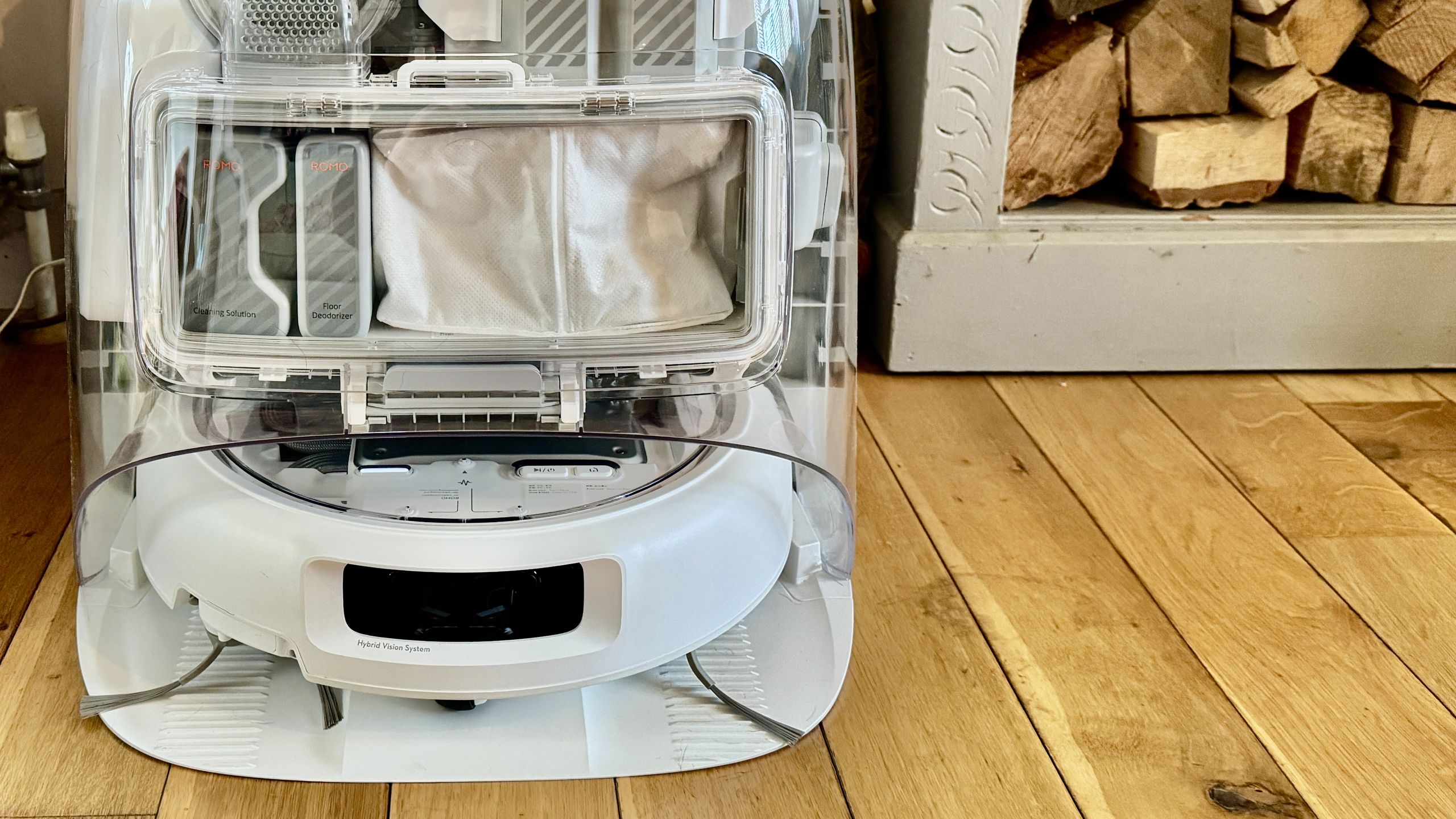
Key Takeaways
- DJI’s Romo P robot vacuum utilizes advanced navigation technology derived from their drone systems, offering remarkable obstacle detection and avoidance.
- Equipped with dual fisheye vision sensors and solid-state LiDAR, the Romo P can navigate around both large and tiny obstacles with precision.
- In comparative tests, the Romo P demonstrated faster navigation and superior obstacle avoidance compared to the Roborock Saros 10R, earning praise for its intelligent cleaning strategies.
DJI, a leader in the drone industry, has ventured into the robot vacuum market with the Romo P, which showcases advanced navigation technologies. The integration of these systems raises the bar for consumer robot vacuums, leveraging DJI’s expertise in obstacle navigation and avoidance.
The Romo P excels in obstacle avoidance, utilizing a cutting-edge navigation system that combines dual fisheye vision sensors with three LiDAR units. This configuration enables ‘millimeter-level obstacle sensing,’ allowing the vacuum to detect not only large furniture but also thin objects as small as 2mm. This skill is particularly impressive for avoiding common household items like phone cables and toys, which pose challenges for many robot vacuums.
What sets the Romo P apart is its ability to make intelligent decisions based on the data it gathers. Using onboard machine learning algorithms, the vacuum can differentiate between types of obstacles and choose appropriate cleaning paths. During testing, the Romo P exhibited contextual awareness, weaving closely around furniture legs for optimal cleaning while avoiding smaller items like ketchup spills during mopping.
In a practical review, the Romo P was subjected to an obstacle course designed to assess its navigation skills. It successfully maneuvered around a variety of items, showing speed and agility akin to an Olympic athlete. The testing involved comparing the Romo P against the established Roborock Saros 10R, known for its decent obstacle avoidance capabilities.
In the first test, both robot vacuums were tasked to navigate through a range of obstacles. While the Roborock Saros 10R encountered some hurdles, managing to complete the task relatively well, the Romo P performed impressively by completing the course in 48 seconds, albeit with a few missteps over some obstacles.
In subsequent tests, the Romo P displayed refined navigation characteristics, especially when adjusted to different modes in the DJI Home app. When set to ‘Obstacle Avoidance Priority,’ it flawlessly navigated through a highly cluttered environment, showcasing its advanced sensing abilities. It completed the course with fewer detours and no collisions compared to the Saros 10R.
These comparisons illustrate that, although the Saros 10R has commendable obstacle avoidance capabilities, the Romo P’s navigation technology offers a quicker and more efficient cleaning solution, solidifying its position in the market. With such innovations, DJI’s entry into the household sector may redefine consumer expectations for robotic cleaning appliances.
The content above is a summary. For more details, see the source article.









