


Key Takeaways
- Guyang-ri village utilizes solar energy profits to fund communal meals and welfare initiatives.
- The South Korean government aims to expand the “solar income village” program to 2,500 villages by 2030.
- Concerns persist regarding grid capacity and dependency on fossil fuels amidst a clean energy transition push.
Community Impact of Solar Energy
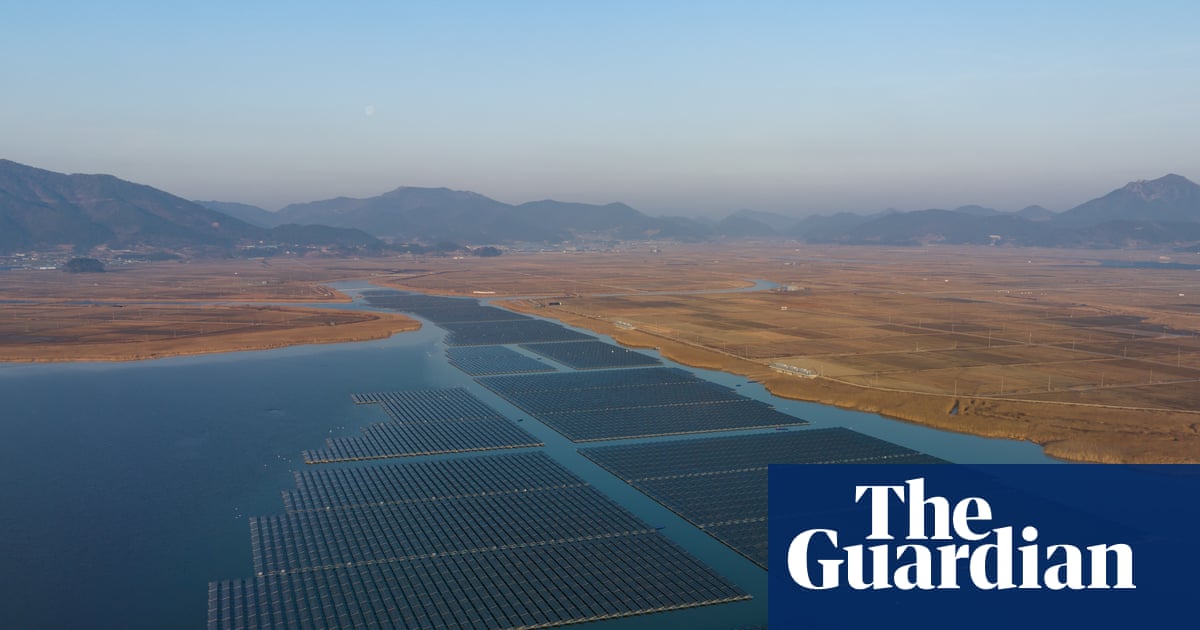
In Guyang-ri, a farming village located 90 minutes southeast of Seoul, residents benefit from a unique solar initiative. A one-megawatt solar installation generates approximately 10 million won ($6,800) monthly, funding free communal lunches six days a week. Village chief Jeon Joo-young emphasizes that these meals foster stronger social bonds, transforming the once isolated community into a supportive network.
Before the solar project’s launch in 2022, the village of about 130 people lacked basic services and infrastructure. Now, solar revenue supports not only communal meals but also a bus service for the elderly, a table tennis facility, and cultural activities. Villagers collectively decided to invest in welfare rather than distributing profits individually, resulting in deeper connections among residents.
Guyang-ri represents a pilot for South Korea’s “solar income village” program, which aims to expand to 2,500 villages by 2030, up from approximately 150 currently. This initiative aligns with President Lee Jae Myung’s clean energy goals, emphasizing the need for energy independence as the country depends heavily on imported fossil fuels. The government’s plan includes generating 20% of electricity from renewable sources by 2030 and phasing out coal by 2040.
To accelerate this transition, a supplementary budget allocates around 500 billion won for energy improvements, including funding for grid upgrades and renewable energy projects, raising annual support to a record 1.1 trillion won ($670 million). Additionally, 400 billion won in low-interest loans will assist villages in deploying solar panels more rapidly.
However, challenges arise as renewable energy expansion strains the existing electricity grid, particularly in southern regions. Many renewable projects await grid connection, while electricity pricing policies hinder investment in infrastructure improvements. Concerns have been raised regarding the Korea Electric Power Corporation (Kepco), which manages national energy distribution. Critics argue that government-subsidized electricity has led to a perception of power as a low-cost public good, complicating necessary reforms.
The government is also addressing supply chain issues related to the dominance of Chinese manufacturers in solar panel production, introducing domestic module requirements and a carbon footprint certification for imports. Despite President Lee’s commitment to clean energy, environmental advocates warn that actual progress may be impeded by conflicting policies that subsidize fossil fuels while promoting renewable energy.
While energy transition financing is underway, some coal plant closures have been postponed, and certain nuclear reactors are being restarted to stabilize the grid. The ongoing situation highlights a pivotal moment for South Korea’s energy future, wherein the government’s readiness to embrace transformative changes remains uncertain.
The content above is a summary. For more details, see the source article.









