


Key Takeaways
- France is testing its domestically developed rocket artillery systems to assess capabilities compared to foreign options, with a key decision expected soon.
- The French Army prioritizes these systems for potential major engagements, aiming to acquire 26 systems by 2030 as replacements for aging artillery.
- France is also advancing a land-based ballistic missile and various munitions, preparing for a potential major conflict by 2030.
Progress on French Rocket Artillery Development
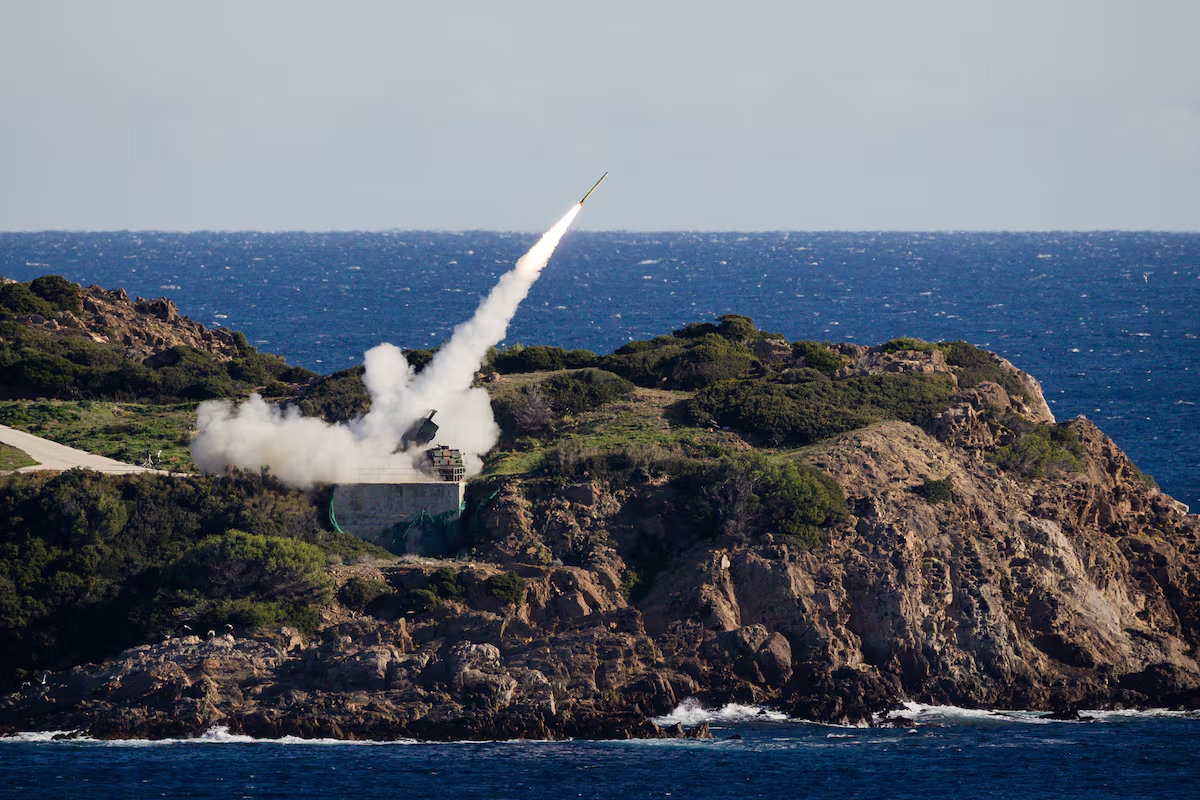
France is advancing toward a decision on its future rocket artillery system, with domestic trials of new equipment conducted this month. Patrick Pailloux, head of the Directorate General for Armament, confirmed the successful initial tests, with further evaluations scheduled. The French-developed system is being compared to foreign alternatives, including options from Hanwha Aerospace, Elbit Systems, and Lockheed Martin.
The French Army views this artillery system as essential for responding effectively in major conflicts. “It is a capability they absolutely must have,” Pailloux emphasized, noting the need for timely delivery and cost considerations. The plan includes purchasing 26 systems with 300 munitions to form a rocket artillery battalion by 2030, ultimately replacing the aging Lance-Roquettes Unitaire units, which are set to be decommissioned by 2027.
France faces challenges in balancing autonomy with development speed, cost, and operational timelines. To enhance its defense capabilities, the country is also investing €1 billion ($1.2 billion) to develop a land-based ballistic missile with a range of 2,500 kilometers. This missile aims to use a maneuverable hypersonic glide vehicle to optimize military efficacy. Although the current target completion date is set for 2035, Pailloux acknowledged the need to expedite progress.
The Directorate General for Armament plans to procure more than €6 billion in munitions this year, including SCALP cruise missiles and various air-defense systems, alongside a €320 million budget for industrial enhancements. Pailloux stressed the importance of preparing for a war of attrition, stating, “the side that still has ammunition left wins.”
In conjunction with artillery development, work will commence on the future F5 standard of the Rafale fighter jet this year. The combat aviation budget totals €3.4 billion, featuring projects such as the new T-REX engine with increased thrust and upgrades to radar and sensors. An accelerated development initiative for longer-range air-to-air missiles capable of exceeding the current Meteor’s capabilities is also underway, labeled as “very ambitious” by Pailloux.
Additionally, the Chorus one-way drone will be produced, targeting a flying prototype by year-end. This drone, designed to have a range of 3,000 kilometers and carry a payload of 500 kilograms, will be developed with cost considerations in mind, aimed at being competitively priced compared to other munitions.
Overall, these initiatives collectively reflect France’s commitment to enhancing its military capabilities in anticipation of evolving conflicts. The emphasis on innovation, speed, and strategic investments in advanced weaponry illustrates a proactive approach to national defense in a changing security landscape.
The content above is a summary. For more details, see the source article.









