


Key Takeaways
- Chinese EV makers are showcasing their advancements in in-car chip technology at the Auto China show.
- Companies like Xpeng and Nio are developing their own chips to enhance autonomous driving and in-car entertainment systems.
- Xpeng claims its Turing chip surpasses Nvidia’s existing technology, highlighting the rapid evolution of smart vehicle features.
Advancements in In-Car Chip Technology
Chinese electric vehicle (EV) manufacturers and supply-chain vendors are making notable strides in developing in-car chips, showcasing their innovations at the Auto China show in Beijing. This event highlights the rapid advancements in China’s automotive sector as it increasingly focuses on smart, autonomous vehicles.
Leading companies in the EV market, including rivals Xpeng and Nio, as well as lidar sensor manufacturer Hesai Group, are creating their own chips designed to enhance both autonomous driving capabilities and in-car entertainment systems. These chips are set to provide computing power that rivals major products from industry leader Nvidia, thereby solidifying the global appeal of Chinese-made electric vehicles.
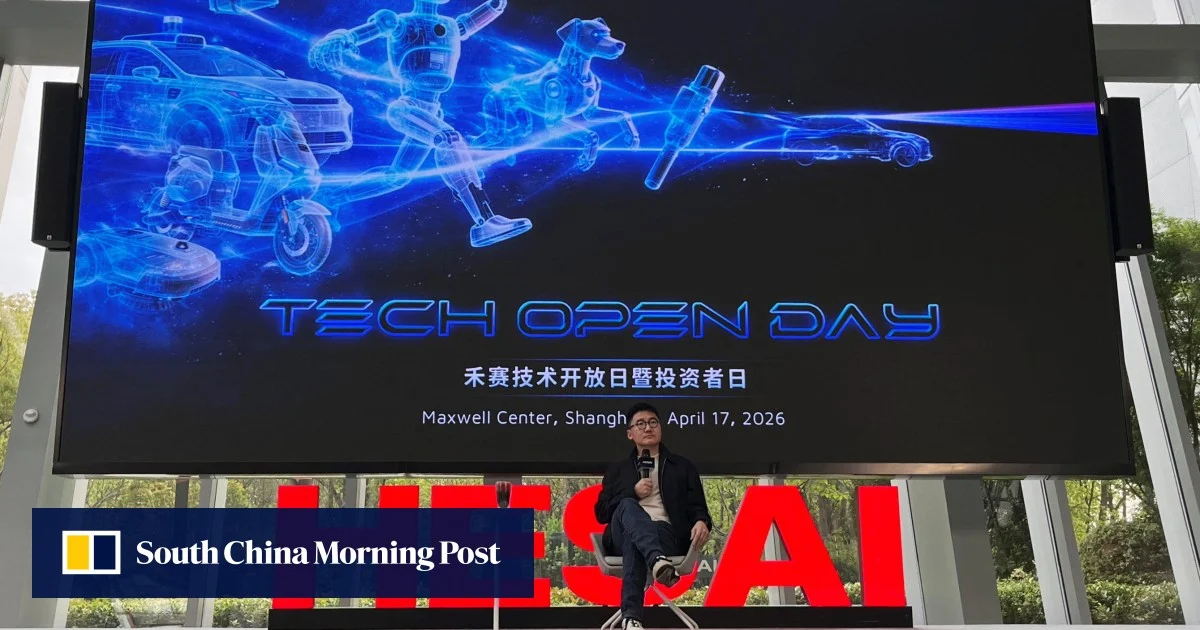
David Li Yifan, CEO of Hesai, emphasized the necessity for self-developed chips during a recent media briefing, stating, “If we use chips provided by third-party suppliers, we cannot guarantee that the chips would cater to our needs in developing lidar sensors.” He explained that creating proprietary chips allows them to meet specific requirements that are not addressed by existing suppliers.
As demand for computing power rises, Chinese EV manufacturers are increasingly investing in smart technologies, leveraging artificial intelligence and digital innovations to push the boundaries of vehicle automation and comfort. The development of a System-on-Chip (SoC) that can efficiently process data from a vehicle’s cameras and sensors is key to enabling new intelligent features.
Xpeng has made noteworthy progress with its Turing chip, designed for level 4 autonomous driving. According to He Xiaopeng, the company’s CEO, the Turing chip is three times more powerful than Nvidia’s Drive Orin X, which is currently used in their smart vehicles. This progress underscores the competitive landscape among Chinese EV makers as they strive to enhance the driving experience through advanced technological solutions.
Overall, the show serves as a platform for demonstrating how Chinese automakers are increasingly self-reliant in their chip development, marking a significant shift in the industry. The advancements showcased at Auto China reflect the potential of Chinese firms to compete on the global stage, reinforcing their commitment to innovation and consumer demand for more sophisticated electric vehicles.
The content above is a summary. For more details, see the source article.









