


Key Takeaways
- West Virginia is launching a $28.56 million initiative to enhance rural healthcare and workforce through three key programs.
- Eligible organizations can access funding via the state’s procurement system aimed at improving public health outcomes.
- The funding is part of a broader $199 million received from the federal Rural Health Transformation Fund for 2023.
State Investment in Rural Healthcare
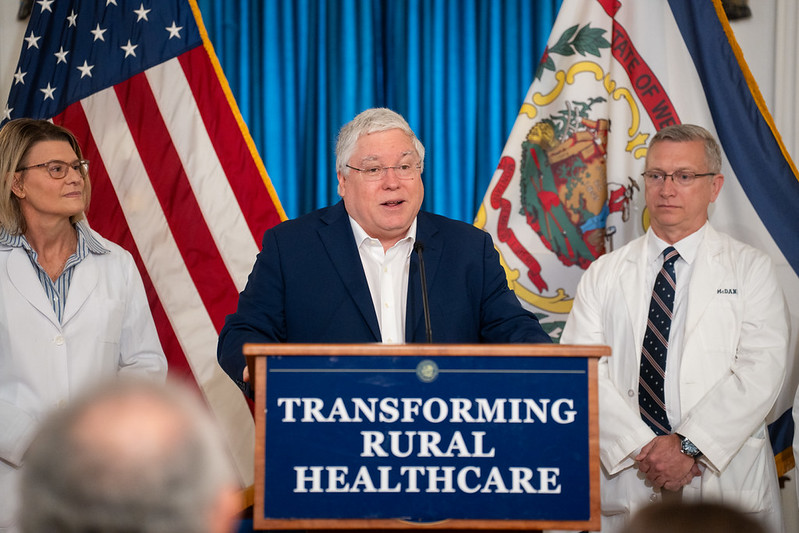
West Virginia Governor Patrick Morrisey has announced the availability of $28.56 million to strengthen the state’s rural healthcare infrastructure and its professional workforce. This funding is part of a larger federal grant aimed at three key programs: the Mountain State Care Force, HealthTech Appalachia, and the Connected Care Grid. Collectively, these initiatives are designed to expand workforce capacity, enhance health outcomes, promote health technology innovation, and improve connectivity in rural and underserved areas.
The state’s goal is to bolster the medical labor market, thereby improving public health and motivating more individuals to join the workforce in healthcare-related fields. Organizations that qualify can apply through the state’s procurement and grants management system at wvOASIS.gov.
Morrisey emphasized the importance of these resources, stating, “We did the work to bring this program to West Virginia, and now these resources are available to the organizations on the ground that can put them to use.” He expressed optimism that deploying these funds will result in more citizens back in the workforce and healthier communities across the state.
State Health Secretary Arvin Singh described this funding as a crucial step towards transforming healthcare and the workforce within West Virginia. “By investing in long-term, system-level solutions through initiatives like the Mountain State Care Force, HealthTech Appalachia, and the Connected Care Grid, we are making meaningful, lasting investments in our healthcare workforce,” Singh noted. The focus remains particularly on ensuring that rural communities gain access to high-quality care both now and in the future.
Additionally, in late December, West Virginia officials announced that the state secured $199 million from the federal Rural Health Transformation Fund for the year. This figure is nearly double the guaranteed minimum for the first year. The entire allocation of $25 billion is being divided among the 50 states, with further discretionary funds distributed based on individual state applications reflecting rural needs and strategic planning.
The Rural Health Transformation Program, established under the “One Big Beautiful Bill Act,” aims to distribute $50 billion over five years across all states, addressing concerns that Medicaid changes could jeopardize existing rural healthcare systems. Nationally, annual disbursements range from $145 million to $281 million, emphasizing the critical need for enhanced rural healthcare support.
The content above is a summary. For more details, see the source article.









