


Key Takeaways
- The U.S. Navy plans to inactivate 14 ships during the current fiscal year, focusing on older vessels.
- Several submarines and guided-missile cruisers are set for recycling or conversion to logistics support assets.
- The Navy aims to phase out the Ticonderoga-class cruisers and Freedom-class combat ships by fiscal 2027.
Fleet Transition and Ship Retirement
The U.S. Navy is set to remove 14 ships from its fleet in the current fiscal year, according to an administrative message released on Sunday. This decision is part of a broader inactivation strategy for fiscal 2026, which includes plans to recycle, dismantle, or transition vessels into logistics support.
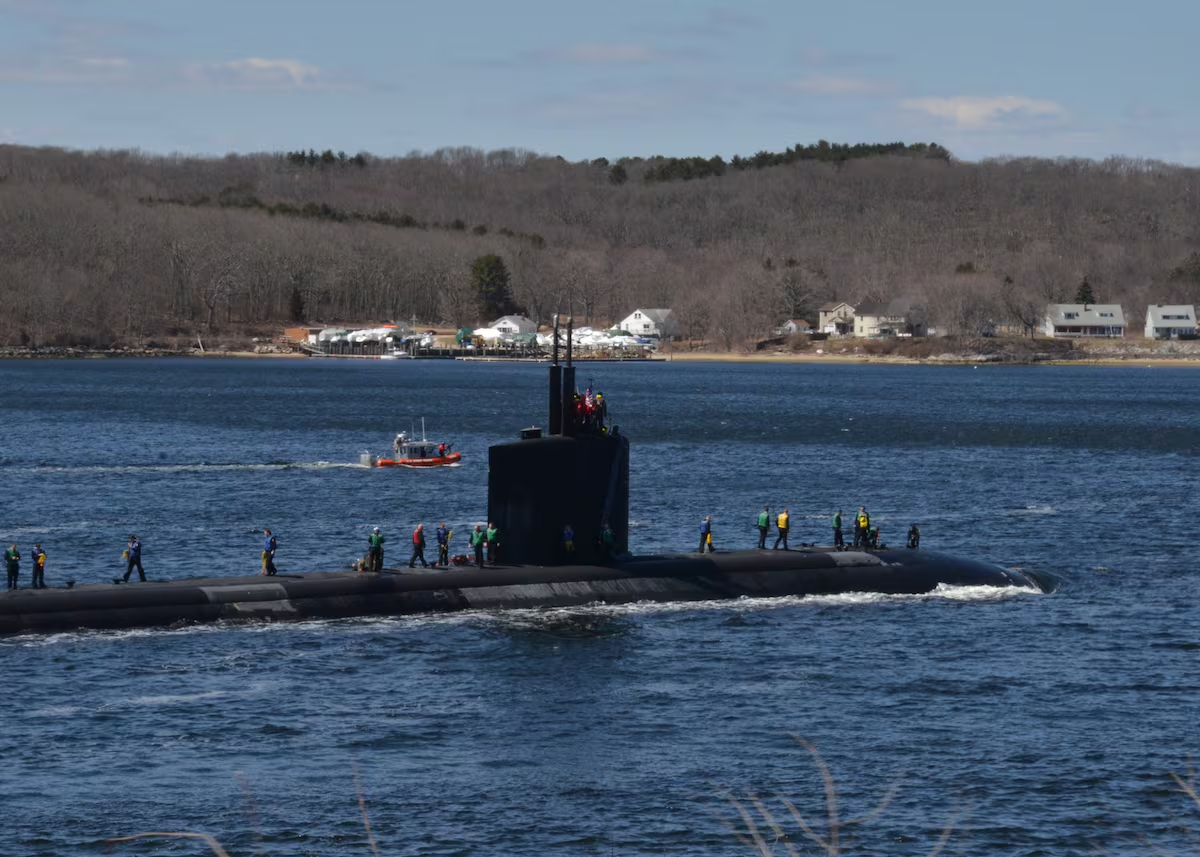
Among the ships earmarked for recycling are the Los Angeles-class submarines USS Newport News and USS Alexandria, as well as the Ohio-class guided-missile submarine USS Georgia. The Navy is phasing out the Los Angeles-class submarines, many of which have been in service for up to 40 years, to introduce newer Virginia-class submarines.
In addition, the Navy will transition several ships to logistics support assets. These include the Ticonderoga-class guided-missile cruisers USS Shiloh and USS Lake Erie, in addition to the Whidbey Island-class dock landing ship USS Germantown and the Henry J. Kaiser-class replenishment oiler, USNS John Ericsson. According to the administrative message, these logistics support assets will aid in parts cannibalization and equipment removal for other ships.
As of April 23, 2025, only 10 Ticonderoga-class cruisers remain in service. The Navy constructed 27 Ticonderoga-class vessels starting in 1980, but has progressively phased out these cruisers, with plans to retire the remainder by fiscal 2027. This class is notable for introducing the AEGIS Combat System, a sophisticated weapons platform that benefits from advanced radar capabilities to detect and engage targets.
Additionally, the Navy announced the dismantling of the Freedom-class littoral combat ship USS Fort Worth, which has experienced numerous mechanical issues, ineffective weapon systems, and escalating maintenance expenses.
The Navy will also transition several ships to the U.S. Maritime Administration, including the Watson-class vehicle cargo ships USNS Red Cloud, USNS Watkins, and USNS Pomeroy, as well as the Offshore Petroleum Distribution System vessel USNS Vadm. K. R. Wheeler and the Henry J. Kaiser-class replenishment oilers USNS Pecos and USNS Big Horn.
This series of changes reflects the Navy’s ongoing effort to modernize its fleet and aligns with the upcoming transformation to state-of-the-art vessels, ensuring operational readiness and efficiency in future military missions.
The content above is a summary. For more details, see the source article.









