


Key Takeaways
- India’s solar power output surged 24% YoY in Q4 FY26, contributing to record electricity generation amid peak demand.
- Peak electricity demand reached a record 256 GW on April 26, 2026, driven by growing daytime usage.
- Renewable energy curtailment remains high, with significant amounts of solar and wind energy curtailed during the quarter.
Renewable Energy Growth Amid Rising Demand
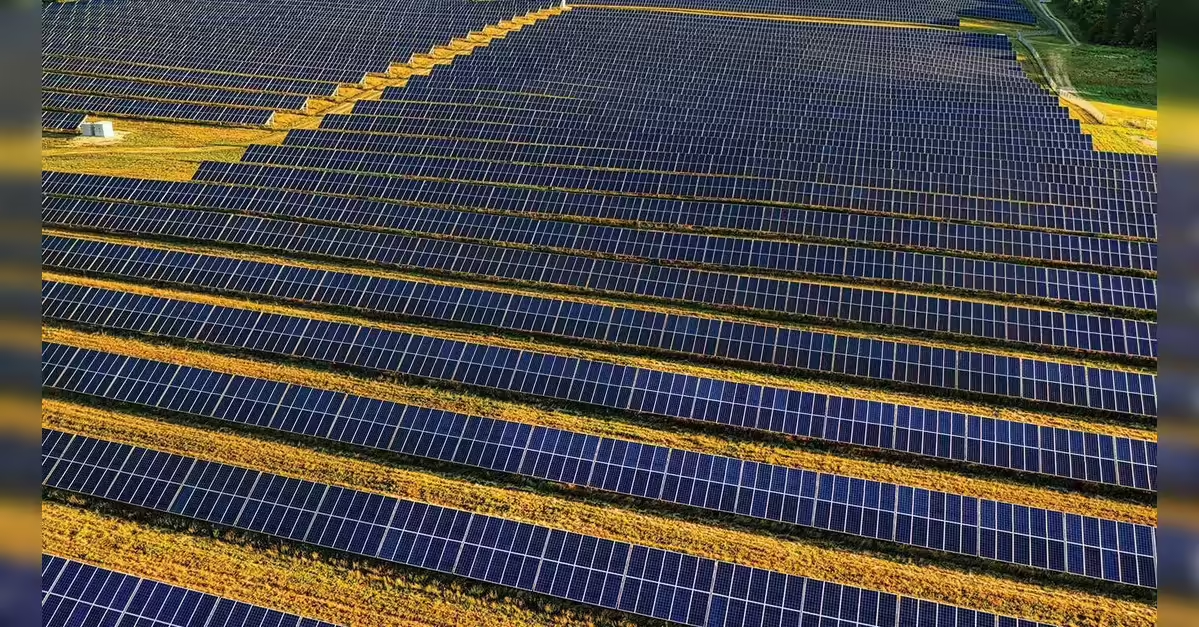
India’s renewable energy sector has made significant strides, evidenced by a 24% year-on-year increase in solar power generation during the fourth quarter of the financial year 2025-26 (Q4 FY26). This boost in output coincided with a record peak electricity demand of 256 GW on April 26, 2026, surpassing previous highs of 245 GW in January 2026 and 250 GW in May 2024.
Total electricity generation in Q4 FY26 reached 464 billion units (BU), reflecting a 3% increase compared to the previous year. Notably, non-fossil fuel sources drove this growth, with solar generation alone accounting for 48.9 BU. Wind energy saw an 11% rise, while nuclear and large hydro outputs also increased by 10% and 7%, respectively.
Despite these gains, the report from the Centre for Research on Energy and Clean Air (CREA) highlighted challenges in integrating renewables into the grid. Specifically, approximately 27 GW of solar energy and 4 GW of wind energy were curtailed due to grid congestion. Gujarat was identified as the region with the highest renewable curtailment issues, underscoring the need for improved grid management.
Electricity Demand Patterns
During the quarter, overall electricity demand grew nearly 3% year-on-year, marking the slowest Q4 growth since FY2020-2021. A notable trend was the alignment of peak demand within solar generation hours, with 88 of 90 days experiencing peak usage during those times. At the peak demand of 256 GW, thermal power remained the predominant energy source, contributing 165 GW or 67% of total demand. Solar power accounted for 48 GW, or roughly 20%.
At the state level, Maharashtra experienced the highest peak demand at 32 GW, followed by Gujarat at 25 GW and Uttar Pradesh at 23 GW.
Utilization Rates and Capacity Additions
Coal-based power plants saw a decrease in utilization, with the plant load factor dropping from 72% to 69% in Q4 FY26. Conversely, gas-based generation saw slight improvements, while solar capacity utilization slightly dipped from 23% to 22%.
On the capacity front, renewables dominated the additions during this quarter. A total of 16.2 GW of renewable capacity was commissioned, compared to 2.3 GW of thermal capacity and 0.5 GW of large hydro. Interestingly, all new thermal capacity added was coal-based, with no thermal units retired. Presently, India has 39.4 GW of coal-fired capacity under construction, although most projects remain in early development phases.
As emphasized by Manoj Kumar, an analyst at CREA, enhancing transmission networks and grid flexibility along with faster battery deployment could enable greater non-fossil source utilization during evening and nighttime demand. This highlights a path towards more sustainable energy management and integration in India’s rapidly evolving energy landscape.
The content above is a summary. For more details, see the source article.









