


Key Takeaways
- China is developing a stealth cruise missile under 4 meters, designed for J-20 and J-35 fighters, with a range of 1,330 km.
- The missile features advanced stealth technologies, including infrared cooling and a serrated exhaust nozzle, to reduce detection.
- This new missile offers a tactical advantage against U.S. carrier strike groups, retaining stealth from launch to target.
China’s Stealth Missile Development
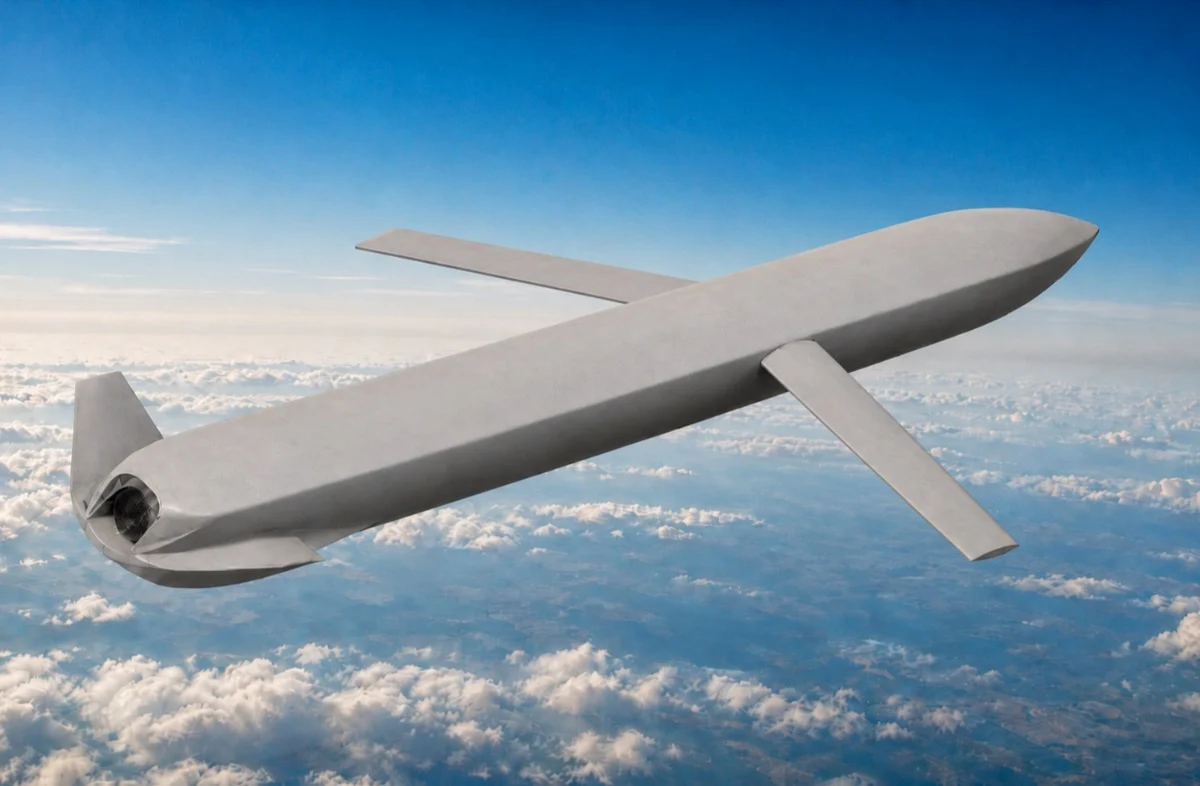
China is reportedly advancing its military capabilities with a new stealth cruise missile, as detailed in technical design documents shared on Weibo. This missile is engineered to fit within the internal weapons bays of the country’s fifth-generation stealth fighters, the J-20 and J-35. Measuring less than 4 meters in length and under 0.85 meters in diameter, the missile’s dimensions are optimized to maintain stealth by concealing the munitions from radar until launch.
The design incorporates a conventional fixed-wing layout, featuring a blended body and a serrated exhaust nozzle—both aimed at enhancing its stealth profile. The V-tail configuration serves a dual function, offering flight control while shielding engine exhaust from infrared detection. These design choices collectively aim to minimize the missile’s detectability across various sensor spectrums.
One notable aspect of the missile is its infrared suppression system, which integrates four cooling nozzles positioned around the engine exhaust. This feature injects cold air into the exhaust plume to mask heat signatures, while thermal insulation wraps the engine to further reduce heat transfer. This multi-faceted approach to infrared suppression enhances the missile’s stealth capabilities significantly.
The missile is confirmed to be subsonic, cruising at speeds around 0.71 Mach and reaching a maximum flight speed of 0.75 Mach, with a striking range of 1,330 kilometers. This subsonic capability is a strategic choice, allowing stealth features like aerodynamic shaping and infrared suppression to function more effectively. From platforms like the J-20 or J-35, this range presents a challenge to surface fleets in the Western Pacific, complicating defensive structures for U.S. carrier strike groups.
The design contrast between China’s new missile and the U.S. AGM-158C Long Range Anti-Ship Missile is notable. The LRASM’s length prevents it from being carried internally by the F-35 or F-22, necessitating external carriage that compromises stealth during approach. Conversely, the Chinese missile’s compact design enables it to maintain stealth from launch to impact, providing a strategic edge.
This stealth cruise missile, which can be mounted in pairs within over 200 J-20 aircraft, signifies a targeted response to the vulnerabilities of U.S. carrier strike groups in the region. While the theoretical performance of this missile appears strong, its effectiveness will ultimately depend on real-world testing and operational application. The development illustrates a focused military strategy that aims to enhance China’s capabilities in high-stakes naval engagements, reshaping power dynamics in the Western Pacific.
The content above is a summary. For more details, see the source article.









