


Key Takeaways
- The Subaru Legacy significantly shifted the brand’s image and success when introduced in 1989.
- The turbocharged models of the Legacy demonstrated impressive performance, particularly in international markets.
- The Legacy laid the groundwork for Subaru’s successful rally history, leading to notable wins with the Legacy RS in the early 1990s.
Subaru Legacy’s Impact
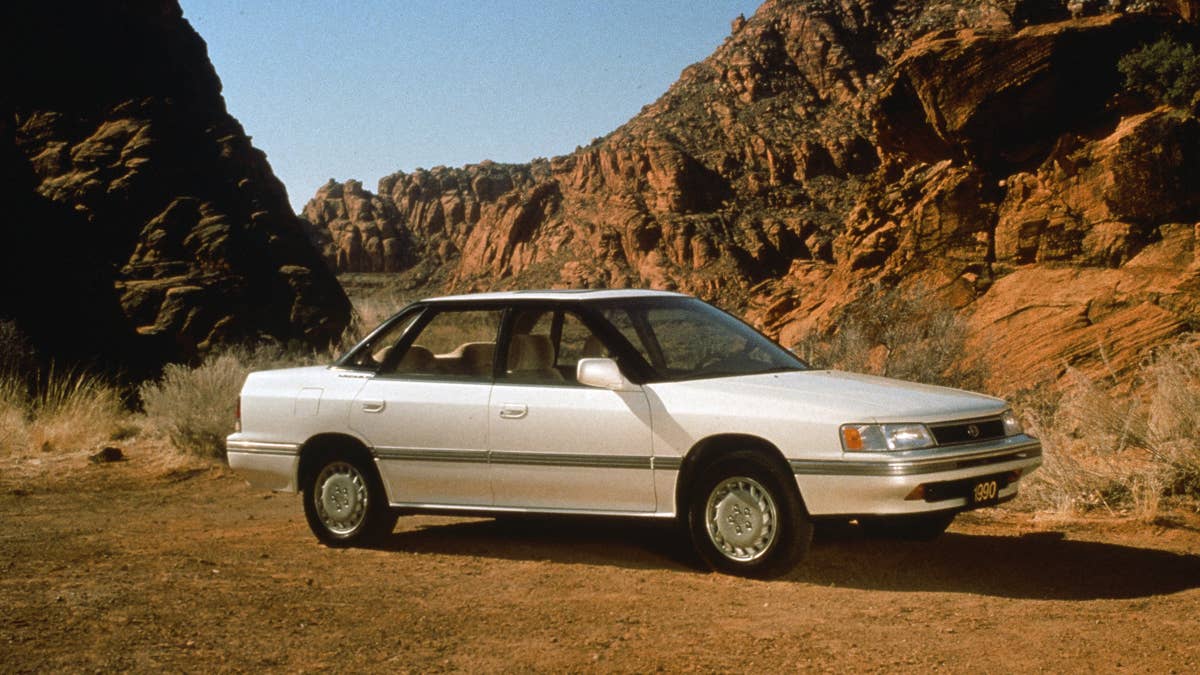
The Subaru Legacy, launched in 1989, was crucial in redefining Subaru’s brand image and performance standards. Positioned against competitors like the Honda Accord and Toyota Camry, the Legacy marked a significant improvement over earlier models and proved to be a successful gamble for Subaru. Its development laid the foundation for Subaru’s current lineup and contributed to the brand’s later achievements in motorsport.
The first-generation Legacy was notably introduced in the North American market in 1990 with a turbocharged 2.2-liter boxer engine, offering 160 hp and 181 lb-ft of torque. At the time, it achieved competitive performance metrics, including a 0 to 60 mph time of 7.9 seconds. However, reviews pointed out that the model lacked excitement compared to its competitors like the Ford Taurus SHO.
For performance enthusiasts, Subaru offered more powerful versions in markets like Japan and Europe, where the Legacy RS was equipped with a 2.0-liter turbo engine that delivered 217 hp and 199 lb-ft of torque. These models achieved a 0 to 60 time of under 6.5 seconds and featured better suspension setups and all-wheel drive systems. The RS Type RA, designed for record attempts, was even lighter and came with enhanced performance specifications, showcasing Subaru’s commitment to performance.
Subaru’s foray into rallying can be traced back to the 1970s, but it was the establishment of Subaru Tecnica International (STI) that truly redefined their rallying success. The Legacy RS made its debut in the Subaru World Rally Team in 1990. Despite initial challenges, the car quickly demonstrated potential, leading to its first win in the 1993 Rally New Zealand, driven by renowned rally driver Colin McRae.
Though the Legacy Turbo holds a special place in rally history, its recognition in North America has been limited. The watered-down U.S. version did not capture the excitement of its more potent counterparts available internationally. Despite this, the Legacy cultivated a dedicated following, particularly in Europe and Oceania, where rallying was more prominent.
As time passes, the first-generation Legacy Turbo is being seen as an overlooked gem among automotive enthusiasts. Many examples have not survived; hence, preserving these models and potentially introducing the performance-oriented RS variants to North America could help revive interest in Subaru’s rich motorsport legacy.
Overall, had Subaru not ventured into performance enhancements with the Legacy, the brand’s trajectory and the landscape of rally racing may have been dramatically different. The Legacy’s influence continues to resonate, a testament to Subaru’s innovative spirit and commitment to performance excellence in both everyday and competitive driving.
The content above is a summary. For more details, see the source article.









