


Key Takeaways
- China Energy successfully synchronized its first tower CSP project, the 100 MW Qingyu HVDC Phase-II, to the grid on December 29.
- The project implemented advanced technologies and efficient practices to meet its construction goals without exceeding budget or schedule.
- An eco-friendly approach was prioritized, resulting in significant ecological restoration and sustainable land use alongside power generation.
China’s New Tower Solar Power Project
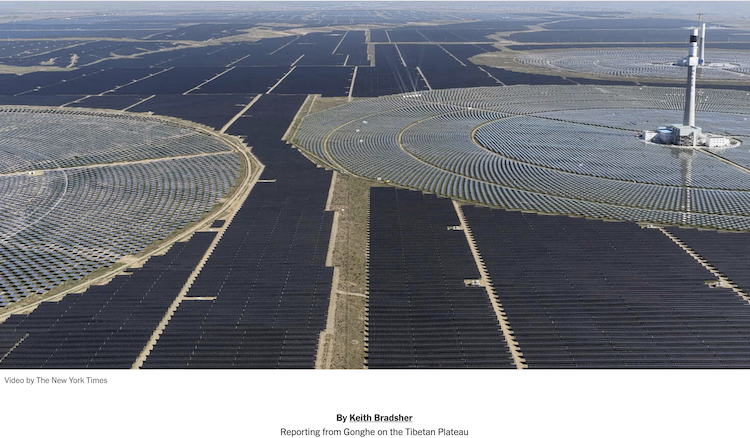
In a significant development in renewable energy, China Energy’s 100 MW Qingyu HVDC Phase-II project successfully synchronized to the grid on December 29, marking its first tower concentrating solar power (CSP) initiative. Located in the Qinghai Gonghe region, this project overcame the challenges presented by the high-altitude environment of the Qinghai–Tibet Plateau, adhering to its stringent construction guidelines, which promised no budget overruns, no delays, and zero major defects or environmental incidents.
The construction team used optimized sequencing methods to achieve exceptional efficiency: civil foundations were leveled with a single pour, and panels for the turbine hall were hoisted in just 8.5 days, establishing a new performance benchmark for similar projects. The facility employs a hybrid CSP + PV configuration, featuring a 12-hour molten-salt thermal storage system. This allows for the deferred dispatch of solar electricity, enhancing overall energy management.
The integration of IoT sensors, big-data analytics, and AI into the site platform enabled precise digital control throughout the project’s lifecycle. Remarkably, over 98% of the essential components, including valves and materials, were sourced domestically. High operational performance is evident, with the plant achieving an average availability rate above 76.68%, a solar-to-electric conversion rate of at least 13.39%, and turbine cycle efficiency exceeding 41.77%.
Moreover, the project implemented “eco-first, green-build” principles, which aimed to enhance environmental protection throughout the construction phase. The approach included concurrent implementation of environmental measures alongside the main works, employing “build-while-restore” strategies to minimize ecological disruption. Techniques such as centralized work zones and water-spray dust suppression effectively reduced the ecological impact.
In line with their commitment to sustainability, the project contributed to ecological restoration by creating a 20 km² forest and a solar-pasture demonstration zone. This initiative involved planting 66,000 trees and reseeding 3,000 mu of grassland, establishing an innovative agro-photovoltaic model where solar panels generate electricity above grazing sheep and growing grass beneath.
This project not only represents a breakthrough in China’s solar energy capabilities but also sets a model for balancing energy generation with ecological sustainability.
The content above is a summary. For more details, see the source article.









