


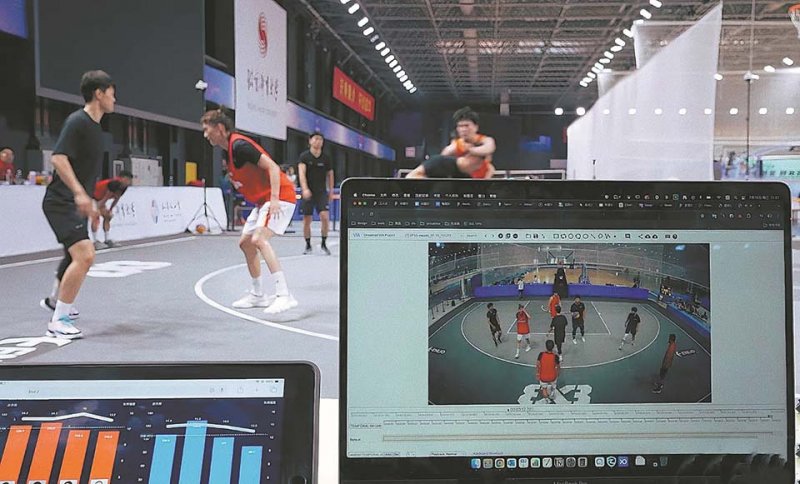
Key Takeaways
- AI is transforming China’s sports industry, enhancing athlete training, public fitness, and sportswear production.
- By 2030, China aims to develop a fully integrated digital sports ecosystem that incorporates data-driven technologies.
- Concerns about data privacy and equitable access to technology accompany the rapid advancement of AI in sports.
AI and Digital Transformation in Chinese Sports
Artificial intelligence (AI) and digital technologies are reshaping China’s sports landscape, impacting athlete training, fan engagement, and sportswear manufacturing. Authorities, universities, and brands are increasingly leaning on AI to improve coaching, performance analysis, and public health initiatives, with a significant goal set for 2030: to create a highly intelligent sports ecosystem combining data, automation, and smart infrastructure.
Zhu Han, deputy director of sports information at China’s General Administration of Sport, emphasized the intention to establish an intelligent, efficient, and widespread digital sports community by 2030. Key components include AI-driven training systems, smart fitness infrastructure, and data-driven coaching.
AI is seen globally as one of the most significant innovations in sports, offering valuable tools such as tactical analysis, injury prevention, motion tracking, and enhanced fan engagement. The adoption of these technologies is moving the industry toward data-driven decision-making rather than relying solely on intuition. For instance, Beijing Sport University has developed an advanced AI swimming analysis system that utilizes high-speed underwater cameras and movement tracking to provide critical performance metrics.
Notably, AI is also revolutionizing sportswear production. Companies like Li-Ning leverage AI to study elite athlete movements and optimize product designs. Anta Sports has launched its “AI365” initiative to integrate AI into all business functions, improving efficiency and innovation across design, manufacturing, and customer service.
Digital technology has a growing presence in everyday fitness, with modern wearables now able to track heart rates, calories burned, and sleep quality, thereby assisting users in exercising safely and effectively. Chinese authorities are working on a national fitness information platform aimed at connecting public fitness resources, enhancing access to gym facilities and personalized health monitoring.
Humanoid robots are being explored within sports science to assist with biomechanics studies and movement analysis, although they are not intended to replace human coaches. While AI offers extensive insights and data, experts assert that human coaches remain crucial for motivation and emotional support.
Despite the promising advancements, concerns about data privacy, surveillance, and fairness in access to technology are prevalent. The rapid integration of AI in sports reflects China’s broader ambitions in digital modernization and economic innovation, with expectations for transformative progress in the next decade. Potential future developments may include fully personalized training systems, automated officiating, and enhanced broadcasting experiences, thereby making sports more interactive and data-rich for fans and professionals alike.
The content above is a summary. For more details, see the source article.









