


Key Takeaways
- The new 8-foot extension cable for Tesla Superchargers underperformed in real-world tests.
- Pricing for the extension cable starts at $729, raising concerns about reliability.
- Using third-party charging adapters can void electric vehicle warranties.
Testing of New Charging Solution
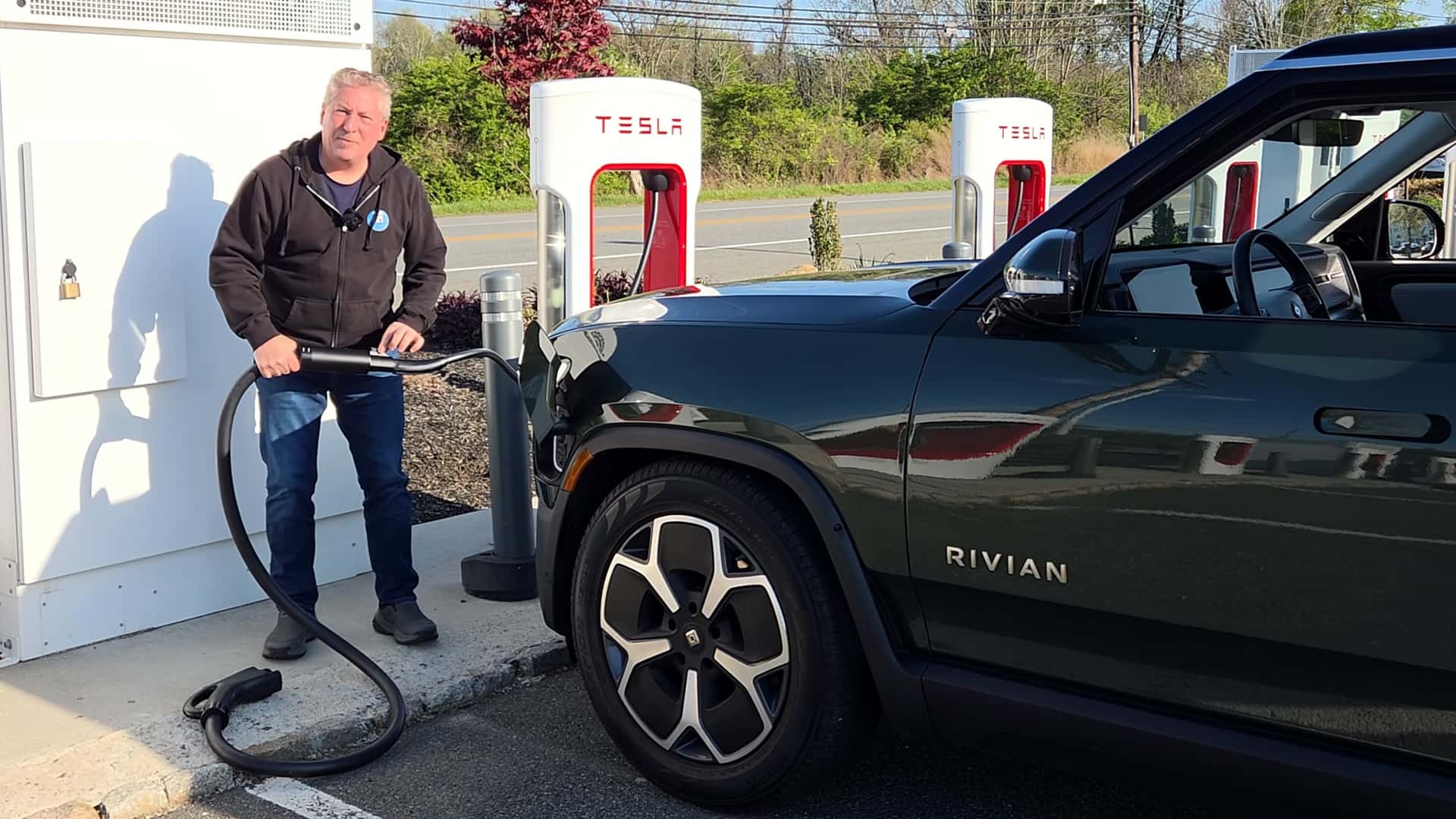
Tom Moloughney, a charging expert at InsideEVs, recently tested Hansshow’s latest Tesla Supercharger extension cable, designed for non-Tesla electric vehicle (EV) owners. This 8-foot cable facilitates charging for EVs that may require a different charging location than Teslas, which often have their ports on the left rear. With tens of thousands of Tesla Superchargers now accessible to non-Tesla EVs in the U.S., this extension aims to alleviate the challenge of double parking at charging stations.
Previously, Moloughney evaluated the first-generation version of this product and found serious safety issues. The second-generation prototype fixed those problems, leading to high hopes for the finalized product. However, the latest version did not deliver as expected during his tests.
The extension cable is available in 5-foot and 8-foot lengths and is rated for 1,000 volts and 350 amps. For comprehensive testing, Moloughney aimed to use the 8-foot cable to charge his Rivian R1S and Ford F-150 Lightning, both of which initially request a significant 500 amps to charge efficiently.
Unfortunately, the testing session was cut short. The Rivian stopped charging after just 17 minutes, despite the cable remaining under 100 degrees Fahrenheit. A subsequent attempt with the F-150 Lightning resulted in an automatic stop after only eight minutes. Even changing stalls within the Supercharger network did not improve the situation.
Interestingly, the pre-production model of the cable, which looks identical to the final version, performed flawlessly in past tests, raising questions about why the latest release failed to meet expectations.
The extension cable retails for $729, prompting discussions about its value, especially given its unreliability. Furthermore, EV manufacturers typically advise against using third-party extension cables or adapters, which could void warranties if any issues arise while charging.
As more non-Tesla EVs join the market, the demand for effective charging solutions will continue to grow. However, this experience with Hansshow’s extension cable highlights the importance of ensuring product reliability and manufacturer-approved solutions in the EV industry.
The content above is a summary. For more details, see the source article.









