


Key Takeaways
- Congress prepares to vote on a bill allowing year-round sales of E15, a higher ethanol fuel blend, amid soaring gasoline prices.
- Opposition from independent refiners and concerns over the Renewable Fuel Standard complicate support for the legislation.
- Proponents argue that E15 will lower fuel costs, boost the economy, and increase energy security.
Legislative Push for Ethanol Expansion
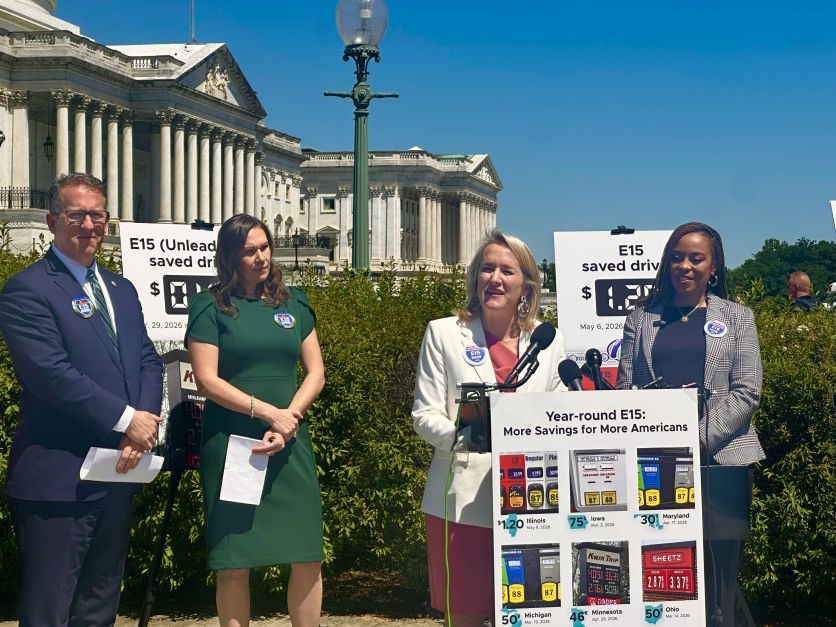
As gasoline prices spike, ethanol and corn industry representatives have converged on Capitol Hill in support of the House’s upcoming vote on a bill permitting year-round sales of E15, a higher ethanol blend. The legislation aims to expand the use of ethanol in the U.S. gas supply, a goal pursued for two decades, but it faces significant hurdles.
Rep. Nikki Budzinski (D-Ill.) emphasized the persistent challenges in advancing ethanol initiatives, stating, “It feels like every other year we get right up to the goal line.” Iowa, the nation’s leading ethanol producer, is currently experiencing an average gasoline price of $4.19 per gallon, a sharp increase from $2.88 a year prior.
The proposed legislation comes at a critical time, with rising fuel costs linked to geopolitical tensions affecting consumer opinions. Monte Shaw, Executive Director of the Iowa Renewable Fuels Association, insists that this vote represents a chance for lawmakers to present constituents with a means to reduce fuel expenses. “This vote is going to be the gas price vote of 2026,” he remarked, stressing urgency.
However, the road to this vote has not been smooth. Previous attempts to pass E15 provisions have been derailed by internal disputes among fossil fuel supporters. President Donald Trump has publicly urged Congress to enact legislation benefiting farmers and biofuel entities, while Rep. Adrian Smith (R-Neb.) claims over 96% of the domestic fuel supply chain supports the bill.
Opponents, including the Fueling America Jobs Coalition, decry the timing and content of the legislation, asserting it would disproportionately impact independent refiners and consumers reliant on affordable gasoline. Key concerns include a provision that revises how small and mid-sized refiners can request exemptions from federal biofuel blending requirements, a change intended to enhance transparency in the market. Yet, critics argue that these reforms may drive smaller refiners out of business.
The American Petroleum Institute backs the bill, advocating for the streamlining of the small refinery exemption process, which they claim currently injects market volatility. Conversely, independent refiners argue that the new regulations would burden them with additional costs, threatening both their viability and overall energy security in the U.S.
Environmental concerns also remain a focal point of the debate. Some Democrats express apprehension about the environmental impacts of ethanol, while proponents highlight research indicating that E15 can reduce emissions compared with standard gasoline.
Despite the challenges, supporters urge that expanding E15 will stimulate demand for American corn, lower fuel costs, and boost rural economies. The Renewable Fuels Association argues that E15 often sells at lower prices than traditional gasoline options. Consensus remains crucial moving forward, especially since a prior attempt to include E15 measures in a spending bill was thwarted by opposition from influential figures like Elon Musk.
As the House prepares to vote, opinions are sharply divided among lawmakers. Some assert that without proper changes to the Renewable Fuel Standard, the move towards E15 would impose a burden on consumers and fuel prices, while others stress its potential benefits in increasing fuel supply and stabilizing corn demand at a time of shifting export markets.
Senate Majority Leader John Thune (R-S.D.) voiced his support, underscoring the dual benefits of bolstering corn demand while simultaneously addressing rising fuel prices. The outcome of the upcoming House vote could significantly shape the future landscape of the American energy market.
The content above is a summary. For more details, see the source article.









