


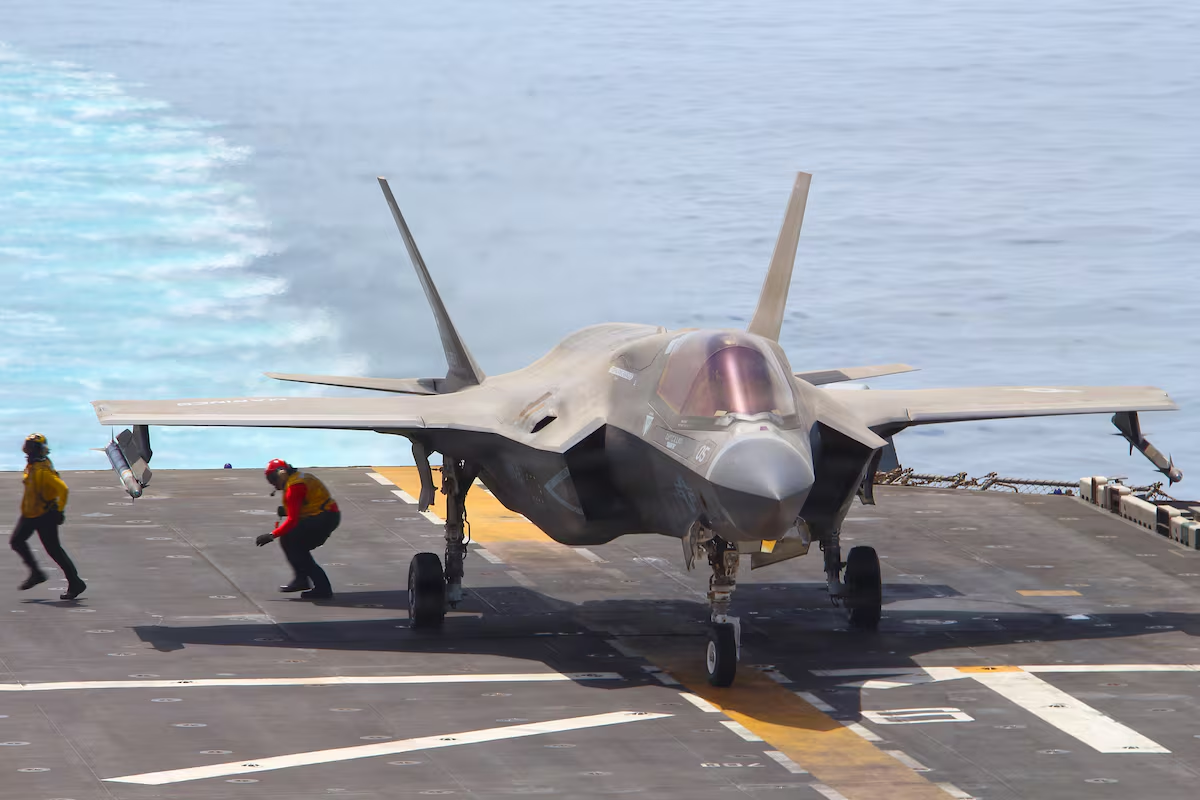
Key Takeaways
- The Pentagon requests 85 F-35 fighters for fiscal 2027, a significant increase from the previous year’s 47.
- The funding for 53 of these aircraft is contingent on a separate $350 billion mandatory funding bill.
- Current F-35 fleet readiness stands at around 50%, falling short of the target availability rate of 65%.
Fiscal 2027 Budget Overview
The Pentagon’s fiscal 2027 budget request includes a notable increase in F-35 Lightning II fighter purchases, proposing 85 aircraft, up from 47 in fiscal 2026. This marks the largest single-year acquisition since fiscal 2022. However, the request hinges on Congress passing a separate funding bill. Currently, only 32 of the requested fighters are financed through the base discretionary budget; the remaining 53 depend on a $350 billion mandatory funding request linked to a forthcoming reconciliation bill.
House Speaker Mike Johnson has pointed out that gaining support for the second reconciliation bill may be challenging. Some House Republicans have expressed concerns following the passage of the One Big Beautiful Bill Act in the prior year. If the bill does not pass, the F-35 purchase might drop significantly to 32 aircraft, which is lower than the fiscal 2026 baseline.
The proposed breakdown for the 85-aircraft request includes 38 F-35As for the Air Force, 37 F-35Cs for the Navy and Marine Corps, and 10 F-35Bs for the Marine Corps, with an estimated total program cost of $21.4 billion. Additionally, a fund of $324 million within the mandatory request aims to expedite procurement of 200 Block 4 modification kits, moving the first fleet delivery from fiscal 2031 to 2030. The Block 4 upgrade package incorporates significant enhancements, including advanced sensors and weapons capabilities. However, delays have occurred, primarily due to hardware issues with the Technology Refresh 3 processor.
The budget also addresses readiness challenges the F-35 fleet faces. The mission-capable rate for the aircraft was around 50% in fiscal 2024, indicating that fewer than half of the fleet was ready for combat. This rate is far below the program’s target of 65%. Acting Pentagon Comptroller Jules Hurst noted that previous funding deficiencies have affected the fleet’s capability, emphasizing that the 2027 request aims to rectify this issue.
In terms of distribution, the Air Force is set to receive the largest share of the joint purchase, with 38 F-35As, which is 14 more than what was allocated in fiscal 2026. Furthermore, the Air Force’s combined request for 38 F-35As and 24 F-15EXs totals 62 aircraft, which is still 10 short of the minimum 72 aircraft that National Guard generals recommend to prevent fleet shrinkage.
The Department of the Navy’s request for 37 F-35Cs doubles last year’s procurement and includes 10 F-35Bs for Marine Corps operations. This increase aligns with a revised aviation plan for the Marine Corps, which has reduced its F-35B fleet objectives while increasing its F-35C goals. This adjustment shifts the Marine aviation force towards a carrier-based paradigm rather than relying solely on amphibious assault ships.
Despite the proposed F-35 budget request, there remains criticism regarding the procurement rate. Retired Lt. Gen. David A. Deptula expressed that the Air Force’s planned acquisition represents “budget triage” rather than a genuine undertaking to modernize its fleet, indicating a need for even higher numbers of F-35As to effectively update its capabilities.
The content above is a summary. For more details, see the source article.









