


Key Takeaways
- Xiaomi reported significant financial losses in its smart EV division, with an operating loss of $457 million in Q1 2026 despite selling over 80,000 vehicles.
- The company experienced a decline in gross margins, dropping to 20.1% from 23.2% in the previous year, largely due to increased costs and subsidies.
- Xiaomi’s aggressive pricing strategy aims to capture market share, with the entry-level YU7 model priced below Western competitors at approximately $34,300.
The Rise and Challenges of Xiaomi’s Automotive Venture
Xiaomi, renowned for its affordable and feature-rich gadgets, has ventured into the automotive market with its own car line, recently achieving rapid sales milestones. The company sold over 15,000 units within half an hour for the second-generation model, indicating strong consumer demand. However, the financial reports reveal deeper issues.
According to CarNewsChina, Xiaomi Group’s Q1 2026 financial data shows that while its smart electric vehicle (EV) and AI division generated 19.9 billion yuan ($2.9 billion USD) in revenue, it also faced an operating loss of 3.1 billion yuan ($457 million USD). The company sold 80,856 vehicles in this quarter, resulting in a staggering loss of about $5,600 per vehicle, which is significantly higher than last year’s loss of $900 per car during the same period.
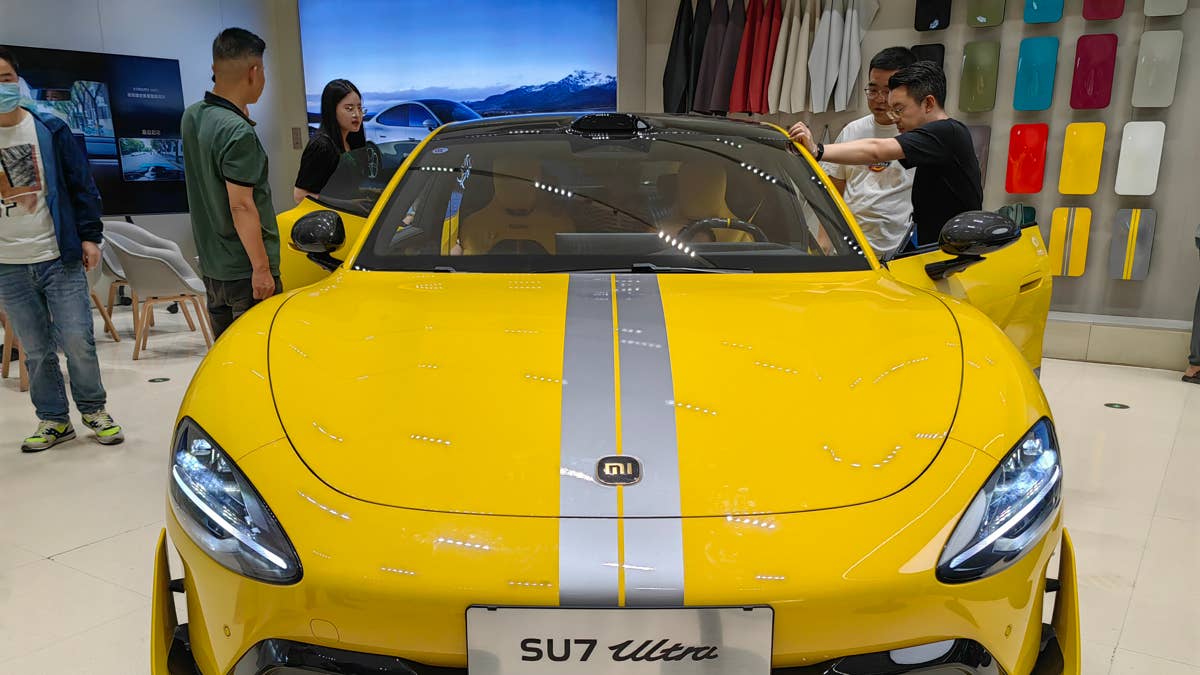
Despite robust sales figures, Xiaomi struggles with profit margins. The gross margins for its smart EV segment fell from 23.2% to 20.1% in the past year. This decline has been attributed to factors such as vehicle purchase tax subsidies, fewer sales of the higher-margin SU7 Ultra model, and rising costs of essential components. Furthermore, Xiaomi is investing heavily in expanding its retail presence, now boasting 490 sales stores across 143 cities in mainland China to meet consumer demand.
In the international market, particularly in the U.S., consumers are increasingly open to purchasing affordable Chinese vehicles. Xiaomi recognizes that to gain a foothold, it needs to stand out with distinctive designs, tech innovations, and competitive pricing. The company’s entry-level YU7 standard version starts at a low 233,500 yuan ($34,300 USD), positioning it advantageously against Western competitors.
Xiaomi’s approach mirrors its strategy in the tech sector, where hardware is subsidized to gain market dominance. The company believes that its ability to sustain initial losses for market share will eventually lead to profitability. However, the ongoing price war in China complicates this strategy, necessitating a balance between volume and profitability. The ultimate challenge for Xiaomi’s automotive division is transitioning from substantial sales to substantial profits while navigating a competitive landscape.
The content above is a summary. For more details, see the source article.









