


Key Takeaways
- Wayve is the only UK start-up in the autonomous taxi market, setting itself apart with end-to-end AI technology.
- Recent funding rounds have attracted significant investment, highlighting the growing integration of technology in the automotive industry.
- The convergence of automotive and AI presents regulatory challenges, necessitating new governance approaches for advanced autonomous systems.
Wayve Leading the Charge in London’s Robotaxi Market
Wayve, a British autonomous vehicle start-up established in 2017, is making waves in London with its pioneering autonomous piloting initiative. As the only UK contender in the robotaxi market, Wayve is competing against established players like Baidu and Waymo, the latter owned by Alphabet.
What sets Wayve apart is its innovative use of end-to-end AI for Level 3 autonomy. Unlike competitors that rely heavily on detailed mapping and localized geomapping, Wayve’s technology mimics human reasoning, allowing vehicles to operate effectively in various urban environments. According to Kaity Fischer, Wayve’s VP of Commercial and Operations, this flexibility offers a seamless transition from driver assistance systems to fully autonomous driving.
Wayve’s AI enables a universal integration across different vehicle models and sensor technologies. Fischer noted that the Wayve AI Driver could be adapted to various sensor suites, showcasing their collaborative approach with automakers.
This trend reflects a larger shift in the automotive industry, where traditional manufacturers increasingly depend on tech firms to innovate and remain competitive. Wayve’s partnerships with renowned auto giants like Nissan and Mercedes-Benz emphasize this evolution.
The company has also garnered attention from investors, securing $1.5 billion in a Series D funding round earlier this year, with notable backing from Nvidia and SoftBank. Additionally, fresh investments from chip manufacturers like Qualcomm, AMD, and Arm underscore the deepening ties between automotive innovation and the tech sector.
Industry leaders are recognizing that a robust software-defined vehicle (SDV) architecture is vital for success in the future automotive landscape. RJ Scaringe, CEO of Rivian, shared this perspective, asserting that automotive companies must embrace tech-forward strategies to maintain relevance.
For regulators, the growth of AI-driven autonomous systems introduces complex governance challenges. As companies like Wayve push the boundaries of end-to-end autonomy, issues surrounding safety, liability, and system certification demand new strategies. Unlike traditional software, AI models evolve, necessitating innovative validation and oversight measures.
The UK has a unique opportunity to emerge as a leader in autonomous mobility by creating an environment conducive to innovation while fostering public trust. Public-private partnerships and adaptive legislation will be crucial in facilitating large-scale deployment of autonomous technologies.
As urban centers like London serve as testing grounds for these advancements, collaboration between government agencies, local authorities, and tech firms will be key to evolving infrastructure and urban planning. The ongoing transformation necessitates that these stakeholders shape standards, trials, and citizen safeguards.
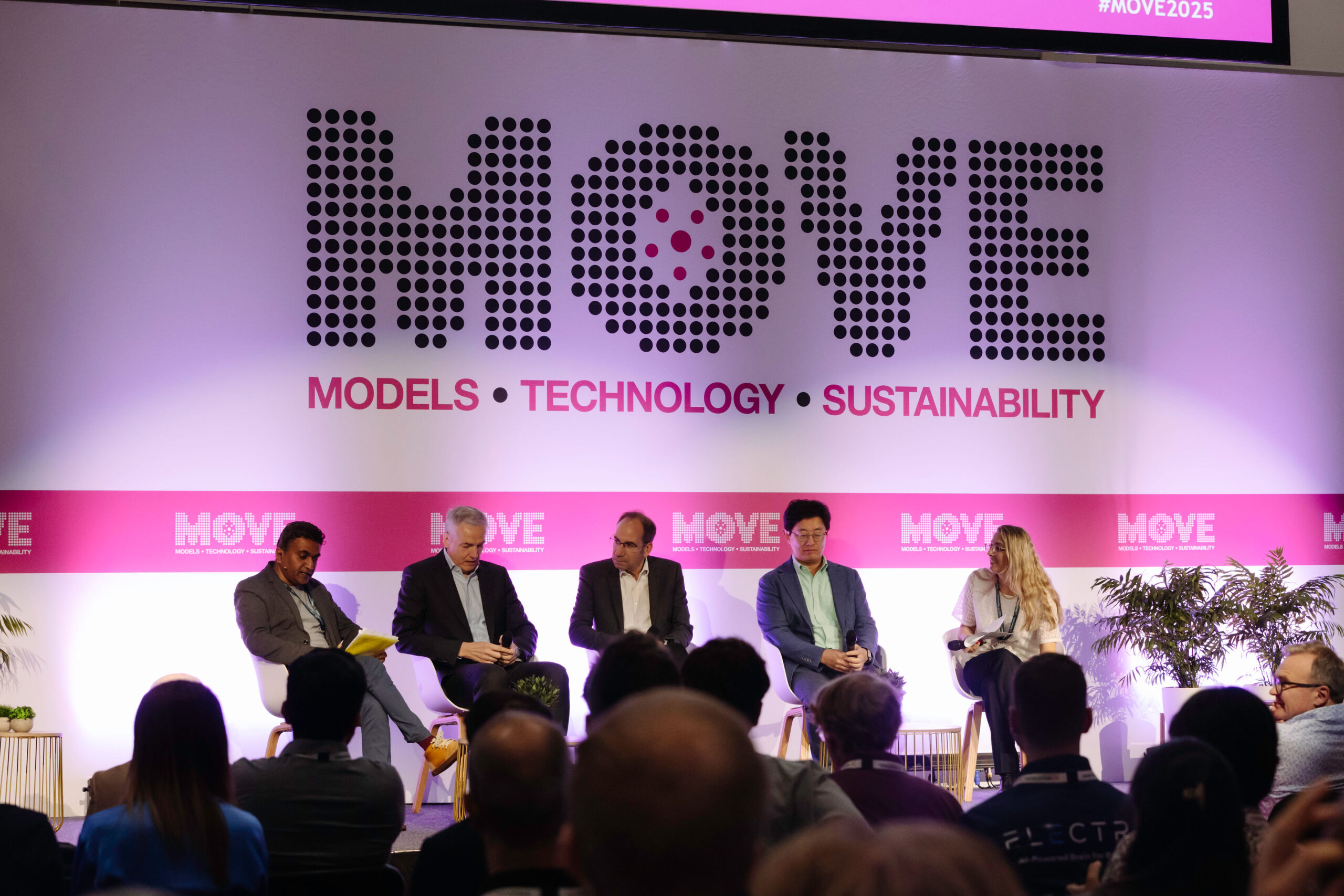
Events like MOVE 2026 play a pivotal role in bridging the automotive and technology industries, facilitating discussions on legislation, regulation, and public trust. Scheduled for June 17-18, 2026, at London’s ExCeL, MOVE serves as a platform for industry leaders to collaborate, explore innovations, and address the challenges of the emerging mobility landscape.
Attendees can expect a high-energy environment, featuring over 200 speakers, networking opportunities, and stages dedicated to electric and autonomous vehicles. MOVE is positioned as a must-attend event for anyone involved in shaping the future of mobility, emphasizing the critical intersection of technology and transportation.
The content above is a summary. For more details, see the source article.









