


Key Takeaways
- Ukrainian drones successfully struck the 15th Naval Arsenal in the Leningrad region, causing significant fire and evacuating over 600 residents.
- The attack indicates a strategic shift in Ukraine’s capabilities, targeting deep within Russian territory and highlighting vulnerabilities in Russian military infrastructure.
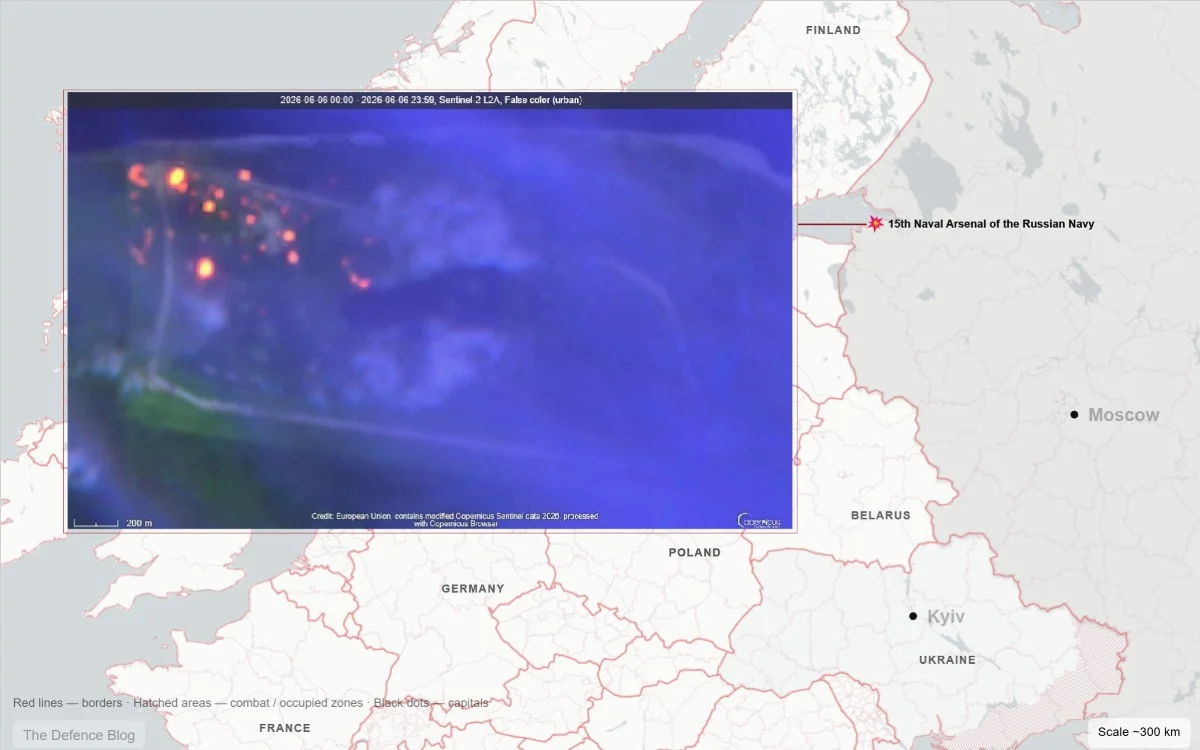
- Satellite imagery confirmed extensive damage at the site, contradicting initial claims from Russian officials regarding the attack’s impact.
Ukrainian Drone Strike Targets Key Naval Arsenal
Fresh satellite imagery has validated reports of a Ukrainian drone attack on the 15th Naval Arsenal in Bolshaya Izhora, Leningrad region. Initially downplayed by Russian officials, local authorities acknowledged the damage after the strike triggered a massive fire and secondary explosions, necessitating the evacuation of over 600 nearby residents.
The imagery reviewed by analysts shows unmistakable thermal signatures and fire damage in the munitions storage areas, confirming that Ukrainian drones reached deep into Russian territory, traversing approximately 1,000 km (620 miles). Ukrainian President Volodymyr Zelenskyy referred to this operation as part of Ukraine’s “long-range sanctions” aimed at disrupting Russian military and economic systems.
Designated as Military Unit 81263, the 15th Naval Arsenal is crucial for the Russian Baltic Fleet. This facility is responsible for storing, maintaining, and disposing of munitions such as torpedoes and missiles, playing a vital role in the operational capacity of Russian naval forces in the Baltic Sea.
Analysis of the satellite images indicated a lack of protective measures around the arsenal, suggesting that the facility has not been updated to counter the ongoing threat from air attacks, particularly from Ukraine’s long-range drone capabilities.
The scale of the destruction was underscored by reports of secondary detonations, which occur when munitions are struck, leading to a more severe destructive impact beyond the initial strike. Local chat groups had begun discussing potential evacuations even before the governor’s confirmation. Alexander Drozdenko, the governor of Leningrad Oblast, initially minimized the attack, instead claiming that Russian air defenses had intercepted numerous drones. However, this narrative fell apart as satellite imagery and verified videos emerged, showing the extent of the damage and the subsequent civilian evacuations.
The Exilenova+ channel, focused on documenting Russian military positions, characterized the 15th Arsenal as a strategic target for Ukraine’s broader operations aimed at diminishing Russia’s military capabilities in the region. The strike also formed part of a more extensive June 6 drone campaign targeting multiple locations, including the Kronstadt naval base and an oil depot far beyond the front lines. These coordinated efforts involved various Ukrainian military units, further demonstrating the effectiveness of Ukraine’s strategy in countering ongoing threats.
The impact of the strike on the 15th Arsenal extends beyond immediate destruction; it poses challenges for Russia’s supply chain, as destroyed munitions cannot be utilized for naval operations. The significance of this attack aligns with a growing trend of Ukrainian efforts to degrade Russian military logistics in the Baltic region.
Satellite technology has revolutionized oversight in this conflict, rendering it difficult for Russia to maintain claims of pristine strategic facilities amid the availability of aerial imagery and open-source verification methods. This dynamic continues to evolve and reshapes the information landscape of the ongoing conflict, leaving traditional narratives increasingly untenable.
The content above is a summary. For more details, see the source article.









