Key Takeaways
- NASA’s AstroPix sensor will be tested on the Fly Foundational Robots mission, launching in late 2027.
- AstroPix aims to improve gamma-ray detection, particularly in the energy range of 500,000 to 1 million electron volts.
- The mission includes a robotic arm to maneuver payloads, enhancing the capabilities of future space instruments.
Overview of AstroPix Technology and Its Role in Upcoming Mission
NASA is set to conduct a groundbreaking demonstration involving its new gamma-ray sensor, AstroPix, as part of the Fly Foundational Robots mission scheduled for launch in late 2027. This innovative technology is designed to measure gamma rays—high-energy forms of light—across a significant energy spectrum, specifically between 20,000 and 700,000 electron volts. This range surpasses the sensitivity of existing NASA missions like the Fermi Gamma-ray Space Telescope, particularly for energy levels between 500,000 to 1 million electron volts. This is crucial for observing powerful cosmic events such as gamma-ray bursts and active galaxies powered by black holes.
The Fly Foundational Robots spacecraft serves as a dual-purpose technology demonstration, designed to thoroughly test AstroPix’s performance before its future deployment in scientific missions. Dan Violette, a team member of AstroPix and a post-doctoral fellow at NASA’s Goddard Space Flight Center, emphasizes the necessity of rigorous testing to ensure the effectiveness of the sensors in diverse cosmic environments. Previous similar technologies have been used in balloon missions; however, the upcoming flight provides an exceptional opportunity to reach orbit.
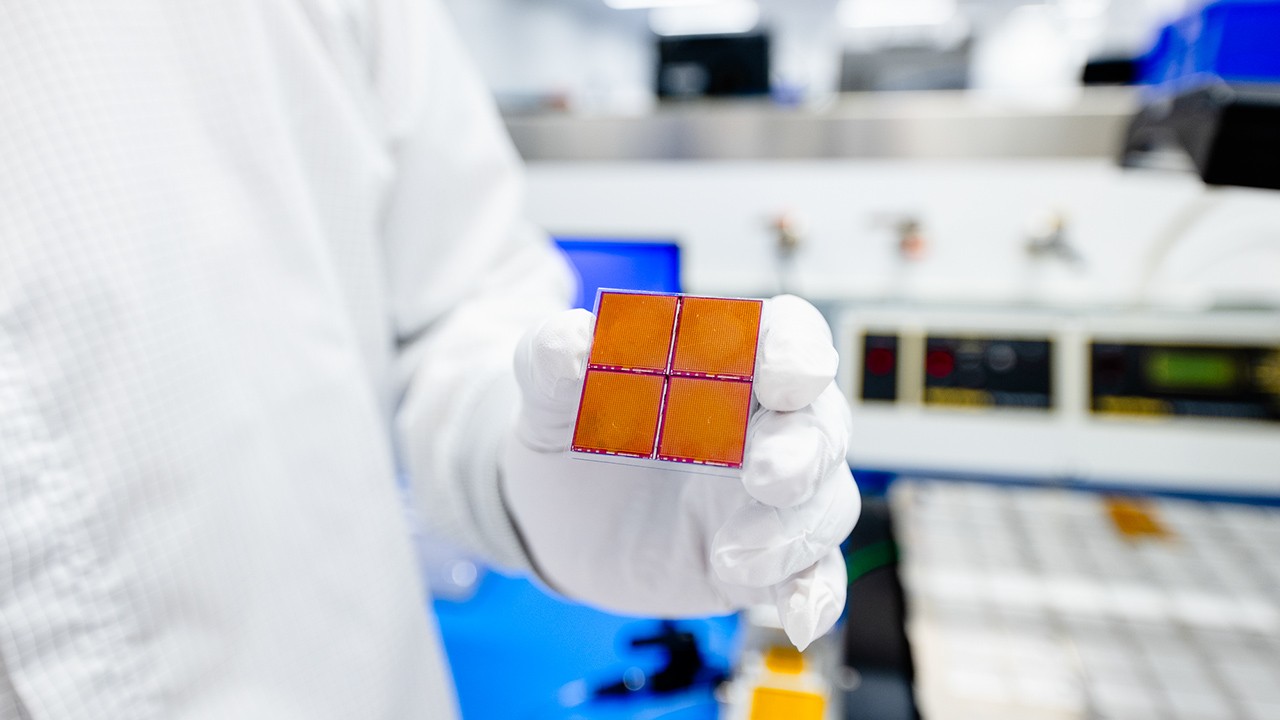
AstroPix’s design incorporates four silicon pixel gamma-ray detectors in each chip, consisting of 1,225 pixels per detector. This technology mirrors the sensors found in standard cell phone cameras, making it more efficient for capturing high-energy gamma rays.
The AstroPix Satellite Technology Demonstration Payload (A-STEP) will be hosted within the Fly Foundational Robots mission’s Orbital Replacement Unit—a movable module by Rocket Lab Robotics. The robotic arm associated with this mission will reposition the unit during the flight, conducting in-orbit operations to enhance the demonstration’s scientific value. Following this repositioning, the A-STEP will collect gamma-ray data, showcasing its capabilities.
As the mission progressed, the Fly Foundational Robots team recognized the opportunity to include the AstroPix payload, optimizing the existing space and resources. Bo Naasz, a senior technical lead with NASA, noted that one of the primary objectives of the mission is to demonstrate how robotic systems can enable the replacement of satellite payloads in orbit. This would allow for upgrades and improvements without incurring the substantial costs associated with complete mission redevelopments.
The AstroPix team plans to deliver their hardware in September, ensuring its timely integration into the Fly Foundational Robots payload before the spacecraft’s final preparations. The Orbital Replacement Unit is designed to support AstroPix, providing the necessary power and electronic interfaces required for data collection and transmission.
Funded through NASA’s Space Technology Mission Directorate’s ISAM portfolio, the Fly Foundational Robots mission engages various collaborators, including Rocket Lab Robotics, which is tasked with supplying the robotic arm system. Astro Digital will manage the space vehicle hosting this innovative technology in NASA’s Flight Opportunities program.
By supporting the development of AstroPix through significant grants and collaborative efforts, NASA aims to revolutionize gamma-ray detection and empower future astronomical research.
For further information, visit: NASA.
The content above is a summary. For more details, see the source article.