


Key Takeaways
- The ACCC is reviewing a complaint against Woolworths regarding its “Kids” sunscreen products.
- The complaint, by the Australian Sunscreen Council, highlights concerns about the ingredient 4-MBC in the sunscreen.
- This case raises significant questions about product marketing, transparency, and ingredient safety in children’s products.
Investigation into Woolworths’ Kids Sunscreen Claims
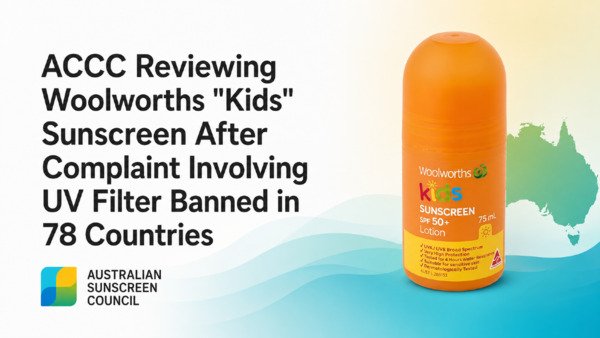
Australia’s competition watchdog, the ACCC, is examining a complaint against Woolworths related to the marketing practices of its private-label “Kids” sunscreen products. This review is prompted by concerns that these products may be misleadingly portrayed as specifically formulated for children.
The complaint, filed by the Australian Sunscreen Council, points out that Woolworths’ Kids SPF50+ Roll On sunscreen differs from its standard SPF50+ Everyday Lotion mainly due to the inclusion of 4-MBC, a UV filter currently under safety review by the Therapeutic Goods Administration (TGA) in Australia. This ingredient is also restricted or not approved in several international markets due to safety concerns.
The issue is compared to a past ACCC action against Reckitt Benckiser’s Nurofen Specific Pain products, which were found to be deceptively marketed as condition-specific while having the same formulations as the standard versions. The Australian Sunscreen Council has urged the ACCC to demand evidence from Woolworths to justify the use of the “Kids” label on their sunscreen.
While the ACCC has commenced its assessment of the complaint, it has yet to make any definitive findings against Woolworths. The ongoing investigation underscores broader concerns regarding product marketing, particularly in children’s goods. The inclusion of 4-MBC in a product aimed at children has raised alarms, with various regulators expressing apprehension about the ingredient’s potential endocrine-disrupting effects. As the TGA continues to evaluate its safety profile, the scrutiny around such formulations is likely to grow, prompting calls for greater transparency and accountability in the marketing of children’s products.
The content above is a summary. For more details, see the source article.









