


Key Takeaways
- India plans to reach an installed wind energy capacity of 100 GW by 2030 and 155 GW by 2035.
- The WT-MARUT portal aims to enhance wind supply chain management and boost domestic manufacturing.
- Wind energy is identified as a key component in India’s target of achieving 500 GW of non-fossil fuel-based energy by 2030.
India’s Ambitious Wind Energy Goals
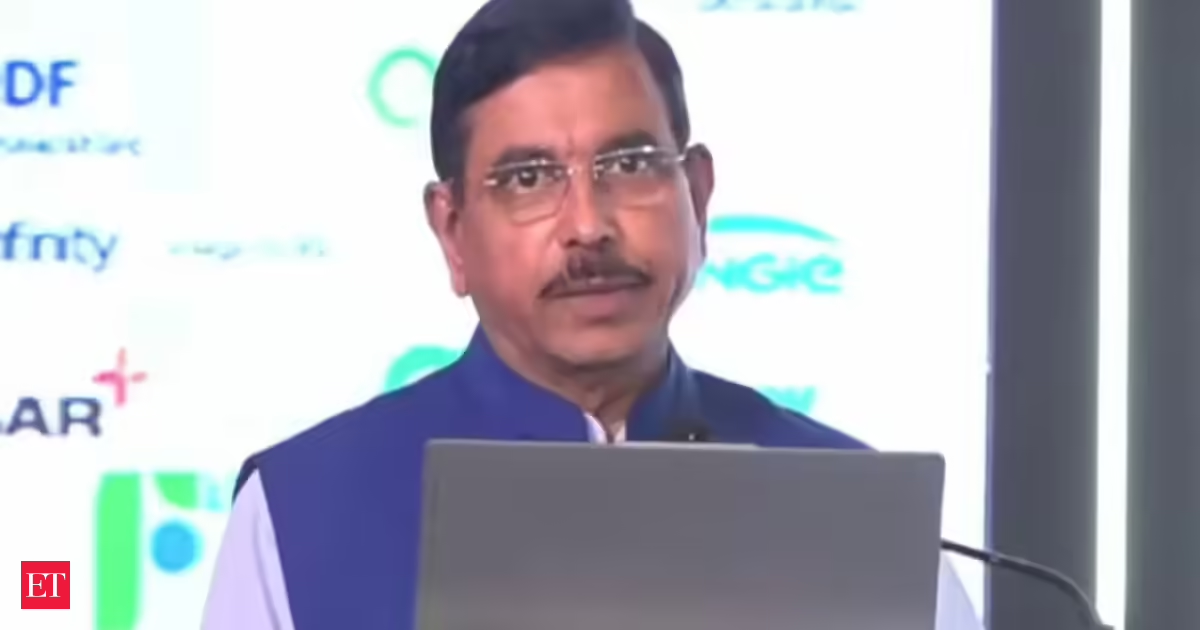
India is setting an ambitious target to achieve 100 GW of installed wind energy capacity by 2030, with a further aim of reaching 155 GW by 2035, as stated by Union Minister of New and Renewable Energy Pralhad Joshi. The current installed capacity stands at over 56.1 GW, positioning India as the fourth-largest wind energy market globally.
The announcement came during the launch of India’s first wind turbine supply chain management portal, WT-MARUT, at the ‘Global Wind Day’ conference in Goa. This event was supported by key industry associations such as the Indian Wind Turbine Manufacturers Association (IWTMA) and Wind Independent Power Producers Association (WIPPA).
WT-MARUT is designed to strengthen domestic manufacturing and enhance transparency within the supply chain, focusing on component sourcing and supplier discovery. It aligns with the Approved List of Models and Manufacturers (ALMM) framework to improve export readiness and collaborate effectively throughout the supply chain.
Minister Joshi emphasized the significance of initiatives like WT-MARUT in enhancing India’s global competitiveness in the wind energy sector. He expressed confidence that the wind energy sector would achieve its 2030 and 2035 targets, highlighting the importance of unlocking global opportunities.
The wind energy sector in India is witnessing a substantial uptick, with a record addition of 6.1 GW of new capacity during the fiscal year 2025-26, marking a 46 percent increase year-on-year. Despite having an estimated potential of 1,164 GW, less than 5 percent of this potential has been exploited so far.
Industry experts, including representatives from the Central Electricity Authority (CEA) and The Energy and Resources Institute (TERI), indicate that over 100 GW of wind capacity will be necessary for an affordable and sustainable energy transition by 2030.
Girish Tanti, chairman of the IWTMA, underscored that wind energy is one of the most cost-effective and grid-friendly renewable technologies. He noted that India has a significant opportunity, with around 24 GW of annual wind manufacturing capacity and capabilities in critical components, such as nacelles and blades. This positions India to increase its annual wind installations to 15 GW by 2030 while aiming to capture 20 percent of the global wind supply chain opportunity by 2040.
A joint report by IWTMA and PwC revealed that wind turbine and related component exports surpassed Rs 12,000 crore in FY 2025-26, an increase of nearly 50 percent compared to the previous year. Projections indicate that India’s share in global wind turbine exports could reach 10 percent by 2030 and rise to 20 percent by 2040, reinforcing the importance of the wind sector in India’s broader energy strategy.
The content above is a summary. For more details, see the source article.









