


Key Takeaways
- The adoption of advanced technologies in South Africa’s agriculture may lead to increased productivity but poses risks of higher unemployment among low-skilled farm workers.
- A study indicates a potential 29% decrease in agricultural employment for every 1% increase in automation, raising concerns about job displacement.
- A balanced agricultural strategy is essential to protect jobs while modernizing farming, especially for small-scale farmers and low-skilled workers.
Technological Shift in South Africa’s Agriculture
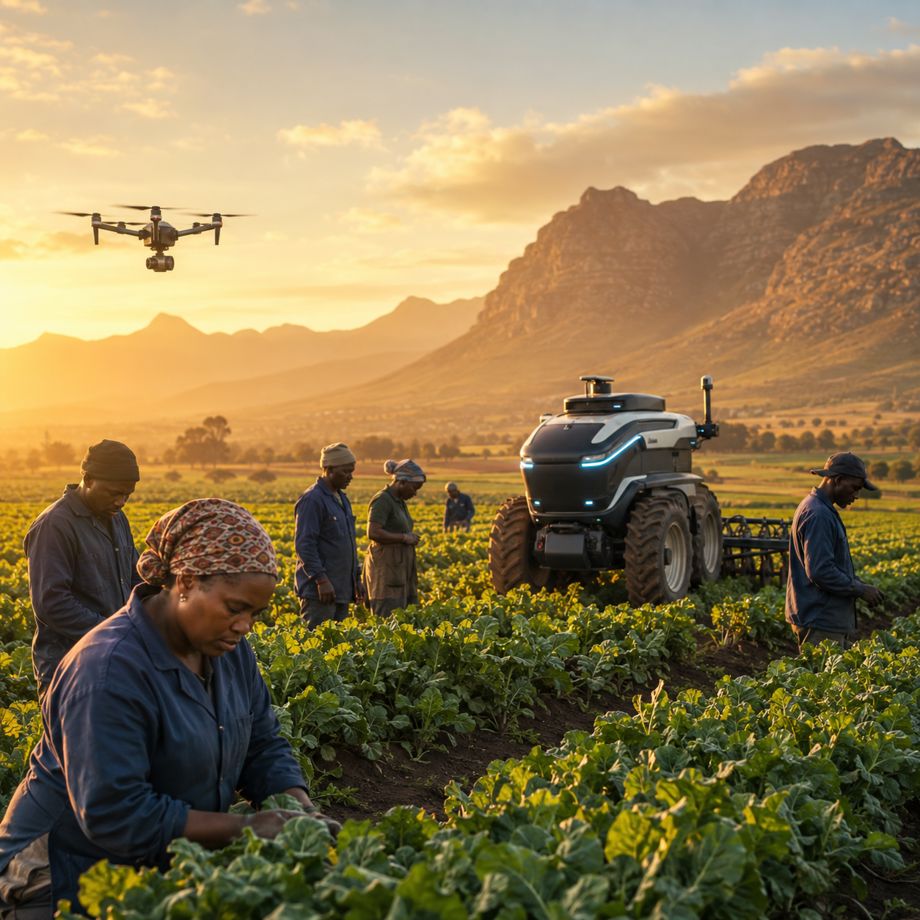
South Africa’s agricultural sector is experiencing a significant shift towards advanced technologies such as precision farming, artificial intelligence, and robotics. While these innovations can boost productivity and efficiency, they raise a critical question regarding the future of farm employment. A study by researchers from the University of South Africa highlights the impact of the Fourth Industrial Revolution (4IR) on agricultural jobs from 1990 to 2024, utilizing data from the World Bank.
The study reveals that increased automation correlates with agricultural unemployment. Specifically, a 1% rise in automation might lead to a staggering 29% decline in agricultural jobs, which poses a challenge for a nation already grappling with high unemployment and inequality.
As South Africa modernizes farming practices with technologies like GPS and drones, especially within commercial sectors, the need for low-skilled labor diminishes. The research indicates a structural shift—while highly trained workers are in demand to manage advanced technologies, low-skilled farm workers may find themselves increasingly redundant. This raises concerns about rural livelihoods, as many affected workers lack the skills required for new roles in the tech-driven agricultural landscape.
The relationship between automation and agricultural jobs is not merely transient; it signals long-term changes. A significant finding of the study is the sustained negative impact of automation on low-skilled employment. Although factors such as rural population growth and available arable land can support job opportunities, the trend toward automation indicates a troubling trajectory for employment in agriculture.
Moreover, the employment risks manifest unevenly. While large commercial farms can invest in technology and automation, small-scale farmers often remain constrained by limited resources and access to training. As a result, they may struggle to compete against more technologically advanced producers, potentially leading to a concentration of jobs and wealth in larger farming operations.
The researchers advocate for a just transition in agriculture, emphasizing the need for government investment in skills training for workers to adapt to new technologies. Educational institutions should align their programs with the skills necessary for 4IR farming.
Policymakers must also take into account the differing needs of farm types. While supporting commercial farms is important, smallholders require accessible technology to enhance productivity without displacing workers. Shared machinery models and digital advisory services could foster inclusive innovation.
The study not only stresses the importance of labor impact assessments in agricultural technology programs but also highlights a broader concern in developing economies engaging in digital agriculture. South Africa’s future in farming must prioritize both technological advancement and the social foundations of employment to ensure a balanced approach to agricultural modernization.
The content above is a summary. For more details, see the source article.









