


Key Takeaways
- China’s Hefei Comprehensive National Science Center developed a transformative biochar production process from agricultural waste.
- The technology employs a single-step dry catalytic process, increasing carbon conversion efficiency to 60% with minimal emissions.
- Future goals include producing sustainable aviation fuel (SAF) from biochar, diversifying its applications beyond soil enhancement and energy storage.
From Waste to Resource: The Biochar Revolution
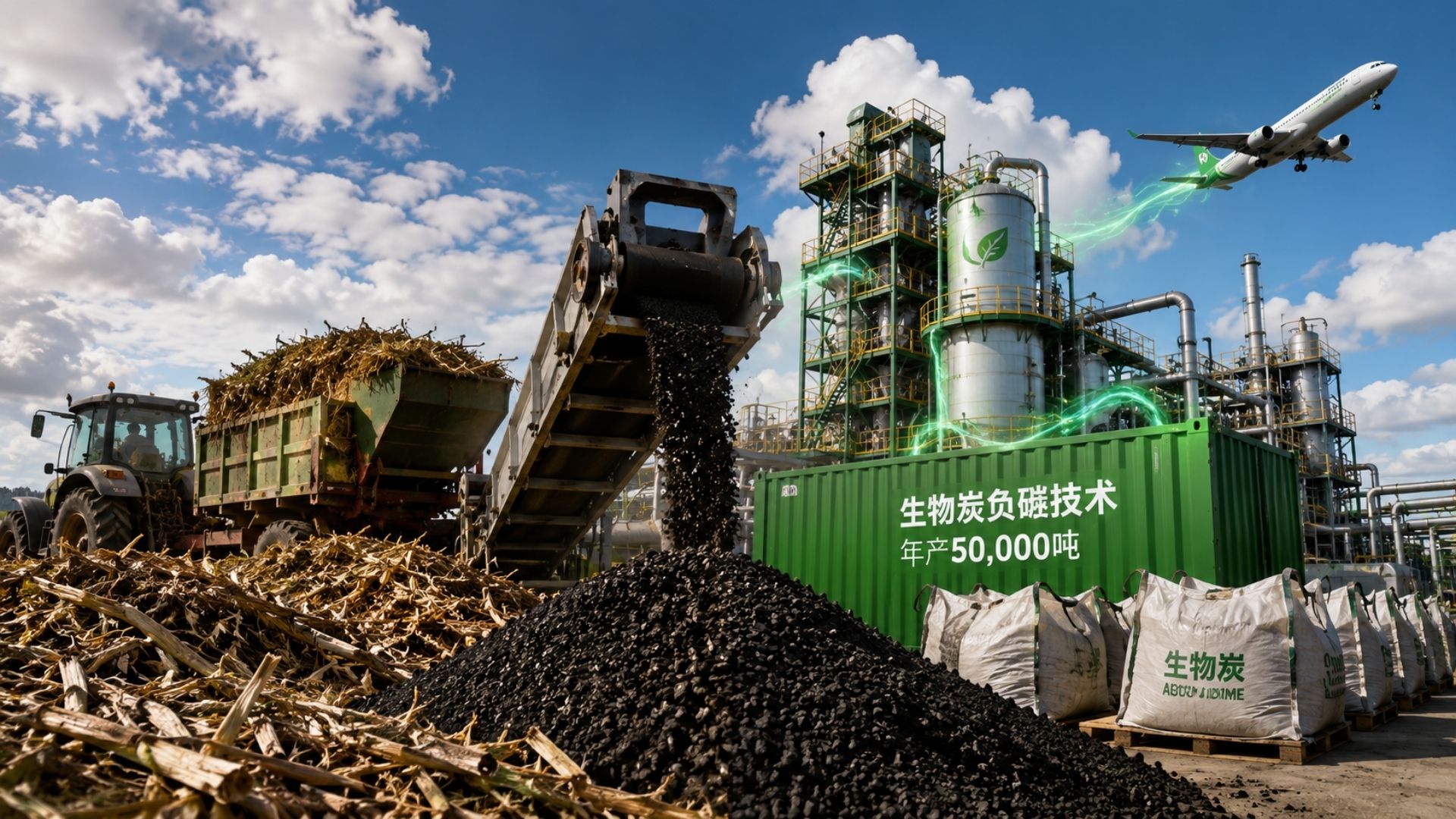
The Hefei Comprehensive National Science Center in China has pioneered a groundbreaking technology to convert agricultural waste—straw, wood chips, and sludge—into high-value biochar. This biochar is not just a soil enhancer but is also being explored for use in energy storage and sustainable aviation fuel (SAF).
Under the guidance of Professor Xing Xianjun, the team overcame significant challenges in biochar production, including low yield, poor quality, high energy consumption, and environmental pollution. The innovative single-step dry catalytic process dramatically improves carbon conversion rates from 35% to around 60% in just 30 minutes, while producing almost no emissions. A single carbonization unit is capable of processing over 50,000 tons of agricultural waste annually.
The journey began in 2011, when the team produced the first 500 grams of biochar in a lab. By 2019, they had scaled up production to an oven that processes 100 tons of waste per day. The dry catalytic method replaced traditional, more water-intensive techniques, allowing for a more efficient and environmentally friendly process.
Biochar, distinct from regular charcoal, is created through thermal decomposition in low-oxygen environments. Its porous structure allows it to retain water, nutrients, and beneficial microorganisms, making it an invaluable resource for improving soil health and increasing crop yields. Furthermore, biochar’s stability as carbon means that when buried in soil, it sequesters carbon dioxide for long periods, contributing positively to climate goals.
The research team’s latest focus on SAF is particularly exciting. This green aviation fuel could significantly lower the carbon footprint of flights but is still in development. Nonetheless, the connection between agricultural waste and sustainable aviation fuel demonstrates significant potential in a sector striving for decarbonization.
Biochar also plays a role in energy storage. High-quality biochar can be utilized to create components for lithium batteries, replacing more environmentally costly materials. This innovation consolidates agricultural waste within the burgeoning energy sector, transforming it into a resource rather than mere waste.
While the assertions of pioneering achievements warrant cautious optimism, the successful applications already proven—soil enhancement and energy storage—support the promise of future developments. The transition from laboratory success to large-scale production will need close monitoring.
Countries like Brazil, rich in agricultural waste, can also benefit from this technology. With policies supporting sustainable aviation fuel, Brazil could leverage its existing biomass to produce biochar and engage in a global movement toward renewable energy solutions.
China’s advances highlight the vast potential of transforming agricultural waste into valuable resources. The future of energy storage and environmental sustainability hinges on innovative methods like those explored in Hefei, heralding a new era in green technology.
The content above is a summary. For more details, see the source article.









