


Key Takeaways
- The U.S. Army is struggling with production of 155-mm howitzer shells, producing only 36,000 of the targeted 100,000 rounds per month as of March 2026.
- Manufacturing issues stem from a failure to produce metal parts at a facility in Mesquite, Texas, complicating overall supply efforts.
- The Army is exploring the possibility of refunding investments in the underperforming Mesquite facility, as recommended by a recent Department of Defense report.
Production Challenges for 155-mm Howitzer Shells
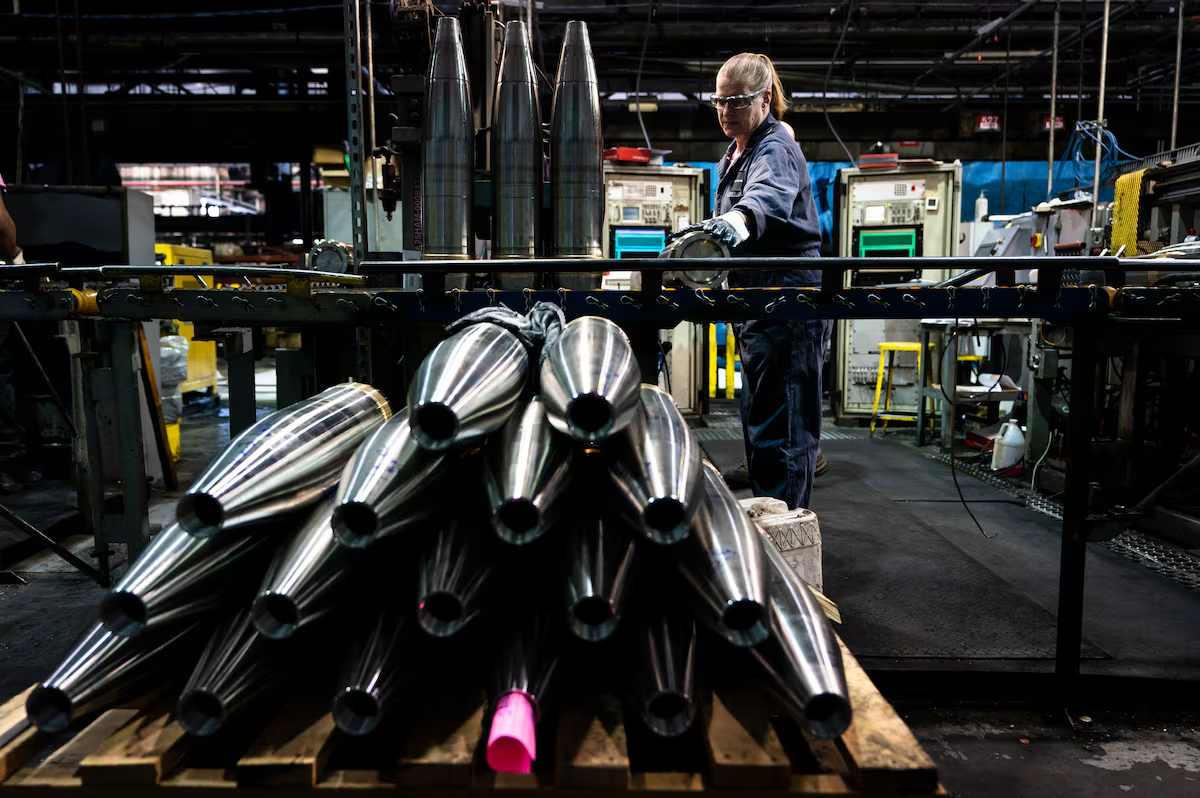
Manufacturing challenges are thwarting the U.S. Army’s ambitions to increase production of much-needed 155-mm howitzer shells, according to a report from the Department of Defense Inspector General. The goal is to produce 100,000 rounds per month by October 2025, yet only 36,000 rounds are being produced as of March 2026.
The production bottleneck primarily exists at a contractor-operated facility in Mesquite, Texas, which has struggled to meet contract specifications for the shell’s metal parts. After a $469 million investment, the Universal Artillery Projectile Lines factory was expected to utilize advanced manufacturing methods for efficient production. However, the results have not met expectations, raising concerns about the choice of unique production equipment that had not been previously tested against U.S. standards.
To expedite the process, the Mesquite factory attempted to adapt equipment originally designed for older munitions rather than for the newer variants. This decision has compounded the problem, as the aging technology has not been able to deliver consistent outputs. Problems have also been reported at an ammunition plant in Scranton, Pennsylvania, including lack of contractor responsiveness and equipment maintenance, with officials worried about the lack of competition in awarding contracts for the Mesquite facility.
While production has increased significantly—from 14,000 to 36,000 rounds—the Army is still far from the ambitious target amid high demand for artillery shells, particularly due to ongoing military expenditures by Ukraine that have diminished U.S. stocks. As part of the 2025 National Defense Industrialization Strategy Implementation Plan, the Army aims to modernize existing plants and create new facilities in Kansas and Arkansas to increase production capacity to 140,000 rounds by December 2027.
The report from the Inspector General suggests the Army should consider evaluating the contract with the Mesquite facility to ensure accountability regarding the funds spent and the terms of the contract. There may be a path toward recouping some investments if it is determined that the contracting process was not adequately competitive.
With ongoing pressure to fulfill military readiness and support efforts overseas, the Army continues to navigate a complex manufacturing landscape, hoping to resolve these issues in a timely manner to meet strategic objectives and reinforce capability.
The content above is a summary. For more details, see the source article.









