


Key Takeaways
- Canada is acquiring 190 armored combat support vehicles for nearly $2 billion CAD, expanding its fleet to 550 vehicles.
- The contract was awarded to General Dynamics Land Systems-Canada, which will also build 35 vehicles for Ukraine.
- The new Defense Industrial Strategy encourages purchasing from Canadian firms to bolster domestic defense capabilities.
Expansion of Canada’s Armored Fleet
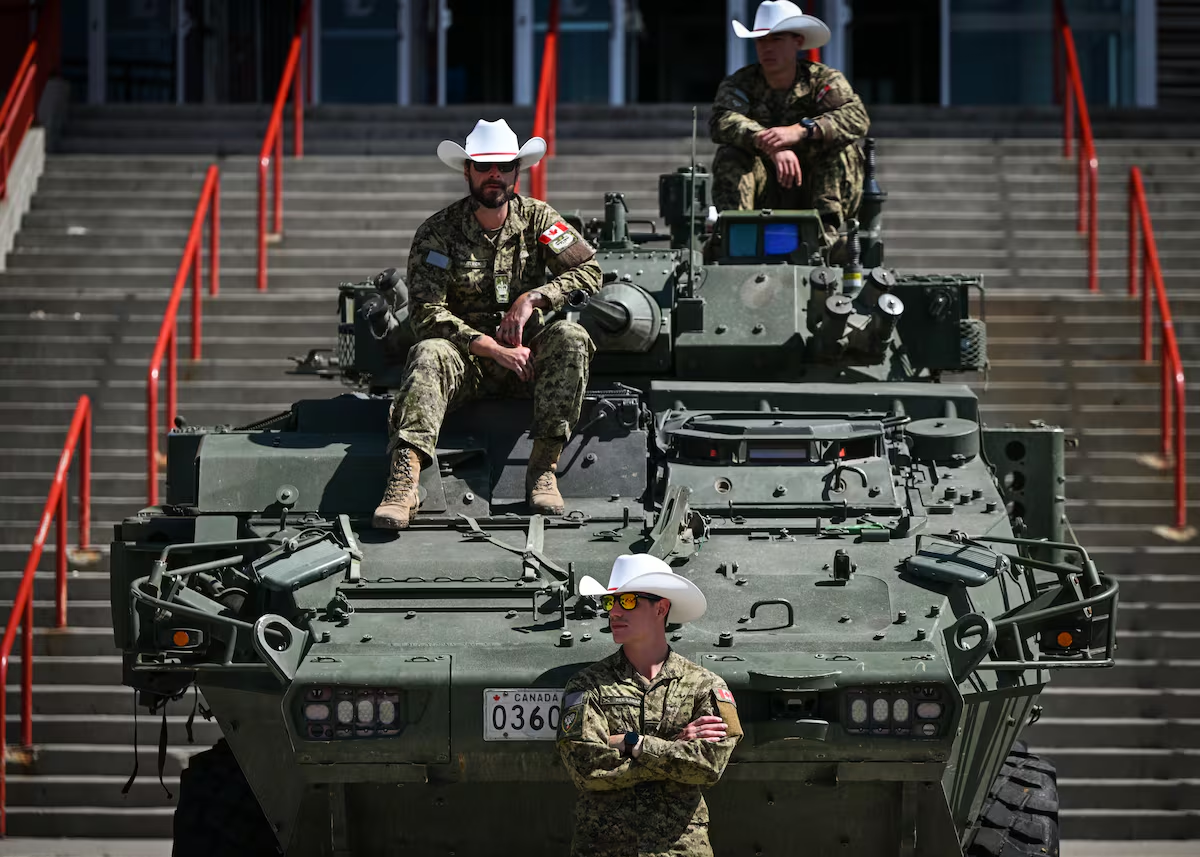
Canada is significantly enhancing its armored combat capabilities by acquiring 190 combat support vehicles through a contract valued at nearly $2 billion CAD (approximately $1.4 billion USD). This contract has been awarded to General Dynamics Land Systems-Canada (GDLS-Canada), headquartered in London, Ontario. In addition to the purchase for the Canadian Army, GDLS-Canada will construct 35 armored combat support vehicles specifically for Ukraine, as announced by Prime Minister Mark Carney on July 16. Prior to this contract, Canada had already donated 89 such vehicles to Ukraine.
This new acquisition will elevate the Canadian Army’s fleet of wheeled light armored combat support vehicles from 360 to 550. GDLS-Canada had previously received a contract for the original 360 vehicles in August 2019, and those have already been delivered. The armored combat support vehicles (ACSVs) come in eight variants, including roles such as ambulance, command post, electronic warfare, and troop transport, all based on GDLS-Canada’s Light Armored Vehicle 6.0 platform, which is designed to minimize training and maintenance costs. Currently, these vehicles are deployed with the Canadian-led NATO Multinational Brigade in Latvia.
Prime Minister Carney also declared GDLS-Canada as the first strategic partner under the newly established Defence Industrial Strategy framework. This initiative prioritizes procurement from Canadian firms, aiming to cultivate domestic defense manufacturing capabilities. Carney remarked, “Through this framework, we’re creating a pathway for Canadian companies like GDLS-Canada to work more closely with our government.”
The framework requires participating companies to invest in Canadian research and development, employ domestic workforce, and enhance local supply chains. In exchange, the Canadian government will act as a key customer, facilitating approvals and expanding access to new export markets. As Carney articulated, “The commitment is simple: when Canadian companies build for Canada, Canada will build with them.” Notably, more than 600 Canadian suppliers are involved in the construction of the armored vehicles at GDLS-Canada.
The defense industrial strategy was a response to U.S. President Donald Trump’s 2025 imposition of tariffs on Canada and threats of economic repercussions. Trump had suggested that to avoid such measures, Canada might need to consider aligning more closely with the U.S. Carney emphasized the necessity for Canada to decrease its dependence on U.S. military equipment, stating that Canada’s defense capital spending should not predominantly go to the U.S.
While Carney expressed the intention to work with U.S.-owned firms like GDLS-Canada, such collaborations would hinge on a firm commitment to domestic economic development. Dave Haggerty, vice president and general manager of GDLS-Canada, welcomed the strategic agreement, highlighting the pride in providing Canadian soldiers with essential combat vehicles while reinforcing Canada’s defense industrial base and skilled workforce.
David Pugliese serves as the Canada correspondent for Defense News.
The content above is a summary. For more details, see the source article.









