


Key Takeaways
- Target Arm’s Ralar 2 system now integrates with HDT Global’s Hunter WOLF and WOLF-X unmanned ground vehicles, enabling autonomous drone operations.
- The system allows drones to launch, land, and recharge from moving vehicles without human pilot intervention, enhancing operational efficiency.
- The technology aims to improve various sectors, including defense, public safety, logistics, and infrastructure protection.
Autonomous Drone Integration with Ground Vehicles
On July 27, 2026, Target Arm Inc. unveiled the integration of its Ralar 2 drone launch and recovery system with HDT Global’s Hunter WOLF and WOLF-X unmanned ground vehicles. This innovative combination facilitates the autonomous operation of drones from moving vehicles, eliminating the need for a human pilot to manage the process.
Typically, drones require stationary platforms for launch and recovery, necessitating halting vehicles and having human operators on standby. This traditional approach can hinder efficiency and increase operational risk, particularly in critical scenarios where remaining mobile is essential to avoid becoming stationary targets or losing mission momentum.
The Ralar 1 and Ralar 2 systems, designed by Target Arm, allow certified drones to operate from vehicles without stopping. These AI-assisted robotics and autonomy systems enable drones to launch, land, recharge, and relaunch while moving, whether on land, air, or water.
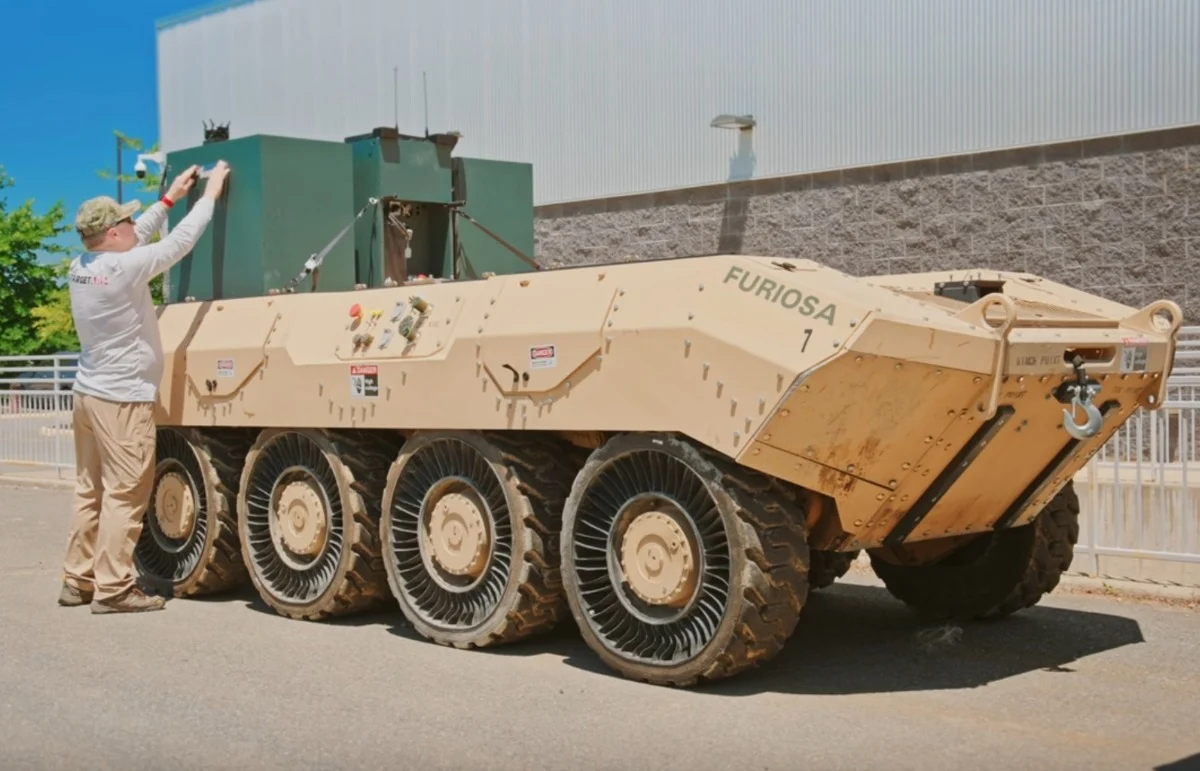
Recent footage shared by Target Arm showcases a field demonstration of this system, featuring equipment mounted on a compact unmanned ground vehicle, termed “FURIOSA.” This robotic platform is designed for rugged terrains and operates autonomously, illustrating the potential for on-the-go drone operations without human oversight.
Unmanned ground vehicles like the Hunter WOLF and WOLF-X are increasingly utilized in military applications for logistics and reconnaissance. They provide essential capabilities such as transporting equipment, scouting, and carrying sensor payloads to high-risk areas, further supported by the drone deployment functionality.
This integration broadens the scope of possible applications beyond military use. Target Arm anticipates roles for the technology in public safety—like search and rescue operations or surveillance—as well as logistics, package delivery, maritime operations, and the protection of critical infrastructure, including power plants and pipelines.
Historically, ground robots and aerial drones have functioned as separate systems, requiring independent teams and launch protocols. The integration facilitated by the Ralar 2 system signals a transition toward a more unified operational model for autonomous systems. This capability of launching and recovering drones without stopping or human intervention could lead to significant advancements across various fields.
Whether this integrated approach becomes a standard development in the evolving landscape of autonomous technology or remains an initial prototype among several competing strategies will be determined over time. As the landscape of drone and robotic systems continues to evolve, the potential for enhanced efficiency and safety in operations proves to be a critical factor for future advancements.
The content above is a summary. For more details, see the source article.









