


Key Takeaways
- Researchers at Gazipur Agricultural University patented a technology to enhance the mineral content of jackfruit seeds from 2% to over 33%.
- The innovation aims to improve nutrition while reducing food waste, as jackfruit seeds are often discarded.
- This advancement marks a significant milestone in Bangladesh’s agricultural and nutrition research sector.
Innovative Use of Jackfruit Seeds
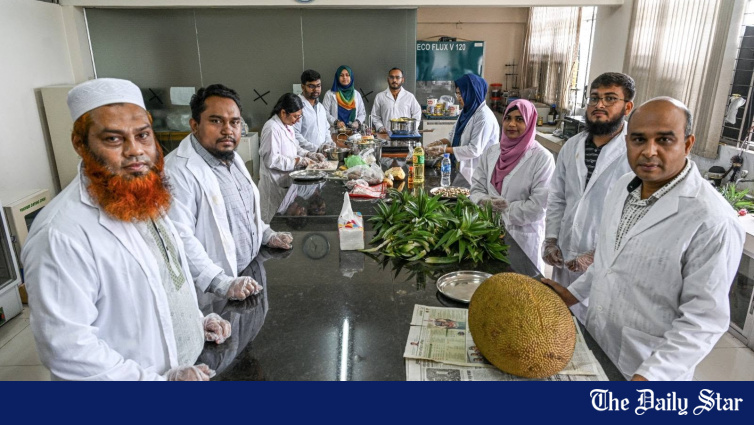
Researchers at Gazipur Agricultural University (GAU) have recently patented a groundbreaking technology that transforms jackfruit seeds into a nutrient-dense food ingredient. The patent, granted by the Department of Patents, Designs and Trademarks (DPDT) under the Ministry of Industries, was developed by Prof Dr Md Amdadul Haque and his postgraduate researcher Md Akram Hossain.
This innovative technology significantly boosts the mineral content in dried jackfruit seeds from around 2% to over 33%, enhancing their mineral concentration by approximately 16 to 17 times. The initiative, funded through the Ministry of Education’s Grants for Advanced Research and Education (GARE) project, seeks to utilize jackfruit seeds that are often discarded, despite being rich in nutrients.
Jackfruit seeds are not only edible but are also packed with essential nutrients, including protein, fiber, iron, and B vitamins. By converting these seeds into a mineral concentrate, researchers aim to enrich processed foods, improving their nutritional value. Additionally, this method contributes to reducing agricultural waste and supports environmental sustainability.
GAU Vice Chancellor Prof Dr GKM Mustafizur Rahman emphasized the significance of this patent, describing it as a landmark achievement in Bangladesh’s agricultural and food science research. The move aligns with broader goals of enhancing food security and nutrition in the country.
In summary, this technological advancement highlights the potential of jackfruit seeds, recognized as a “superfruit” due to their diverse health benefits, including high fiber content, vitamin C, potassium, and antioxidants. By transforming a commonly discarded food byproduct into a valuable nutritional resource, researchers are paving the way for healthier food options while promoting sustainability in agriculture.
The content above is a summary. For more details, see the source article.









