Key Takeaways
- NASA’s Curiosity rover discovered extensive honeycomb-like polygonal fractures in a Martian valley called “Valle Grande.”
- The newfound features, each measuring 1.5 to 3 inches across, may provide insights into Mars’ geological history and past environments.
- Curiosity continues to reveal evidence of ancient water and chemistry supportive of microbial life on Mars.
New Discoveries in Valle Grande
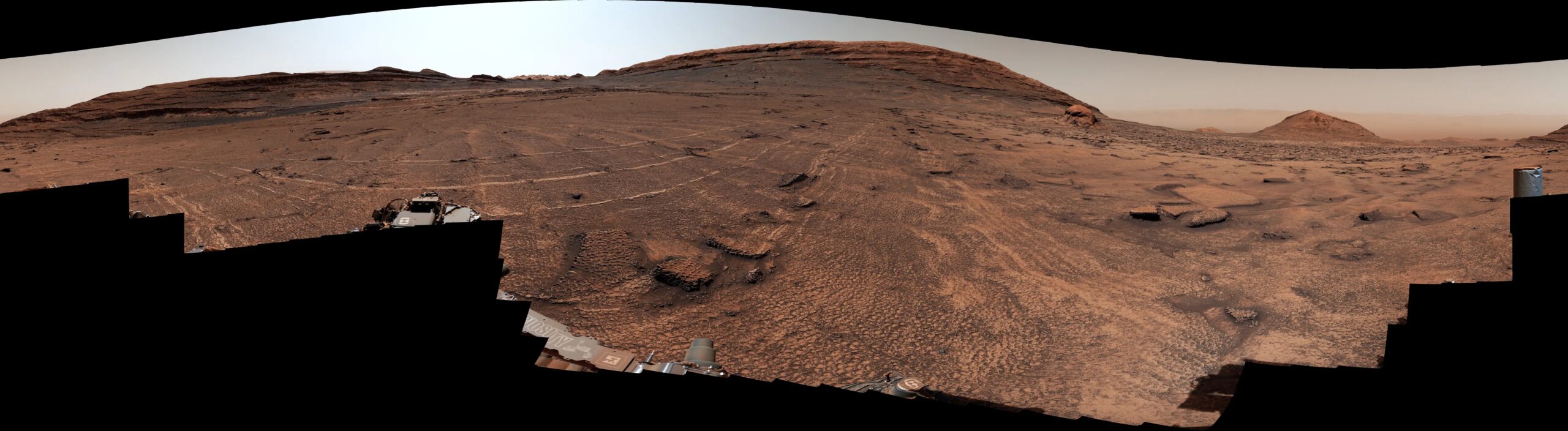
NASA’s Curiosity rover has unveiled an extensive area of polygonal fractures in a Martian valley, Valle Grande, during its recent journey. Captured on June 19 and 20, the images showcase honeycomb-like textures spreading outwards from the rover for miles, including around a nearby butte named “Miraflores,” which climbs 20 feet high and is capped with sand.
Project scientist Ashwin Vasavada from NASA’s Jet Propulsion Laboratory expressed excitement over the breathtaking landscape, stating that the team is hopeful the data will reveal clues about the formation of these polygonal shapes. Despite having seen smaller patches of similar formations before, the sheer scale in Valle Grande is unprecedented.
The new polygons are thought to have originated from different geological processes, including mud cracking and temperature fluctuations that could have led to the expulsion of water from sediment layers. This discovery highlights Curiosity’s ongoing exploration, which has yielded various intriguing geological features over its 14-year mission since landing on Mars on August 5, 2012.
Curiosity has been instrumental in uncovering evidence of Mars’ ancient environments, including the presence of lakes and streams in the lower foothills of Mount Sharp, the mountain it has been climbing since 2014. The rover has previously detected carbon-based molecules in its explorations, which are believed to be precursors to essential nucleic acids like RNA and DNA. While it remains unclear whether these organic molecules were formed by biological or geological processes, their presence further supports the idea that ancient Mars had the right conditions for life.
Managed by Caltech, JPL develops and leads the Curiosity mission for NASA’s Science Mission Directorate, contributing to the broader Mars Exploration Program. For further information on Curiosity and its findings, visit NASA’s official site dedicated to the mission.
The content above is a summary. For more details, see the source article.