


Key Takeaways
- BMW will commence mass production of its iX5’s battery packs in South Carolina starting December.
- The automaker aims to create a local supply chain and reduce costs by bringing battery production in-house.
- The new battery pack promises up to 435 miles of range and can be charged from 10-80% in just 22 minutes.
BMW Invests in Local Battery Production
Amidst a challenging year for electric vehicle (EV) sales in the U.S., BMW is making a significant move by localizing battery production. The company plans to begin mass production of its iX5 high-voltage battery packs at the newly established Plant Woodruff in South Carolina, starting this December. This decision marks a bold financial commitment, as only a few automakers have taken on such extensive battery production efforts domestically.
By producing batteries in-house rather than relying on imports, BMW is initiating a multi-billion-dollar venture that aims to develop a robust local supply chain. This strategy may protect the company from geopolitical uncertainties and potentially lower costs over time. Additionally, since the iX5 is manufactured at the nearby Plant Spartanburg, this approach will enhance logistical efficiency.
Robert Engelhorn, president and CEO of BMW Manufacturing, emphasized the importance of integrating battery and vehicle production. The proximity will facilitate a seamless assembly process for future fully electric BMW X models produced at Spartanburg.
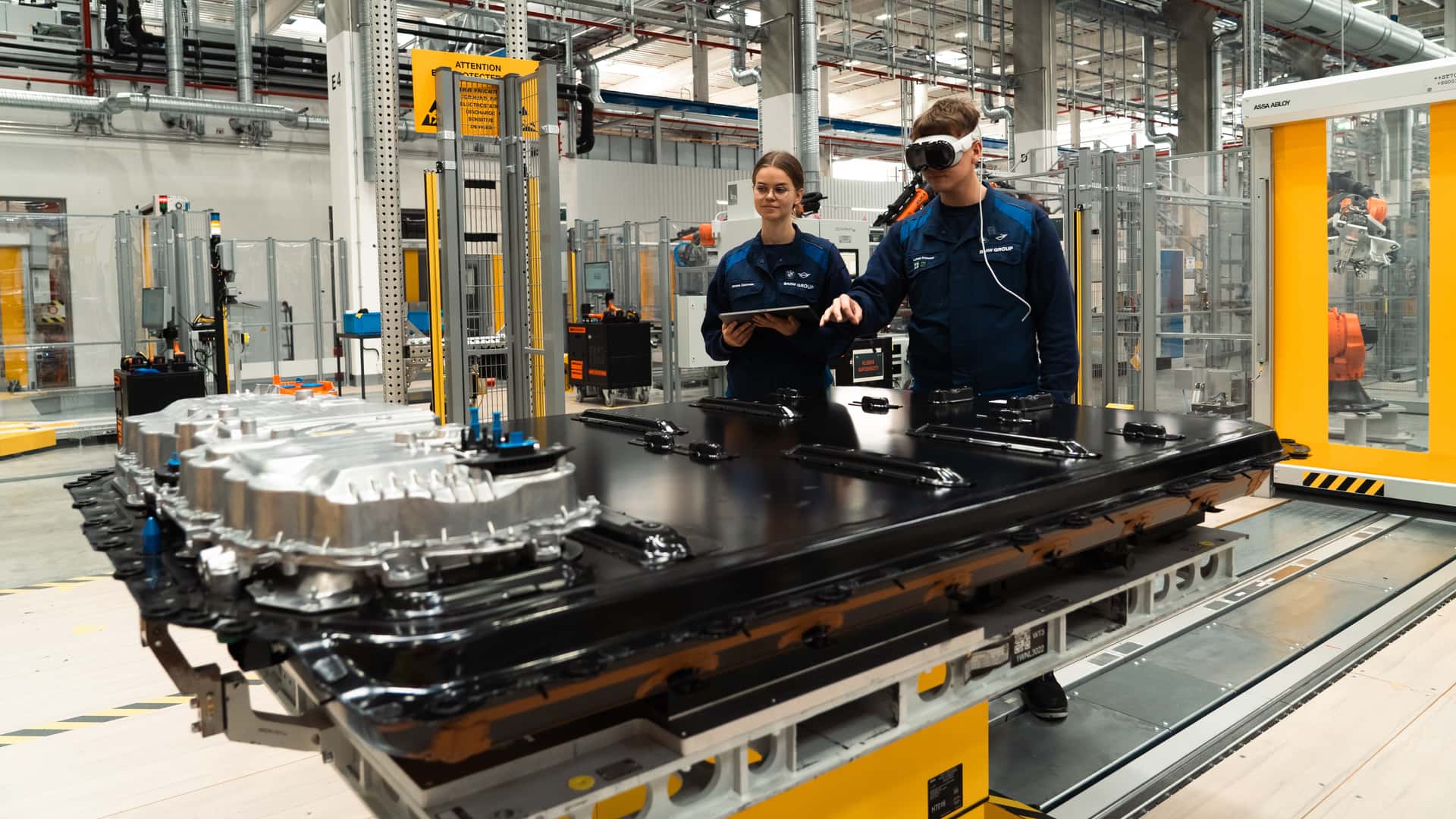
Approximately 300 human employees and 250 robots will work at the Woodruff facility, utilizing advanced technologies such as virtual reality and artificial intelligence to minimize errors. The cylindrical battery cells will be supplied by Automotive Energy Supply Corp. (AESC), which is now primarily owned by China’s Envision Group. Although AESC had initially planned to produce these cells in South Carolina, that project was postponed last year due to a series of cancellations in the battery sector after the withdrawal of EV incentives during the Trump administration.
Instead of the original site, AESC will continue supplying BMW’s Gen6 battery cells from a different, undisclosed location. The new iX5 battery cells are 120 millimeters tall and offer 30% more usable energy compared to the 95-millimeter cells used in the iX3. The battery pack itself has a total capacity of 144 kilowatt-hours (kWh) in the U.S. and 141 kWh in Europe, allowing for an estimated range of 435 miles. Notably, this large pack can recharge from 10-80% in just 22 minutes, thanks to a peak charging rate of 460 kilowatts.
The assembly process for the battery pack begins with checking the voltage of each cell upon arrival. Workers then cluster these cells and attach cooling components, following which they are welded together using lasers. The completed pack is encased in foam for protection and stability. The final step involves sealing the housing and installing the Energy Master, the battery’s management system, followed by additional checks before transporting the pack to the Spartanburg plant for installation into the iX5.
BMW is not limiting its battery production efforts to South Carolina; it is also manufacturing battery packs in Hungary, Germany, China, and Mexico. This “local for local” strategy aims to optimize supply chain logistics, potentially providing BMW with a competitive edge for the foreseeable future.
The content above is a summary. For more details, see the source article.









