


Key Takeaways
- Nvidia’s CEO predicts the semiconductor industry could grow from $791.7 billion to $7.9 trillion in a decade, driven by the rise of AI agents.
- Nvidia and Micron Technology are well-positioned to capitalize on the demand for advanced AI technology and memory chips.
- Micron’s stock remains undervalued despite a recent pullback, making it an attractive buy for long-term investors.
The AI Revolution and Semiconductor Boom
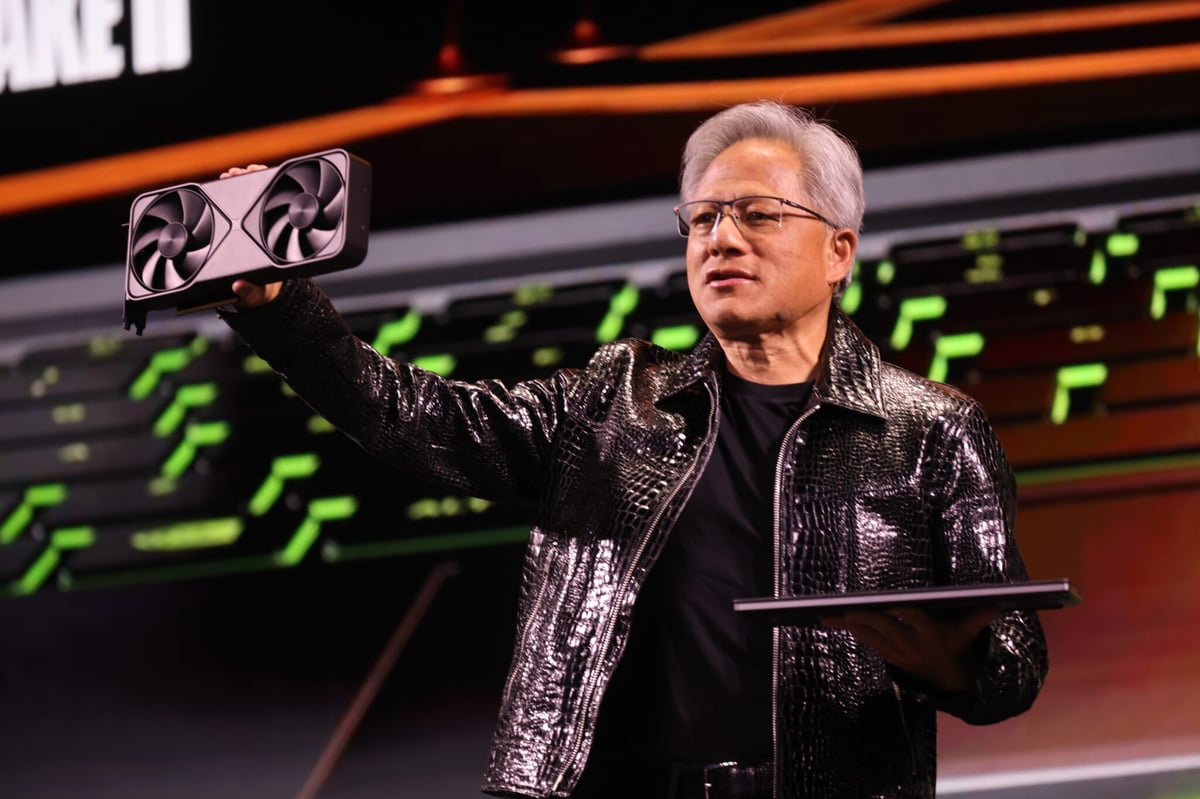
The artificial intelligence (AI) landscape is evolving, suggesting that the pessimistic forecasts regarding its development may be unfounded. Currently, the emergence of AI agents—self-directed systems capable of autonomously managing tasks—could significantly enhance productivity for corporations. Nvidia’s CEO, Jensen Huang, recently indicated that the semiconductor industry must expand dramatically to accommodate billions of these AI agents.
Huang estimates that the industry, which was valued at about $791.7 billion last year, could escalate to approximately $7.9 trillion within the next decade. This prediction highlights the anticipated rapid growth in demand for AI technology. Key players in this booming sector include Nvidia and Micron Technology.
Nvidia, recognized as the leader in the Graphics Processing Unit (GPU) market, reported an impressive revenue increase of 85% year-over-year in Q1 fiscal year 2027, totaling $81.6 billion. Its gross margins are also up significantly, reaching 74.9%. The company sees a robust future in its latest technologies, particularly the Vera Rubin architecture, which features a standalone CPU crucial for AI’s growth. Nvidia anticipates $20 billion in stand-alone CPU revenue through 2026, underlining its expanded role beyond GPUs.
In contrast, Micron Technology has seen its revenue skyrocket due to demand for memory chips amid a significant shortage. For Q3 fiscal year 2026, Micron’s revenue surged nearly 346% year-over-year to $41.46 billion, with a substantial increase in margins. The forecast suggests ongoing demand due to supply constraints, with major competitors, including Samsung Electronics, predicting the memory chip shortage could persist until at least 2028.
Despite a recent 15% decline in share price as investors realize profits, Micron is trading at only 5.3 times forward earnings. This appears attractive given its rapid revenue growth and long-term supply agreements, which provide a buffer against potential downturns in demand.
Long-term investors are encouraged to consider both Nvidia and Micron as they possess strong potential to yield substantial returns, particularly if AI demand continues to expand or the memory chip shortage remains prevalent.
The content above is a summary. For more details, see the source article.









