


Key Takeaways
- Modern tank warfare is complex, requiring a combination of firepower, protection, mobility, and technology.
- The top battle tanks emphasize crew survivability, operational experience, and adaptability to various environments.
- The M1A2 SEPv3 Abrams, Leopard 2A8, K2 Black Panther, Merkava Mk.4 Barak, and Challenger 3 are currently considered the best in the world.
Understanding Modern Battle Tanks
Modern tank combat extends beyond traditional metrics like armor and firepower. A successful battle tank now must detect threats, engage while on the move, and withstand an array of modern attacks, including drones and anti-tank missiles. Critical elements influencing the effectiveness of these tanks include maintenance, fuel efficiency, and logistics, alongside technological advancements.
Five tanks stand out as the best in today’s battlefield, evaluated on their overall systems rather than individual specifications. These criteria include firepower, protection, mobility, technology, and operational history.
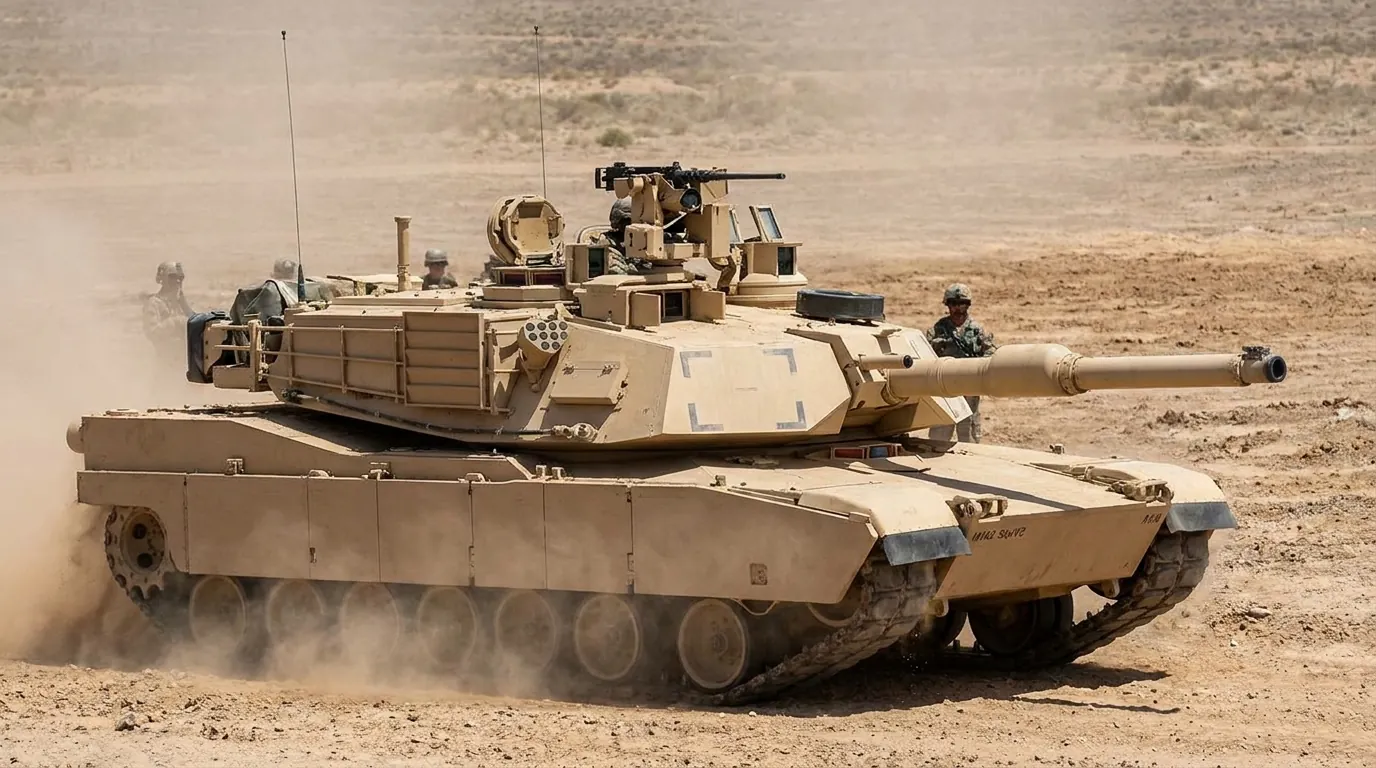
The M1A2 SEPv3 Abrams from the United States is renowned for its superior firepower and protection measures. Featuring a powerful 120 mm cannon and advanced composite armor, its design maximizes crew safety with innovative ammunition storage and active protection systems. While it excels in many areas, its gas turbine engine does lead to higher fuel consumption.
Germany’s Leopard 2A7/A8 maintains its relevance through continual upgrades since its introduction in 1979. Emphasizing balanced performance, the Leopard 2 combines accurate firing capabilities with effective mobility through its diesel engine, making it a versatile option for various mission types.
South Korea’s K2 Black Panther showcases cutting-edge technology and adaptability. Its hydropneumatic suspension allows for adjustments based on terrain, enhancing stability and firing accuracy. The K2 is lighter yet powerful, with advanced electronics that facilitate rapid target engagement, although it lacks extensive combat experience compared to other tanks.
Israel’s Merkava Mk.4 Barak prioritizes crew survivability in its design, with innovative layouts and active protection systems that counter anti-tank threats. This approach reflects Israel’s unique combat experiences and offers enhanced battlefield awareness through upgraded sensors.
The UK’s Challenger 3 represents a significant modernization effort of the Challenger 2 fleet. While its operational record is still developing, it focuses on integrating modern digital architecture and improved ammunition capabilities, alongside planned modular protection systems.
Each of these tanks embodies different philosophies and technologies, showcasing how nations adapt to evolving warfare landscapes. The future of tank design is pivoting toward not only armor and firepower but integrating advanced sensors, mobility, and crew decision-making to enhance battlefield effectiveness. As threats evolve, these factors are becoming pivotal in determining the world’s best battle tanks.
The content above is a summary. For more details, see the source article.









