


Key Takeaways
- Germany’s solar power generation reached a record 12 billion kWh in July 2026, driven mainly by increased photovoltaic capacity.
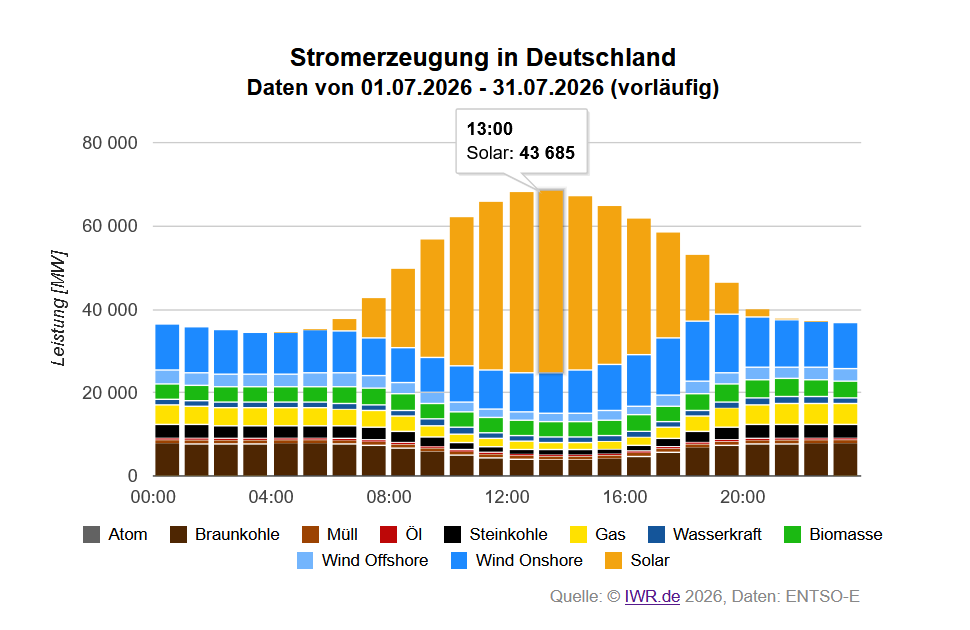
- Average midday solar output during this month exceeded 40,000 MW, significantly displacing coal and gas generation.
- Misconceptions persist regarding the EEG compensation system, as it only covers the differential costs, not the full amount for solar power fed into the grid.
Record Solar Generation in Germany
Germany’s photovoltaic sector has achieved a milestone, with approximately 12 billion kWh of solar energy integrated into the public electricity grid in July 2026. This remarkable figure emerged from a comprehensive analysis of quarter-hourly feed-in data by the Internationales Wirtschaftsforum Regenerative Energien (IWR) via ENTSO-E.
Solar energy is now a crucial element of Germany’s electricity supply, playing a larger role than ever before. The analysis highlighted that while the reported solar generation was 12 billion kWh, the actual total was considerably higher since it did not account for solar power used on-site by households and businesses. Notably, the midday solar output exceeded 40,000 MW, equivalent to the electrical output of over 40 nuclear power plants, aligning perfectly with peak electricity demand hours.
Public Misconceptions about Solar Subsidies
The IWR has also drawn attention to persistent misconceptions surrounding the EEG compensation for residential solar photovoltaic systems, which is usually perceived as a direct state subsidy. Currently, new photovoltaic systems receive around 7 cents per kWh fed into the grid, but this has led to misunderstandings. Dr. Norbert Allnoch from the IWR emphasized that this amount does not reflect a true subsidy, as it merely compensates for the difference between market exchange rates and the remuneration entitlement.
Solar power generated by these systems is first sold on the electricity exchange. The proceeds go into the EEG account, and compensation is paid based solely on the difference between the market price and the statutory rate of 7 cents per kWh. Therefore, if market prices are lower than the stipulated rate, the EEG covers the shortfall; if prices are higher, the excess goes back into the EEG fund.
Legacy Systems Driving Costs
The bulk of current EEG differential costs is attributed to older photovoltaic systems installed between 2010 and 2013, which secured much higher guaranteed compensation rates due to their initial investment costs. These rates often exceed 30 to 40 cents per kWh and will remain in effect for 20 years before they start to expire between 2030 and 2033. As these legacy contracts phase out, the overall differential costs associated with the EEG are projected to decline significantly, independent of the remuneration rates for newer systems.
The developments in Germany’s solar energy sector underscore its transformative role in the national energy landscape and illuminate the misunderstandings that can complicate public perception and policy discussions.
The content above is a summary. For more details, see the source article.









