Key Takeaways
- The Proba-3 mission features two spacecraft, the Coronagraph and the Occulter, designed for solar observations.
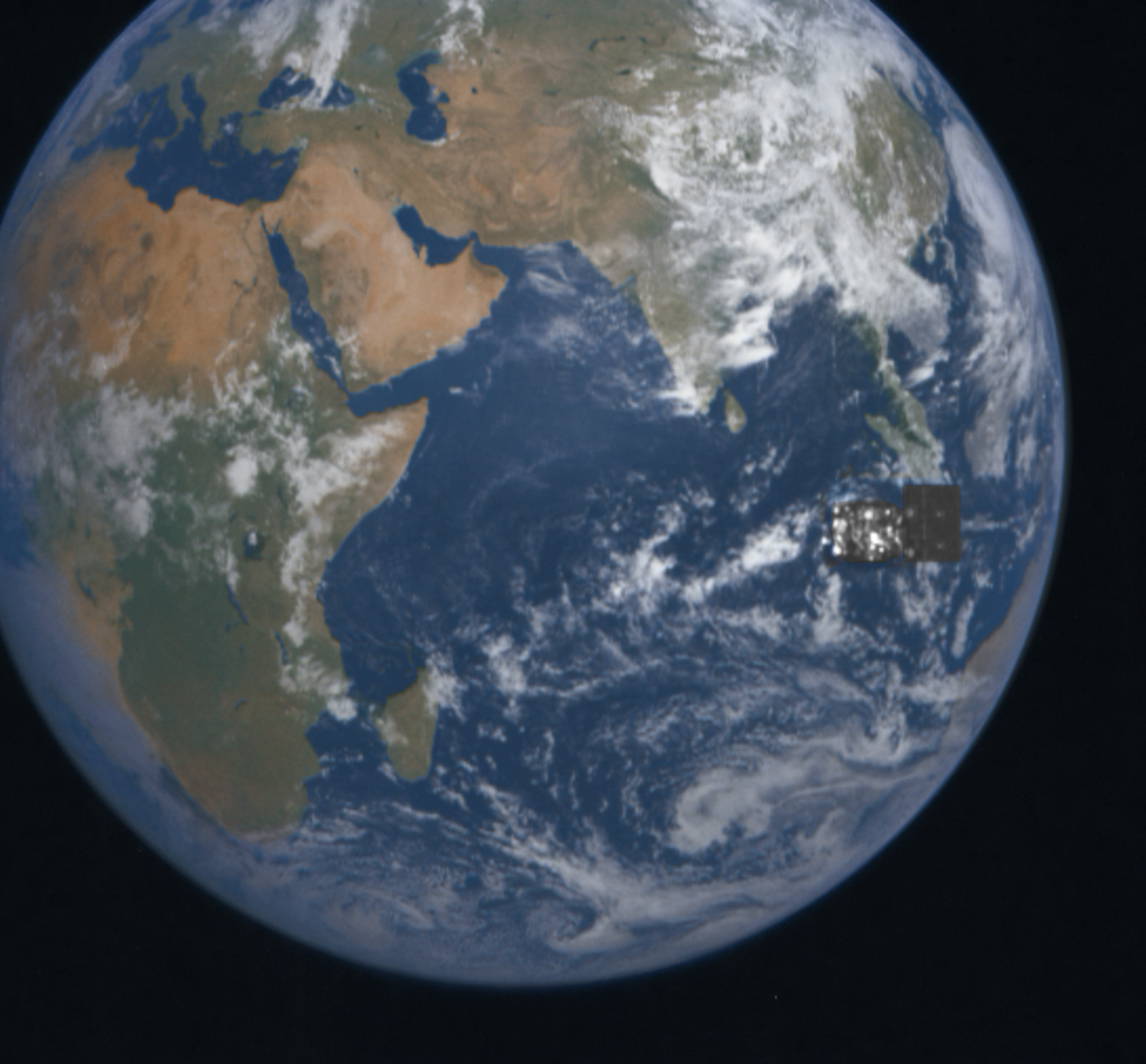
- A recent image highlights the Occulter’s unique ability to capture stunning Earth views while positioning itself for formation flying.
- The captured image shows the spacecraft’s operation 147 meters apart during a routine maneuver on July 10, 2026.
Mission Overview
At first glance, a recent image may seem like just another view of Earth. However, upon closer inspection, the Proba-3’s Coronagraph spacecraft can be spotted near the Indonesian Archipelago in the Indian Ocean. The image is interactive, allowing viewers to use a slider to reveal the Coronagraph in black and white against a vibrant Earth background.
The Proba-3 mission, launched with two spacecraft—the Coronagraph and the Occulter—has a distinct focus on solar observation. The Coronagraph specifically examines the Sun and its corona. Complementing this, the Occulter employs a sophisticated camera system to autonomously adjust its position relative to the Coronagraph. This system includes a wide-angle camera (WAC) to track flashing LED lights on the Coronagraph and a narrow-angle camera (NAC) for more precise alignment.
In addition to supporting solar observations, the Occulter’s camera captures remarkable views of Earth under the right conditions. The showcased image was taken on July 10, 2026, during a standard operation to position the two spacecraft 147 meters apart, preparing for formation flying.
The monochrome view on one side of the image shows exactly what the Occulter’s cameras detect, while the left side is artificially colored for easier identification of the spacecraft. The processed image was produced by the Royal Observatory of Belgium, and highlights the beauty of our planet, with deep blue oceans and white cloud swirls visible across land and sea.
As the Proba-3 mission continues, it not only furthers our understanding of the Sun but also provides captivating imagery of Earth, showcasing the capabilities of advanced space technology. The dual mission serves both solar science and offers a glimpse into the fragile beauty of our planet from space.
The content above is a summary. For more details, see the source article.