


Key Takeaways
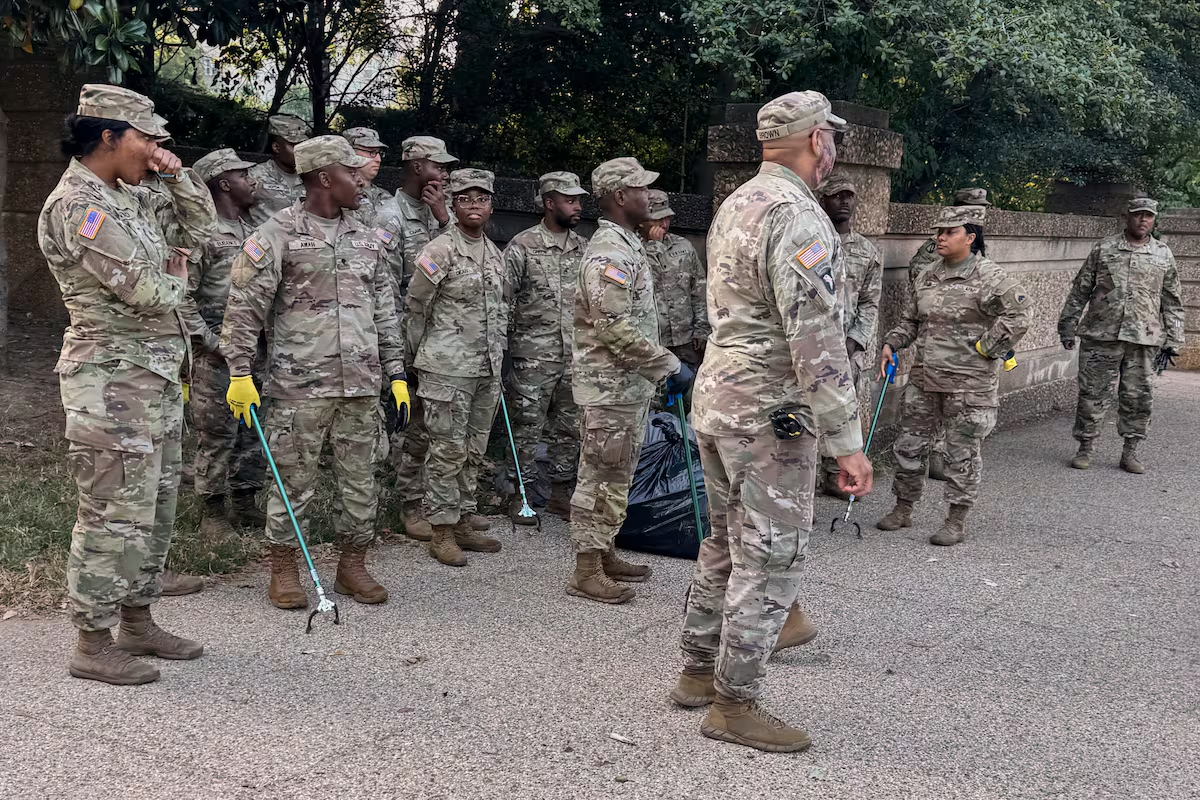
- Approximately 9,700 National Guard troops have been deployed in D.C. since August 2025, part of a mission costing $55 million monthly.
- Success indicators are mixed, with some reduction in property crimes, but violent crime rates largely unchanged.
- Plans include transitioning troops to apartments for improved response time and further patrols in high-crime areas.
Deployment Overview
Since August 11, 2025, nearly 9,700 National Guard troops from various states have been stationed in Washington, D.C., as part of the “Make DC Safe and Beautiful” initiative ordered by President Donald Trump. As the mission approaches its first-year mark, its effectiveness is being evaluated from different perspectives.
Brig. Gen. Leland Blanchard, interim commanding general of the D.C. National Guard, highlighted that the overall success of the deployment goes beyond the statistics; it also encompasses public sentiment regarding safety. While reported interventions by the Guard include 788 medical assists, assistance in reunifying 43 lost children, and supporting law enforcement on 479 occasions, the potential impact signifies more than just numbers.
Blanchard recounted instances where Guardsmen made direct interventions, such as halting a sexual assault on the D.C. Metro and providing life-saving assistance through Narcan for 325 individuals experiencing overdoses. He noted a visible change in areas like Starburst Plaza, a known drug activity hub, where a Guard member’s life-saving actions prompted positive feedback from community members.
Despite these anecdotes, scrutiny remains regarding the mission’s overall long-term effectiveness and cost-effectiveness. The Congressional Budget Office estimates the ongoing deployment will cost taxpayers around $55 million each month, which translates to more than $2 million for each Narcan administration, raising questions about financial efficiency. An updated estimate suggests an additional $1.4 billion could be incurred before the mission concludes in January 2029.
To reduce costs, the Guard is moving from hotels to apartments, a shift facilitated by a $292 million contract awarded to Placemakr. This change could save around $90 million while allegedly improving proximity to mission areas.
Current troop levels stand at about 4,600, a figure expected to decrease post-summer. A study from the nonpartisan Niskanen Center indicated that the National Guard’s presence correlated with a notable drop in specific property crimes, particularly in visible areas; however, it found that violent crime rates remained steady.
Blanchard remarked on the study’s conclusions, asserting there has been a positive impact on crime where the Guard is deployed, although some authors contested specific location choices. He expressed intentions to extend similar impacts in neighborhoods like Ward 8 and Trinidad, alongside existing downtown locations, maximally utilizing resources in high-need areas.
With the D.C. mission entering its next phase, details remain sparse, but plans indicate a reallocation of personnel to enhance community safety. Blanchard stated, “We’ll just shift some of those resources, and again, working in coordination with federal law enforcement and the Metropolitan Police Department, reallocate and repurpose some of those personnel,” as the initiative continues to evolve.
The content above is a summary. For more details, see the source article.









