


Key Takeaways
- The Kaimosi Agricultural Training Centre aims to provide Kenyan farmers with modern skills and climate-smart practices.
- Training programs will address challenges like climate change, rising costs, and declining soil fertility.
- The initiative seeks to transform agriculture into a professional sector by enhancing knowledge and technology usage among farmers.
Empowering Farmers through Training
The Kenya government has launched the Kaimosi Agricultural Training Centre to equip farmers with essential skills and modern technologies to enhance agricultural productivity and resilience against climate change. This initiative was announced during the Kenya Agricultural and Livestock Research Organization Training Centre (KARTC) Expo, where senior officials emphasized agriculture’s critical role in the economy.
The commissioning of the center comes at a challenging time for farmers grappling with unpredictable weather, rising production costs, and declining soil fertility. The center aims to bridge the gap left by traditional farming knowledge, providing practical skills in crop management, pest control, and climate adaptation.
Prime Cabinet Secretary Musalia Mudavadi highlighted the need for farmers to utilize innovative solutions, stressing that training is fundamental to achieving agricultural transformation. The center is set to introduce advanced tools such as drones, which can help monitor crops and improve farm management.
Felix Koskei, Chief of Staff and Head of the Public Service, urged farmers to take advantage of the training opportunities available at Kaimosi. He pointed out the necessity for greater investment in coffee and cocoa production and advocated for formal agricultural training that could elevate farming from a fallback option to a respected profession.
Central to the mission of Kaimosi is climate resilience. With unpredictable rainfall and soil degradation impacting agricultural output, the center will focus on training farmers in climate-smart practices like water conservation and crop diversification.
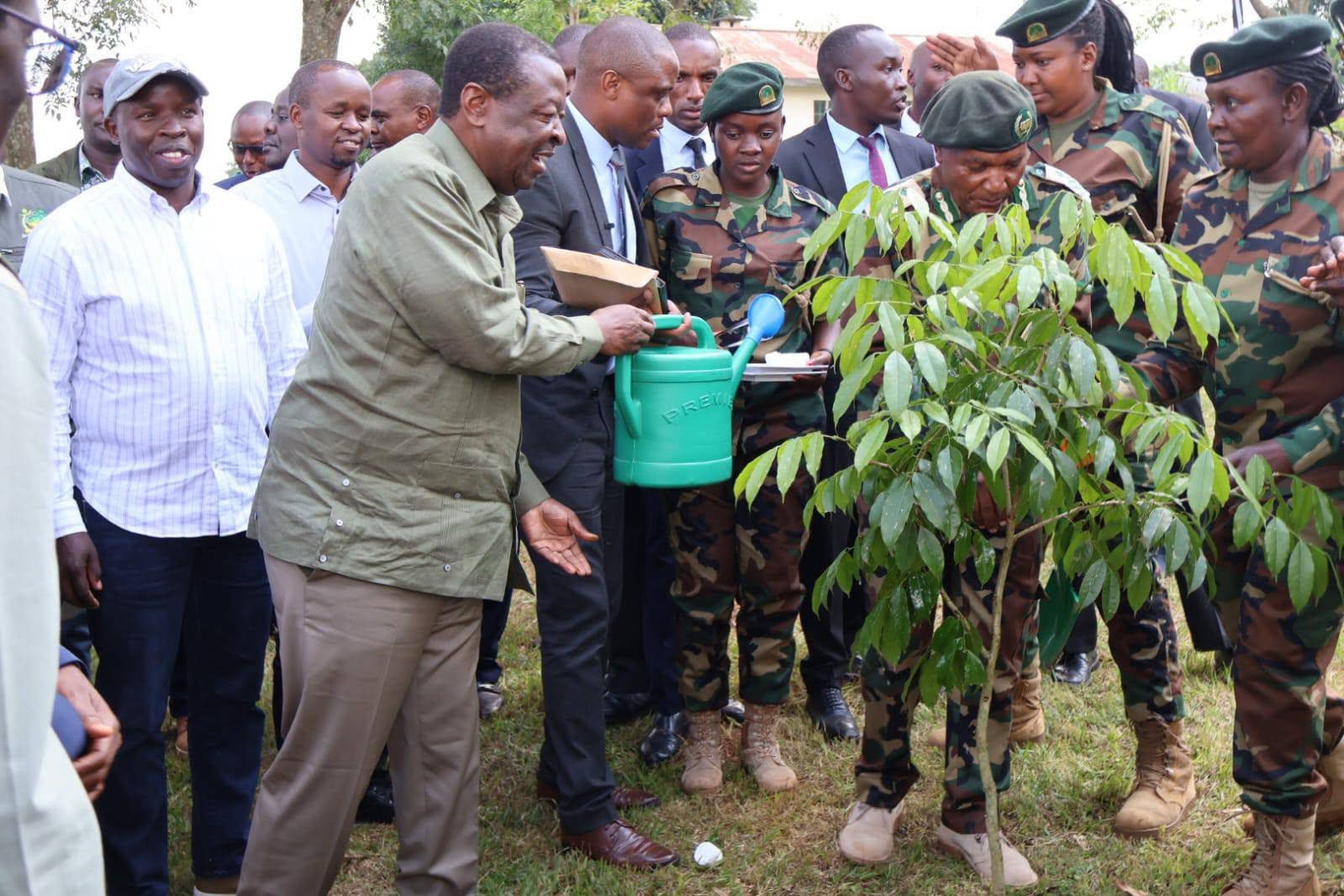
The initiative also emphasizes the relationship between agriculture and environmental conservation. The involvement of the Kenya Forest Service underlines the importance of healthy ecosystems in sustaining agricultural productivity. Protecting the environment is not just ecological; it’s tied to securing the future of farming.
Collaborations between various stakeholders—national and county governments, research institutions, and training centers—are critical for transitioning research into practical solutions for farmers. The success of the Kaimosi center will be measured not only by its facilities but by the actual uptake of training by farmers, the adoption of new technologies, and improvements in productivity and livelihoods.
Furthermore, it is vital that smallholder farmers can access training without barriers, alongside financial support and quality inputs. The center has the potential to become a model for agricultural training across Kenya, demonstrating that the future of agriculture lies in continuous learning and innovation.
Ultimately, the establishment of the Kaimosi Agricultural Training Centre represents a significant step toward redefining farming in Kenya into a knowledge-driven and technology-oriented sector, capable of securing food supplies and bolstering rural economies.
The content above is a summary. For more details, see the source article.









