


Key Takeaways
- The U.S. Navy successfully tested AI-driven sonar technology, SensorMAX, during RIMPAC exercises to enhance submarine targeting.
- SensorMAX allows rapid retraining and data retransmission, significantly improving operational capacity with multiple sonobuoy feeds.
- Lockheed Martin’s collaboration with FUSE Inc. ensures secure updates of AI models and software for ongoing missions.
AI Technology Enhanced Submarine Detection
The U.S. Navy has successfully implemented artificial intelligence in sonar technology during the recent multinational Rim of the Pacific (RIMPAC) exercise held in July. Lockheed Martin’s SensorMAX is a groundbreaking system that leverages AI and machine learning to analyze acoustic sensor data, fostering more effective submarine detection and engagement.
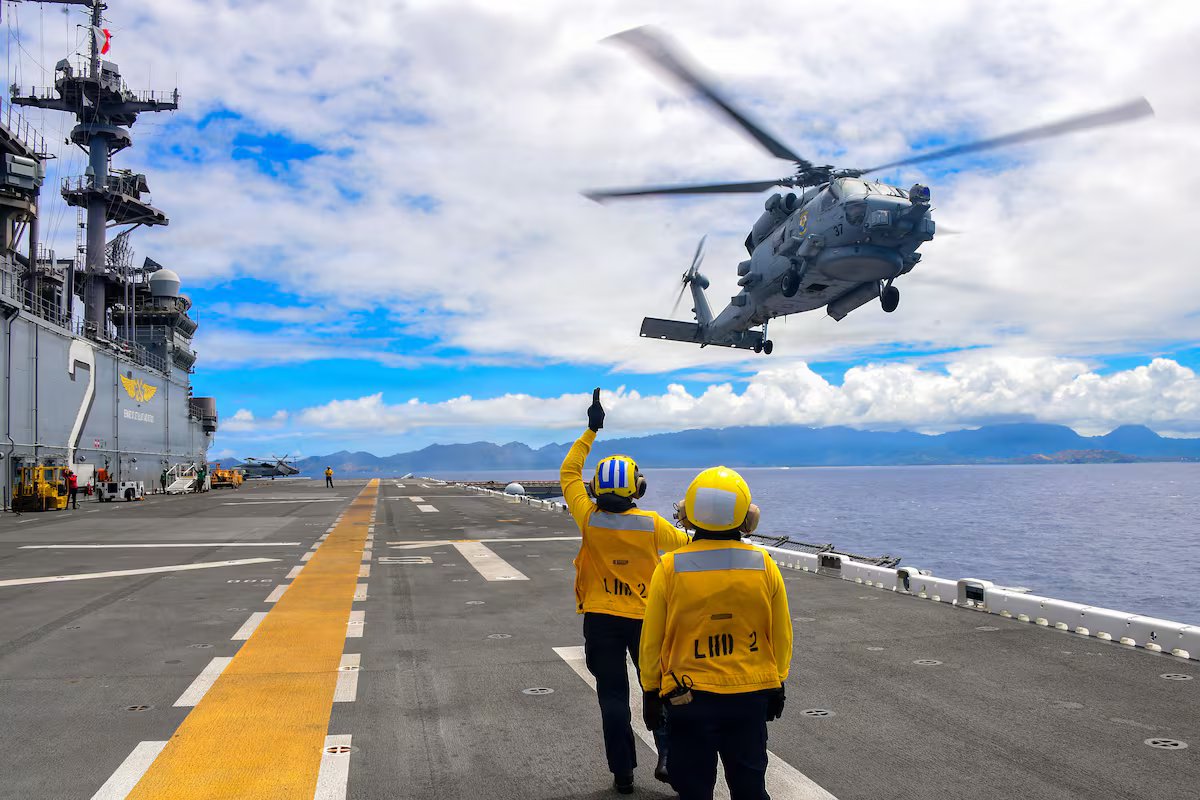
During the RIMPAC exercises near Hawaii, Navy MH-60R helicopters deployed sonobuoys that transmitted data to the SensorMAX system. This innovative technology aids crews in target identification by retraining its model based on new acoustic signals within minutes. Lockheed Martin highlighted the versatility of SensorMAX, describing it as “the Navy’s AI portable sonar expert,” which significantly enhances the situational awareness of air and naval forces.
The operational capabilities of SensorMAX enable aircrews to manage up to eight simultaneous sonobuoy surveillance feeds, effectively doubling the monitoring capacity compared to older systems. According to Lockheed Martin, model retraining takes less than five minutes, allowing for swift adjustments in real-time scenarios. The system continuously integrates data from various sensors, making it suitable not only for aerial operations but also for ground and naval engagements.
An essential aspect of the development is the collaboration between Lockheed Martin and FUSE Inc., which ensures secure and resilient software updates for deployed aircraft. This partnership enables the rapid delivery of SensorMAX’s trained AI models and mission software without disrupting ongoing operations.
The implications of such advancements extend beyond the U.S. Navy; China has also been integrating AI into its anti-submarine warfare strategies. Chinese media reported that researchers have developed AI systems capable of evaluating data from multiple sources, including sonobuoys and environmental factors like water temperature and salinity, indicating a competitive landscape in this critical domain.
As the defense sector continues to embrace AI technologies, systems like SensorMAX represent a significant evolution in how militaries can leverage data for enhanced operational efficiency and effectiveness. The integration of AI into naval warfare strategies not only hastens response times but also strengthens defense capabilities around high-value assets.
In summary, the successful deployment of SensorMAX during RIMPAC exemplifies the U.S. Navy’s commitment to embracing innovative solutions to modernize its anti-submarine warfare capabilities. As potential adversaries adopt similar technologies, the need for continued advancements in AI and data utilization in military operations becomes increasingly vital.
The content above is a summary. For more details, see the source article.









