


Key Takeaways
- India’s renewable energy capacity has surpassed 300 GW and is on track to achieve a 500 GW target by 2030.
- Experts highlight the need for an economic shift from a “petro state” to an “electro state” to meet growing electricity demands.
- The World Bank is pivoting its focus away from direct renewable financing to enhancing private investment in infrastructure and skills.
Transforming India’s Energy Landscape
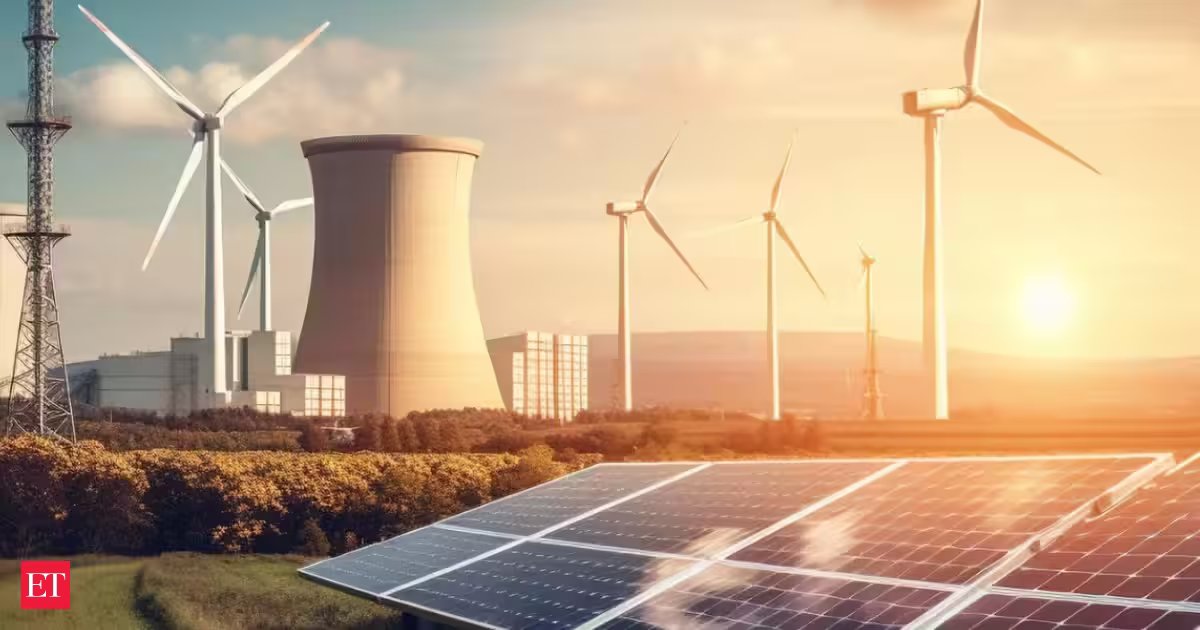
India is navigating recent geopolitical challenges effectively, largely due to its rapid expansion in renewable energy. The country now boasts over 300 GW of non-fossil fuel power installations and is set to achieve its ambitious goal of 500 GW by 2030. To support this transition, experts emphasize a fundamental shift from a “petro state” to an “electro state” to meet the increasing electricity demands driven by electric vehicles, artificial intelligence, and burgeoning data centers.
During a panel discussion titled “The New Energy Order: Balancing Security, Affordability, and Sustainability,” moderated by Anubhuti Vishnoi from ET, various speakers underscored the urgency for expanded renewable capacity, long-term capital infusion, enhanced transmission infrastructure, and increased private sector involvement in nuclear energy. Renewable Energy Secretary Santosh Kumar Sarangi advocated for behavioral changes to support this transformation. He noted that increasing supply capacity for electric vehicles and home appliances could significantly enhance resilience and decrease import reliance.
Girish Tanti, co-founder of Suzlon Group, echoed these sentiments, urging India to elevate its renewable energy goals given the substantial groundwork laid over the past decade. He pointed out that globally, renewable sources have constituted nearly 80% of new energy additions, a trend that will persist, aligning with the demands emanating from artificial intelligence and economic growth. Tanti projected that by 2050, India could require almost five times its existing power capacity, predominantly sourced from renewables, emphasizing that much of India’s renewable potential remains untapped.
Scalability poses challenges, particularly regarding financing. While renewable projects typically require long-term investments of 30 years or more, the majority of capital in India currently has tenures under 10 years. Paul Procee from the World Bank highlighted a shift in the institution’s role, indicating a move away from financing renewable energy generation directly. Instead, the focus will transition to enhancing supportive infrastructure, smart grids, battery storage, and workforce skills, thereby facilitating private investment.
The recent Sustainable Harnessing and Advancement of Nuclear Energy for Transforming India (SHANTI) Act of 2025 stands to revolutionize nuclear energy capacity by inviting private sector participation. Sunita Kumar, CEO of Bajaj Energy’s nuclear division, emphasized that renewable and nuclear energy are complementary rather than competitive, forming an essential part of India’s energy mix.
To address fluctuating energy supply demands, a recent tender by the Solar Energy Corporation of India aims to provide round-the-clock power by integrating solar, wind, and battery storage. This innovative approach, presenting a competitive tariff of ₹5.25 per unit, could significantly address one of the major challenges facing renewable energy: ensuring a firm, reliable power supply.
This evolving scenario places India at the brink of potentially revolutionizing its electricity landscape, providing an opportunity for sustainable growth that aligns with global energy trends and domestic energy needs.
The content above is a summary. For more details, see the source article.









