


Key Takeaways
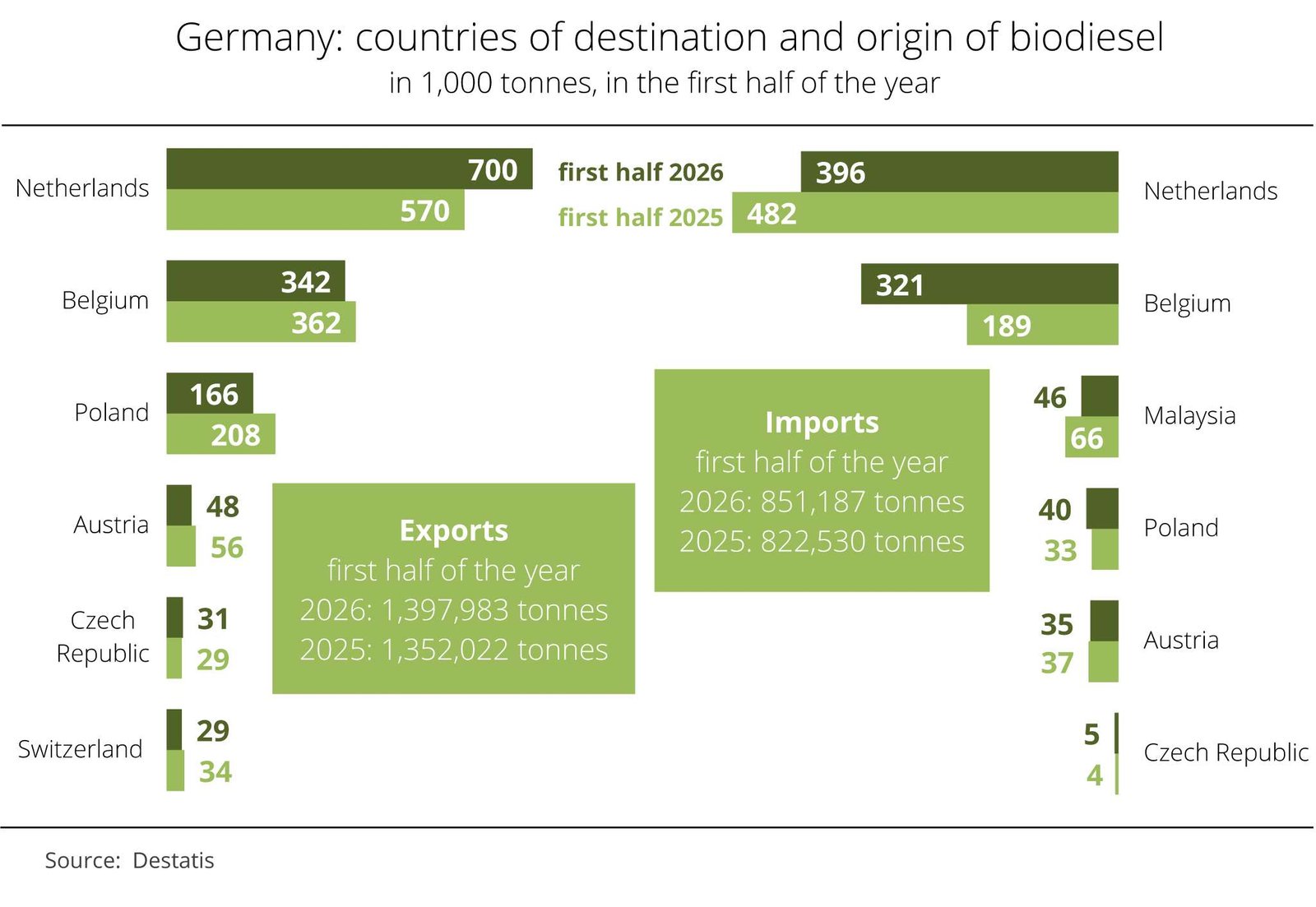
- Germany’s biodiesel exports grew by 3.4% to 1.4 million tonnes in H1 2026, while imports increased by 3.5% to 851,200 tonnes.
- The Netherlands is the main hub for biodiesel trade, with significant increases in imports from Belgium and a decrease from Malaysia.
- Rising HVO imports and upcoming changes due to the Renewable Energy Directive are likely to influence market dynamics and pricing stability.
Biodiesel Trade Trends in Germany
Germany’s biodiesel foreign trade accelerated in the first half of 2026, with notable year-on-year growth in both exports and imports, as reported by the Federal Statistical Office. Biodiesel exports increased by 3.4%, totaling 1.4 million tonnes, while imports rose by 3.5% to 851,200 tonnes.
The Netherlands retains its position as the primary logistical hub, significantly impacting biofuel trade patterns across Europe. Notably, imports from Belgium surged by approximately 69.6%, contrasting with a sharp decline in shipments from Malaysia, which fell by 30.2%.
EU Member States are still the top destinations for German biodiesel, with the Netherlands, Belgium, Poland, and Austria leading in demand. Particularly striking is the 22.8% rise in Dutch imports, while Polish imports saw a decrease of around 20.3%. The Union zur Förderung von Oel- und Proteinpflanzen (UFOP) has observed that robust biodiesel exports bolster rapeseed oil prices, benefiting producers even amid disappointing harvest yields.
The UFOP anticipates firm pricing into the 2026/27 season, driven by the implementation of the revised Renewable Energy Directive (RED III), which will enforce stricter biofuel quotas. Additionally, HVO imports are expected to contribute substantially to the market, with preliminary estimates suggesting an intake of around 325,000 tonnes in the first half of 2026.
The association emphasizes that major agricultural economies like the US, Canada, and Brazil actively leverage national biofuel policies to support farm revenues, an approach which could influence global market conditions. In conclusion, the evolving landscape of Germany’s biodiesel trade reflects shifting demands and regulatory impacts, setting the stage for continued growth and stability in the sector.
The content above is a summary. For more details, see the source article.









