


Key Takeaways
- The Italian Air Force is considering purchasing U.S. technology to convert unguided missiles into precision weapons.
- The U.S. Department of State approved a $364 million Foreign Military Sale to Italy for Advanced Precision Kill Weapon System (APKWS) II guidance systems.
- The APKWS system will enhance Italy’s defense capabilities while offering a cost-effective solution for targeting drones.
Italian Air Force Considers Advanced U.S. Missile Technology
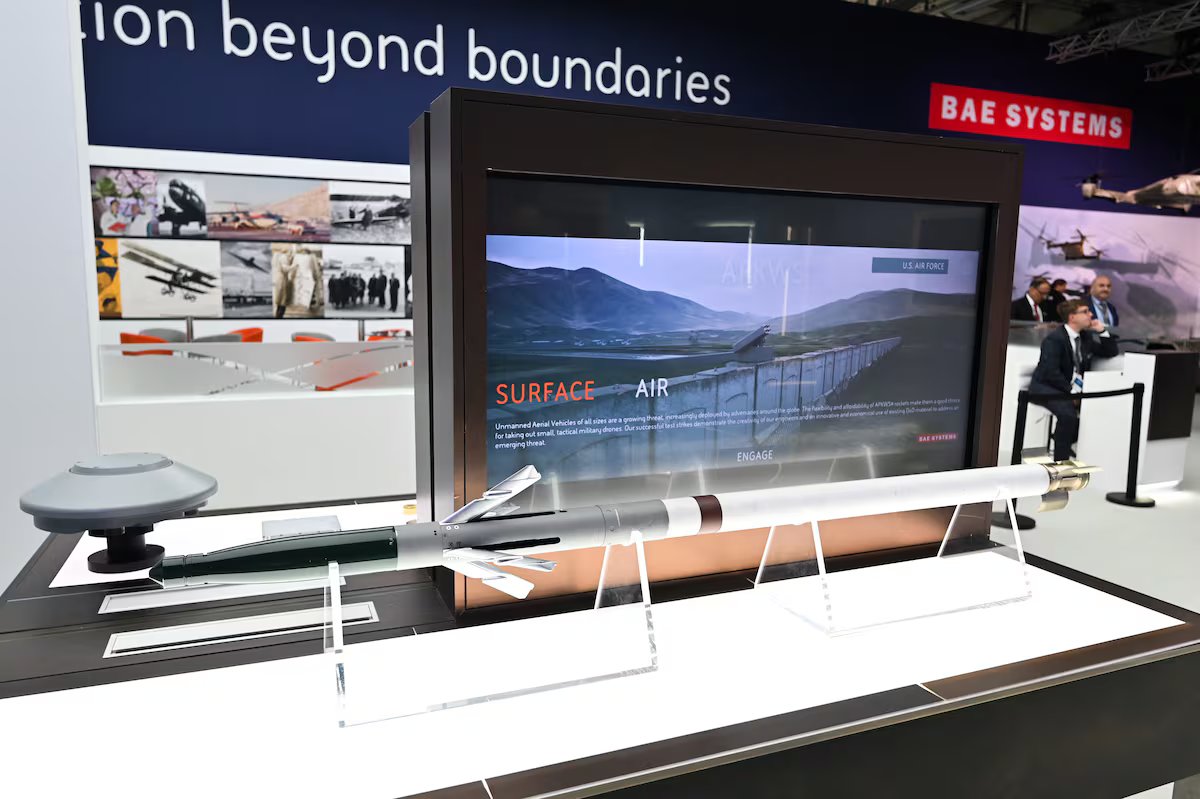
The Italian Air Force is exploring the acquisition of U.S. technology that transforms low-cost unguided missiles into precision-guided weapons. This upgrade offers a more affordable alternative to deploying expensive air-to-air missiles against drones.
The possibility of this deal stems from the U.S. Department of State’s green light for a Foreign Military Sale (FMS) to Italy, which includes 5,031 units of the BAE Systems Advanced Precision Kill Weapon System (APKWS) II. The APKWS is designed to be inserted between the warhead and motor of unguided missiles and features four fold-out wings, each equipped with a laser seeker. This modification enables missiles costing under €100,000 ($117,000) to achieve precision targeting.
The integration of APKWS into the Italian Air Force’s arsenal would allow for increased efficiency by reducing reliance on high-cost missiles, such as the AMRAAM, which is ten times more expensive. The State Department noted that this proposed sale would bolster Italy’s ability to address both current and future threats, enhancing homeland defense and acting as a deterrent against regional dangers.
The FMS approval encompasses not only the guidance systems but also launchers, warheads, and rocket motors. Overall, the potential value of the deal reaches $364 million, as detailed by the State Department. However, sources in Italy have indicated that no contract has been finalized and the technology remains under evaluation.
Italy’s Eurofighter jets are expected to be the primary recipients of the APKWS, as they are currently deployed in safeguarding European airspace from drone intrusions. Recently, one Eurofighter engaged in NATO air policing in the Baltics successfully intercepted an unidentified drone entering Latvian territory.
The Royal Air Force (RAF) has already implemented the APKWS on their Eurofighters. Following a swift acquisition process, the RAF reported that testing and deployment were completed within just two months. An RAF representative emphasized that the APKWS provides pilots with a highly accurate means to eliminate aerial threats, including drones, at a significantly reduced cost compared to traditional air-to-air missiles.
As the Italian Air Force assesses this technology, it stands to enhance its operational capabilities while addressing the growing challenges posed by drone technology in modern conflicts.
The content above is a summary. For more details, see the source article.









