


Key Takeaways
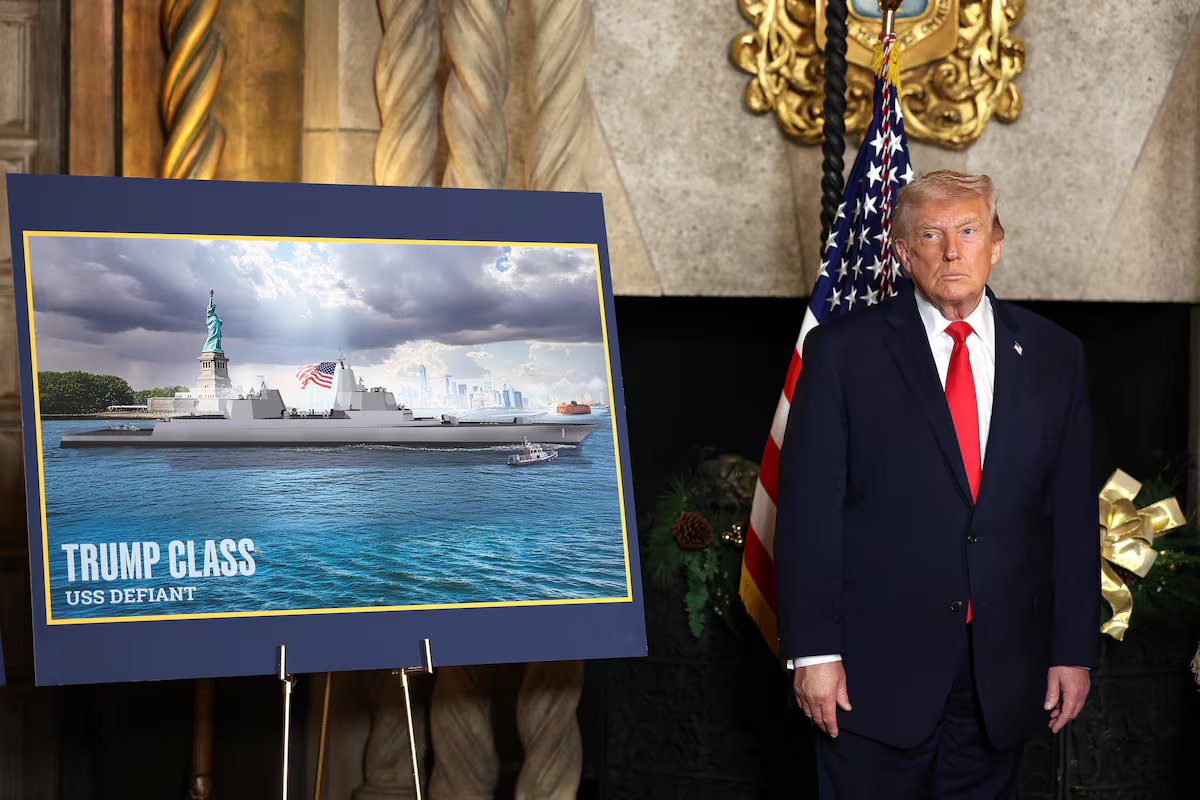
- The proposed Trump-class battleship has sparked significant debate, praised for its advanced capabilities but criticized for exorbitant costs and design challenges.
- Chinese military analysts express skepticism regarding the new U.S. Navy ship, highlighting potential vulnerabilities and the impact on U.S. naval capabilities.
- Delays in American shipbuilding raise concerns about the program’s feasibility and its effects on other critical naval projects.
Recent Developments in U.S. Naval Strategy
The U.S. Navy is facing considerable challenges, from technical issues with its ships to declining morale, yet it is also seeing a renewed focus on shipbuilding. The current administration is keen on innovative maritime strategies, one of which includes the contentious proposal for a new Trump-class battleship.
Supporters of this class tout its advanced technologies and capabilities, claiming it could operate independently with enhanced weaponry and long-range, nuclear propulsion, allowing for extended deployments without needing to refuel. However, detractors are quick to highlight the overwhelming cost of the project, projected at $275 billion for 15 ships, significantly higher than previous estimates due to the shift to a nuclear-powered design. The lead ship is expected to cost around $23.4 billion, making it a substantial financial commitment.
An official article from China’s National Defense News brings to light the perspective from America’s primary global competitor on this naval initiative. It recognizes that larger vessels, like the proposed battleship, can accomplish certain missions even under compromised conditions, such as communication jamming, and they offer greater resilience than smaller ships. However, this view is layered with skepticism, reflecting concerns commonly expressed in Western assessments regarding the ship’s practicality and the ambitious plans laid out for its design.
The report critiques the assessment’s estimated costs, considering them “exorbitant,” especially since issues such as nuclear waste management post-retirement have not been factored into the total estimate. It also raises alarms over the immaturity of some proposed technologies, questioning whether building a platform prior to finalizing its equipment is a sound strategy—citing past failures like the Zumwalt-class destroyer as relevant parallels.
In a shift from the U.S. Navy’s recent strategy of Distributed Maritime Operations—which prioritizes dispersing assets and capabilities—the Chinese analysis indicates that a focus on large surface ships may render the U.S. Navy vulnerable to modern threats, including submarines, hypersonic missiles, and drones. The Chinese critique notes the current delays affecting American shipyards, extending delivery times from five years in the early 2000s to nearly eleven years today, raising additional doubts about the Trump-class program.
The potential impacts of this new battleship initiative could have broader implications for U.S. naval priorities, potentially slowing down the construction of essential aircraft carriers and submarines. Observers note that China itself is exploring nuclear-powered surface ships, which adds another layer of complexity to the regional naval balance.
Ultimately, the article implies that while the Trump-class battleship may be an appealing concept, it may not be practical given the Navy’s existing shipbuilding challenges and the financial constraints likely to accompany future defense budgets. It suggests that the U.S. Navy should focus on its proven strengths, particularly in undersea warfare and emerging drone technologies, rather than pursuing the ambitious Trump-class initiative.
In the grand geopolitical scheme, the article indicates that some Chinese strategists would welcome the U.S. Navy’s pursuit of this costly program, as it may serve to weaken its primary rival. As the landscape of naval warfare evolves, the U.S. might benefit from aligning its fleet more closely with contemporary strategic needs rather than engaging in high-profile, high-cost shipbuilding ventures.
The content above is a summary. For more details, see the source article.









