


Key Takeaways
- Yemen’s Houthi movement seized the port city of Mocha on September 10, advancing their position near the Bab al-Mandeb strait, crucial for global trade.
- The attack led to significant withdrawals of government troops, who are regrouping in the coastal area of Dhubab.
- Renewed hostilities signal a sharp escalation in Yemen’s civil war, coinciding with broader regional conflicts.
Houthi Forces Capture Mocha Port City
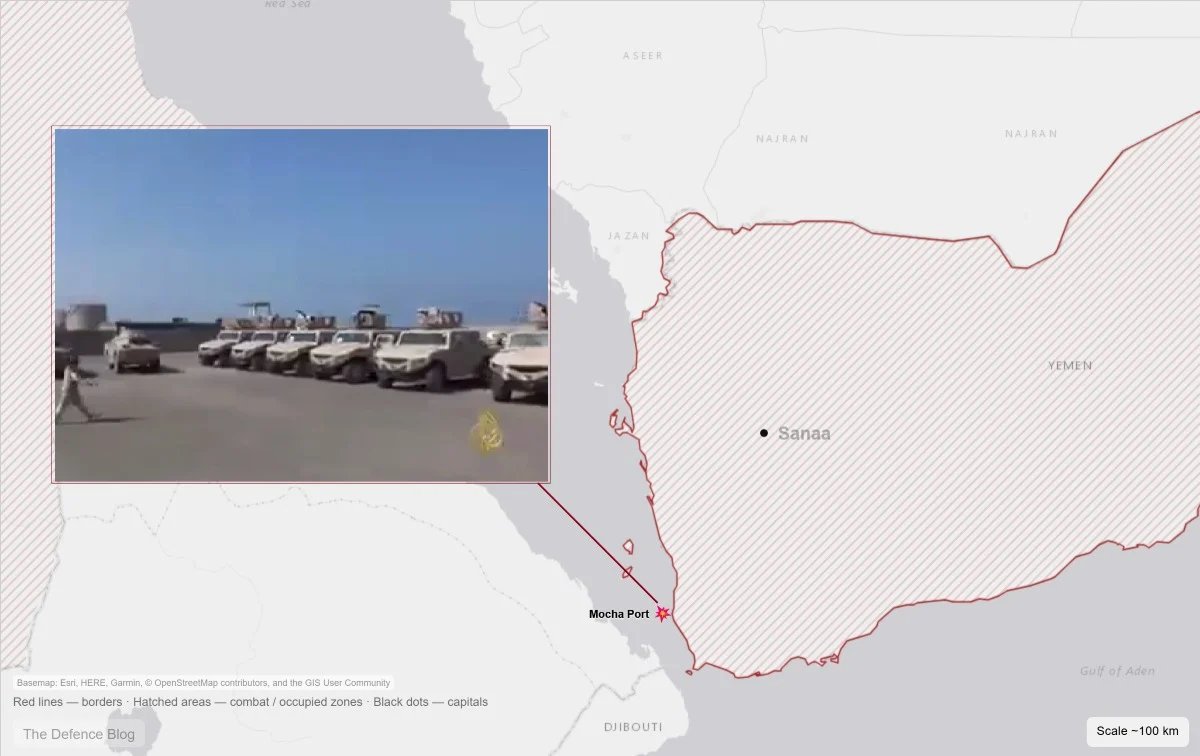
Yemen’s Houthi movement, backed by Iran, has successfully captured the strategic port city of Mocha as of September 10, 2026, marking a significant escalation in the ongoing civil conflict. Several Yemeni military sources indicated that Houthi fighters took control after intense fighting, pushing government-aligned forces to retreat toward Dhubab, a location crucial for defending the Bab al-Mandeb strait, through which 10 to 12 percent of global trade flows.
These advances have left the internationally recognized Yemeni government in a precarious situation. Tareq Saleh, commander of the National Resistance Forces that previously held Mocha, reported the relocation of his command center following heavy losses from a calculated Houthi offensive. Surprisingly, the government has not publicly confirmed the loss of Mocha, even as multiple military officials corroborate the takeover.
Al Jazeera’s correspondent highlighted that the Houthis also captured the nearby district of Hais, indicating a wider push against government forces, which have struggled under overwhelming pressure. The fleeing troops reportedly left behind considerable military equipment at Mocha, with Houthi-aligned media claiming it to be a significant weapons cache, though this has not been independently verified.
The battle for Mocha is part of a larger offensive that started around September 3, when Houthi forces began their assault from multiple fronts including western Taiz and southern Hodeidah. The capture has also resulted in mass displacement, with tens of thousands, including women and children, fleeing toward government-held regions such as Lahij and Aden. Reports indicate that over 20,000 people have been displaced in the recent fighting.
Analysts point out that the fall of Mocha is a critical setback for the Yemeni government due to the strait’s narrow width, which allows the Houthis to threaten maritime traffic also with artillery. Historically, the Houthis controlled significant northern territories, including the capital Sanaa and Hodeidah, but not areas directly controlling the Bab al-Mandeb.
In response to these developments, Saudi Arabia has initiated a maritime defense coalition to secure shipping routes in the Red Sea, following an increase in Houthi attacks on commercial vessels. Reports also indicate that Saudi warplanes conducted airstrikes across various provinces shortly after Mocha’s fall, although the Saudi government has not officially acknowledged these strikes.
This renewed escalation occurs against the backdrop of increased regional tensions, exemplified by the wider Middle East conflict that began with U.S. and Israeli strikes on Iran in early 2026. The situation in Yemen, which has been marred by civil war since the Houthis’ takeover of Sanaa in 2014, represents one of the most pronounced escalations since a UN-brokered ceasefire in 2022 aimed to reduce hostilities between the Houthis and the Saudi-backed government.
The content above is a summary. For more details, see the source article.









