


Key Takeaways
- Falkland Islands MLA Lewis Clifton asserts that the archipelago’s defenses are adequate, citing regular briefings from British Forces.
- Plans to replace older Typhoon jets with more advanced Tranche 2 models are set for late 2027.
- The remarks occur amid escalating tensions between Argentina and the UK over the islands’ sovereignty and hydrocarbon exploration.
Defense Assurance for the Falklands
A member of the Falkland Islands Legislative Assembly, Lewis Clifton, has expressed confidence in the islands’ defense capabilities, responding to recent scrutiny from Westminster regarding military upkeep and equipment. Clifton, who oversees Emergency Services and Island Security, indicated that regular updates from the Commander of British Forces at Sullivan House provide “absolute assurance” of the islands’ security.
Concerns in Westminster have included discussions about the maintenance of armed forces and the replacement of the aging Tranche 1 Typhoon jets stationed in the Falklands. Clifton noted that plans are in place to replace these aircraft with Tranche 2 jets, equipped with advanced radar, avionics, and weaponry, during a scheduled rotation in late 2027. This information was confirmed by Luke Pollard, Minister of State for Defence Readiness and Industry, in response to inquiries from Conservative MP Ben Obese-Jecty about ensuring the archipelago’s safety.
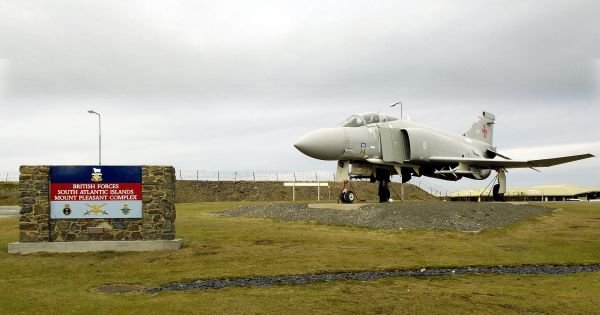
During a visit to the Mount Pleasant complex after he took office in December, Clifton stated that assembly members saw “firsthand” new missile systems being deployed, emphasizing that the islands possess “state-of-the-art technology.” However, he refrained from detailing specific systems or offering figures for the military assets present, and there is currently no independent confirmation of the claimed advancements.
These statements come amid rising tensions between Argentina and the United Kingdom over the sovereignty of the Falkland Islands. Recently, Argentina’s government has filed criminal complaints and initiated administrative processes against companies engaged in hydrocarbon exploration in the surrounding waters. In response, the UK has issued guidance supporting companies operating in the area, which Argentina has rejected, further escalating the diplomatic dispute.
As both nations navigate these complexities, Clifton’s assertions aim to reassure residents and stakeholders of the islands’ commitment to security and military readiness amidst ongoing geopolitical challenges.
The content above is a summary. For more details, see the source article.









